Nir Baruch: Angleton and Harvey’s Israeli Spy in Cuba
by James Nicita
On January 23, 2025, President Trump signed Executive Order 14176, which resulted in the disclosure of the final set of records assembled pursuant to the President John F. Kennedy Assassination Records Collection Act of 1992. These records contained the collection’s most sensitive secrets of governmental agencies such as the Central Intelligence Agency (CIA) and the Federal Bureau of Investigation (FBI), among others.
One of the most significant records disclosed pursuant to the executive order is CIA counterintelligence chief James Angleton’s secret 1975 Church Committee testimony.[1] Previously released with significant redactions, Angleton’s now fully-disclosed testimony contains several passages regarding his cultivation of the “Israeli account;”[2] his close cooperation first with the Jewish underground during and just after World War II, then with Israeli intelligence after 1948. Author Jefferson Morley discusses the “Israeli account” in detail in his biography of Angleton, The Ghost.[3]
Angleton’s Church Committee testimony described his procurement of the services of an anonymous Israeli intelligence agent to assist the CIA’s clandestine activities in Cuba against Fidel Castro. Under diplomatic cover in the Israeli embassy in Havana, the agent would act as a penetration-proof in-country source for Angleton’s CIA colleague William King Harvey, who was directing these clandestine activities.
Early in his Church Committee testimony, Angleton mentioned in passing that he had put Harvey “in touch with the Israelis on the Cuban business.”[4]
When the Committee later circled back to the Israeli agent, Angleton explained his motivation for procuring the latter’s services:
Now, what struck me, not having had any part of the Bay of Pigs because of differences with [then-CIA Deputy Director of Plans Richard] Bissell, was that it seemed to me that both the Cubans and the Soviets knew everything that was being planned. In other words, they had the thing penetrated, and it was foredoomed.[5]
Angleton did not identify the Israeli agent by name. However, he gave background information on the agent that enables such an identification:
So when Bill took over in the Cuban business, then I decided that since we were very close friends that I would try to help him out by getting him a source totally unknown to everybody. And I went to the Israelis. And I had them assign a man to Havana, whom I happened to know very well. He was born in Bulgaria. He can speak Russian and the Balkan countries’ languages. He is today their senior man on Soviet intelligence.[6]
The specifics of Bulgarian birth and expertise in Soviet intelligence are key to identifying the anonymous Israeli agent as Nir Baruch, a diplomat and high official in Israel’s Shin Bet domestic intelligence service.
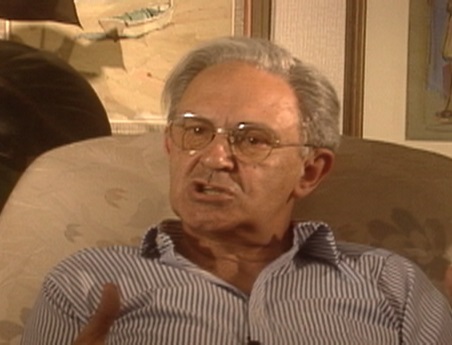 Nir Baruch in 1990
Angleton’s testimony revealed little or nothing of what Baruch actually did for Harvey on the “Cuban business.” But Baruch’s story opens the window further on Angleton’s “Israeli account.”
The Cuban Business
After the Cuban revolution on New Year’s Day 1959, Fidel Castro began a gradual process of nationalizing and then closing mafia-owned casinos in Havana, including the Riviera, owned by Meyer Lansky, head of the American organized crime syndicate and known as its “chairman of the board.”[7] Citing the work of Berkeley professor Peter Dale Scott,[8] scholar and podcaster Aaron Good asserts that Lansky was connected both to U.S. intelligence and to Israel’s Mossad. Later in 1959, Lansky allegedly volunteered in a meeting with the CIA to arrange the assassination of Castro via some of his people who were still on the island, and indicated that he was prepared to finance the operation himself.[9]
In March 1960, President Eisenhower authorized the CIA to undertake covert action against the Castro regime, including the creation of an organization of exiled Cubans to manage opposition programs, a propaganda offensive to draw support for the movement, establishment of an intelligence gathering network inside Cuba, and the development of a paramilitary force to be introduced into Cuba to organize, train and lead resistance groups against the Castro regime.[10]
According to a 1967 CIA Inspector General’s report, in August 1960 the CIA’s Deputy Director of Plans Richard Bissell conceived of a plan to assassinate Castro via “the U.S. gambling syndicate that was operating in Cuba.” CIA contractor Robert Maheu recruited mobster Johnny Roselli, who in turn recruited mob bosses Sam Giancana and Santos Trafficante; the latter was “the Cosa Nostra chieftain in Cuba” and, like Lansky, a Havana casino owner. Trafficante, in turn, recruited Castro’s aide Juan Orta to put poison pills into Castro’s food. The plot failed in early 1961.[11]
Trafficante next approached Antonio Varona, a former Cuban prime minister now exiled in Miami, to pick up the poison pill plot. The IG report stated that the FBI in 1961 had associated Varona with “efforts…by U.S. racketeers to finance anti-Castro activities in hopes of securing the gambling, prostitution, and dope monopolies in Cuba in the event Castro was overthrown.”[12]
Complicating the plot, Varona was also engaged with the CIA in planning for the imminent Bay of Pigs invasion. According to authors such as Jack Calhoun and Peter Dale Scott, Varona had met with Lansky to secure financing for the Frente Revolucionario Democratico, which the CIA had set up in association with its efforts to overthrow Castro, including the Bay of Pigs invasion.[13]
The plotters set aside Varona’s effort upon the April launch of the Bay of Pigs invasion,[14] a debacle resulting in President Kennedy’s firing of CIA director Allen Dulles, deputy director Charles Cabell, and Bissell. Cabell’s brother Earle was the mayor of Dallas when JFK was assassinated there.
Harvey’s biographer Bayard Stockton relates that from late 1961 to early 1962, Harvey assumed control of two significant CIA operations. One was Task Force W within General Edward Lansdale’s Operation Mongoose, the CIA’s new clandestine operation to overthrow the Cuban regime. The CIA ran Mongoose out of the agency’s massive JM/WAVE complex in Miami, as well as Mexico City.[15] Mongoose was a much more aggressive covert action program than the one President Eisenhower had approved, and included terrorist acts against civilians, disruption of the Cuban economy, sabotage of infrastructure, and the mining of harbors.[16]
Harvey’s second CIA operation was the assassination (or “executive action”) program, ZR/RIFLE, one of whose targets was Castro. In April 1962, Harvey renewed the pill plot contact with Roselli and Varona, but cut Trafficante and Giancana out of the operation. The three continued their efforts, unsuccessfully, through February 1963.[17]
In the meantime, during the October 1962 Cuban Missile Crisis, Harvey allegedly exploded at President Kennedy and his brother, Attorney General Robert Kennedy, exclaiming, “If you fuckers hadn’t fucked up the Bay of Pigs, we wouldn’t be in this fucking mess!” Harvey was soon relieved of his Task Force W and ZR/RIFLE leadership roles, and by the summer of 1963 was reassigned to the Rome CIA station.[18]
Finally, inquiries into the “Cuban business” revealed Angleton’s own mob connections. Scott cites the Church Committee testimony of CIA Western Hemisphere Division agent John Whitten, who stated that Angleton had squelched his investigation, requested by Attorney General Kennedy, into Lansky’s use of Panamanian banks for money skimmed from Las Vegas casinos. Western Hemisphere Division chief J.C. King told Whitten that “Angleton has these ties to the Mafia, and he is not going to do anything to jeopardize them…” and that “it had to do with Cuba.”[19] Similarly, Angleton squelched the FBI’s investigation into a meeting Bill Harvey had with mobster Johnny Roselli in June of 1963, months after Harvey had been removed from his role directing assassination attempts against Castro[20]
A Bulgarian-Born Israeli Agent With Expertise in Soviet Affairs
Angleton testified to the Church Committee that there were only “two or three people” in the Israeli embassy in Havana during the “Cuban business.”[21] The ambassador, Jeonathan Prato, who served from 1960[22] to 1963, does not fit the description of having both Bulgarian birth and Soviet expertise; he was born in Florence, Italy. The embassy’s 1st Secretary under Prato at the time,[23] however, does meet the description: former Shin Bet official Nir Baruch.
In fact, Baruch has already been introduced, not in connection with Harvey, but rather with Angleton’s own intelligence activities in Cuba. In his biography of Angleton, The Ghost, author Jefferson Morley briefly mentions Baruch in Cuba concerning Angleton’s “CIA within a CIA” – that is, running agents outside of regular CIA channels, and unknown to most of his fellow CIA officials.[24]
Morley’s source is an interview Baruch gave to journalist Yossi Melman, upon condition that Melman not publish the interview until after his death. Melman reported on the interview with Baruch in a 2011 article in Haaretz,[25] and in his 2012 book with Dan Raviv, Spies Against Armageddon: Inside Israel’s Secret Wars.[26]
Melman confirmed Baruch’s Bulgarian birth.[27] Likewise, Melman and other sources attest to Baruch’s Soviet expertise:
Baruch told Melman that in 1953 he joined the Nativ organization, a clandestine Israeli government agency that, among other things, aided Jews of the Soviet Union and Eastern Europe in migrating to Israel. Israel sent him to serve as the Nativ’s representative, in the guise of an Israeli diplomat, in the Bulgarian capital, Sophia, from 1953 to 1957. While in Bulgaria, then still behind the “Iron Curtain” and under Soviet domination, Baruch photographed military sites, and these images were relayed to American intelligence.[28]
After Baruch returned to Israel from his service in Bulgaria, Shin Bet chief Amos Manor recruited him. Most of Baruch's professional career was spent in Shin Bet’s “Headquarters 2,” which eventually became the counter-espionage and infiltration prevention unit. Melman relates that Baruch was involved in some of Shin Bet's more prominent counter-espionage operations against the Soviet KGB and its Eastern European subsidiaries, for example, the 1960-1961 arrest and conviction of the German-Czech professor Kurt Sitte of the Israel Institute of Technology, known as the Technion.[29]
From 1969-1971, Baruch served as Minister Counselor of Israel’s Embassy in Washington – its third-ranked officer.[30] According to historian Dina Adamsky, in January 1970 Baruch consulted on the likelihood of Soviet intervention in ongoing hostilities between Egypt and Israel with two top Soviet experts in the U.S. Department of State: Adolph Dubs, Director of the Office of Soviet Affairs, and G. Norman Anderson, head of the USSR Desk.[31]
As he had been in Sophia, while in the Washington Embassy, Baruch was the emissary of the Nativ. Historian Pauline Peretz writes that in 1971, he organized a meeting that included Rabbi Herschel Schachter, chair of the National Conference on Soviet Jewry, Richard Davies, U.S. deputy assistant secretary of state for European Affairs, and Senator Edward M. Kennedy, as part of his efforts to lobby the U.S. to increase support for Soviet Jewry.[32] Baruch’s tenure in Washington is further discussed below.
Baruch also told Melman that in 1972, by which time he was the head of the Shin Bet’s Headquarters 2 unit, he oversaw the operation to capture Col. Yuri Linov, the only KGB officer on active duty who was planted and captured in Israel. The assignment given Linov, who was posing as an Austrian businessman, was to renew ties with the Soviet Union's spying networks with which contact had been broken due to the Six-Day War in 1967.[33]
Baruch in Cuba
There is a discrepancy between Angleton and Baruch as to when the latter’s activity in Cuba began. Angleton said it was when Harvey took over the Cuban business, as noted above, in late 1961.
Melman, on the other hand, reported that Baruch arrived two weeks before the April 1961 Bay of Pigs invasion. “Very quickly he discovered that the Soviet Union had sent its experts to deploy missiles on the island. He conveyed that information to the CIA.”[34] Baruch then began operating immediately after the invasion, reporting on Russians who arrived in Cuba, and filming missile sites.[35]
Similarly, Angleton and Baruch vary in their respective description of communication pathways. Angleton said, “...the communications were from [Baruch] in a one-time pattern, I mean total security, from Havana to Tel Aviv, to me, and from me to Bill [Harvey].”[36] Baruch, on the other hand, told Melman:
I sent my reports directly to the Mossad representatives working at the Israeli embassy in Washington, DC…They sent it over to Angleton and his people…At a certain stage, the CIA supplied me with a better code machine to speed up my reports. Every few months, I would travel to Washington to meet with Angleton and his assistants. I would brief them in more detail and then return to Cuba.[37]
Neither Angleton nor Baruch described specific services that Baruch rendered to Harvey; Baruch never even mentioned Harvey in his interview with Melman. Angleton’s Church Committee testimony described Baruch’s work for him, not for Harvey.
Angleton said he sent a radio to Tel Aviv, which the Israelis in turn conveyed to Baruch in Cuba, who placed it for operatives to find and use. Angleton further said that Baruch
…would go to a Hungarian restaurant where the Soviet officers would also go. And he would spot one of the waiters or a headwaiter who was Jewish and it wouldn’t be long before he would say, you are from the Israeli Embassy, and pretty soon one thing led to another, and his production was without question the greatest production there was.[38]
Angleton and Baruch are consistent on one particular point: Baruch’s work was limited to intelligence gathering; clandestine activity and assassination were out of bounds.
This is how Melman quotes Baruch in the Haaretz version of their interview:
On several occasions [Angleton] asked me to be a courier and meet with CIA agents in Cuba, but I declined. I thought this was too dangerous.
In the Spies Against Armageddon version, Melman quotes Baruch as follows:
A few times, the Americans asked me to serve as a courier and meet one of their agents in Cuba, but I refused. I thought that that was too risky. One of my sources was an aide to Castro, and I convinced Angleton it would be a pity to put my relationship with the aide at risk.[39]
In Angleton’s Church Committee testimony, there is this exchange:
Mr. Kirbow. Mr. Angleton, to your specific knowledge, did Bill [Harvey] ever attempt to use the excellent contact he had in Havana to carry out the mission of eliminating the leader down there, or try to get any help out of him in that regard?
Mr. Angleton. He knows that I would have cut his throat.
Mr. Kirbow. That would have jeopardized your entire contact with the Israelis.
Mr. Angleton. Yes sir.[40]
Baruch’s tenure as 1st Secretary of the Israel Legation in Havana extended into 1963.[41] The precise month and the circumstances of his departure remain obscure.
In March 1963, outgoing Israeli Ambassador to Cuba Jeonathan Prato arrived in Miami from Havana along with 96 refugees on a flight organized by the American Red Cross, on a DC-6 that was involved in ferrying supplies bartered to the Castro regime for the earlier release by Castro of over 1,000 Bay of Pigs prisoners. Prato insisted to a reporter that there was “no significance” to his departure from Havana.[42] He was succeeded by Haim Yaari.[43]
Cuba and Israel
An obvious question arises: was Baruch’s service on behalf of the CIA’s “Cuban business” consistent with Israel’s own policy towards Castro and Cuba?
In the early 1960s, Castro’s own views towards Israel were not adversarial. Castro believed that he had converso ancestry. (Conversos were Spanish Jews who converted to Christianity to avoid persecution by the Inquisition.) Historian Allan Metz asserts that Cuba-Israel relations were “rather cordial” up to the 1967 Six-Day War, and that Castro did not break off relations with Israel until a month prior to the 1973 Yom Kippur War. [44]
On the other hand, an exodus of Jews from Cuba began after the revolution. Margalit Bejarano writes that the Jewish population in Cuba dropped from 10,000-12,000 in 1959 to 1,200 in 1963.[45] According to Dana Evan Kaplan, the exodus took place not due to antisemitism, but rather as a result of the Castro regime’s expropriation of private property. “Castro was puzzled as to why the Jews were leaving…[and] even asked the Israeli ambassador in Havana why Cuban Jews felt it necessary to emigrate, since he had nothing whatever against them and would have been happy to use their talents to develop the new socialist regime.”[46]
While most Jewish emigres – by far – settled in the United States rather than Israel,[47] it is not hard to envision that facilitating the exodus, as well as gathering intelligence from emigrating Cuban Jews, was an element of Baruch’s diplomatic service in the Israeli embassy in Havana; as he done previously in Eastern Europe with the Nativ organization.
If so, perhaps Angleton made use of such intelligence. Angleton told the Church Committee regarding the Jewish exodus from Eastern Europe, “I think in a certain period of time it resulted in over 22,000 reports dealing with the Soviet bloc which were unique.”[48] Perhaps Angleton took similar advantage of intelligence from Cuban Jewish refugees for his 1963 CIA report on the Cuban situation.[49]
Did the Soviets Penetrate Baruch-Angleton-Harvey?
One passage in Angleton’s Church Committee testimony is somewhat inscrutable, and needs to be disentangled. Doing so raises the possibility that the Soviets had penetrated the Baruch-Angleton-Harvey espionage loop on the “Cuban business.”
Angleton had springboarded into his discussion of the anonymous Israeli agent – Baruch – from his narration of an instance of Soviet propaganda:
After the [1967] Six-Day War the Soviets put out a barrage of propaganda in Arabic to the Middle East from Radio Moscow that the CIA – and then mentioned Bill Harvey, who was working for us, and whom I had put in touch with the Israelis during the Cuban business — had met on a ship with Morris, the Chief of British Intelligence, who had a background in the war with the Israelis, and had met there and prepared and carried out all of the strategic part of the Six-Day War. And this is all PFIS.[50]
No one named “Morris” was ever the chief of British intelligence – either MI-5, the British equivalent of the FBI, or MI-6, the British equivalent of the CIA. There may be an issue with the transcription of Angleton’s testimony: Angleton was probably referring not to “Morris,” but rather to “Maurice;” namely, Maurice Oldfield, who served as the director of MI-6 from 1973 to 1978, including 1975, the year of Angleton’s Church Committee testimony. In addition, according to historian Martin Pearce, Oldfield served as MI-6 liaison in Washington, DC, in the early 1960s, knew Angleton and Harvey, and advised President Kennedy during the Cuban Missile Crisis.[51]
Oldfield also “had a background in the war with the Israelis,” if the war Angleton was referring to was World War II. Oldfield had been stationed as an MI-5 agent in 1945 in Egypt, where he met, and became lifelong friends with, Teddy Kollek, at the time an intelligence operative with the Jewish Agency, then later with the Mossad. Kollek served for years as mayor of Jerusalem.[52]
If “PFIS” — whatever that stands for — is synonymous with “BS,” then the Soviet propaganda broadcasts were, in fact, “all PFIS.” Two detailed biographies[53] contain no references to Oldfield ever having carried out “all of the strategic part of the Six-Day War,” to say nothing of doing so “on a ship” — with Bill Harvey or anyone else. (The possibility that Angleton’s Church Committee testimony was revealing some super-secret, previously unknown aspect of Oldfield’s career is highly unlikely.)
Likewise, there is less than infinitesimal likelihood that Bill Harvey was on any boat, with Oldfield or anyone else, carrying out the strategic part of the Six-Day War. Harvey was in fact working for the CIA in 1967…but barely. As his tenure as Rome station chief had progressed through the mid-1960s, Harvey was sinking into dissolute, debilitating drunkenness, suffered a heart attack, and was near the nadir of his life and career. CIA director Richard Helms recalled Harvey from Rome in 1966. In 1967, at the time of the Six-Day War, Harvey was still working for the CIA at Langley, doing projects for Helms “where he wouldn’t have anyone to supervise or any operations to run.” His drinking continued; he eventually took nearly a year of accrued sick leave, and retired in 1969.[54]
The person who might actually have “prepared and carried out all of the strategic part of the Six-Day War” was Angleton himself. Authors Andrew and Leslie Cockburn quote an anonymous National Security Agency official as saying, “Angleton and the Israelis spent a year cooking up the ‘67 war. It was a CIA operation designed to get [Egyptian president Gamal Abdel] Nasser.”[55]
Angleton next explained to the Church Committee that the Soviets had actually substituted Harvey’s name for his own in their propaganda broadcast regarding the Six-Day War:
They used Harvey’s name instead of my name, because professionally we were very close, and more important, I had introduced Harvey as the only officer to the Israeli operational people on the Cuban business. And, therefore, it showed they had knowledge of Harvey’s, and so on.[56] (Emphasis added.)
In other words, notwithstanding Angleton’s Church Committee testimony that the very reason he procured the services of Baruch in Cuba was to have a secure source free from Soviet and Cuban penetration, Angleton appears to be conceding that the Baruch-Angleton-Harvey espionage loop on the “Cuban business” had in fact been penetrated. Angleton closed this passage of his Church Committee testimony by saying, “The query then raised was whether the penetration was here or was it in Israel.”[57]
Baruch and Israel’s “Technical Intelligence Network” in the U.S.
Angleton favored Israel’s development of nuclear weapons; another point upon which he was grilled during his Church Committee testimony.[58] Kennedy’s opposition to such development during his presidency is one of the sources of suspicion in some quarters that Israel had some involvement in his assassination.
As mentioned above, Nir Baruch served from 1969 to 1971 as Minister Counselor in Israel’s Embassy in Washington, D.C. The same 1970 diplomatic roster of Israel’s Washington Embassy listing Baruch as Minister Counselor also lists, as Scientific Counselor, Dr. Avraham Hermoni, whom Morley in The Ghost names as part of the four-man Israeli team participating in the final episode of the so-called “heist” of nuclear material and technology from the Nuclear Materials Equipment Corporation (NUMEC) facility in Apollo, Pennsylvania, on September 10, 1968. This occurred under Angleton’s watch as the CIA Israeli desk officer.[59]
According to author Roger Mattson, the three other Israelis participating with Hermoni on the September 10, 1968, visit did so under false credentials. All three were in fact affiliated with Shin Bet, Baruch’s own agency. Dr. Ephraim Biegun, credentialed as “Group Leader, Department of Electronics, Ministry of Defense, Israel,” headed the technical department of Shin Bet’s secret service. Abraham Bendor, identified with “Department of Electronics, Israel,” and Raphael Eitan, identified as “Chemist, Ministry of Defense, Israel,” were both with the covert operations unit that served Shin Bet and Mossad.[60]
Baruch’s 1969-1971 tenure as Minister Counselor corresponds almost precisely with the 1969-1972 period during which — as described by Kit Klarenberg and Wyatt Reed in the Grayzone, based on an FBI memo disclosed as well in the 2025 JFK records batch — “Angleton, in his official capacity had frequent personal liaison contacts with Israeli Intelligence Service (IIS) representatives at the Embassy of Israel, Washington, D.C., involving the exchange of extremely sensitive information,” and during which the Israeli Embassy operated a “technical intelligence network” directed by Hermoni. The FBI investigated Hermoni “and colleagues at the Embassy” through 1972.[61]
The Custom of Intelligence
During the time of the House Select Committee on Assassinations’ investigation into President Kennedy’s death, former CIA spy Victor Marchetti provided this definition of a “limited hangout:”
A “limited hangout” is spy jargon for a favorite and frequently used gimmick of the clandestine professionals. When their veil of secrecy is shredded and they can no longer rely on a phony cover story to misinform the public, they resort to admitting—sometimes even volunteering—some of the truth while still managing to withhold the key and damaging facts in the case. The public, however, is usually so intrigued by the new information that it never thinks to pursue the matter further.[62]
Were Angleton and Baruch engaging in a kind of “limited hangout” with their respective interviewers? Certainly there is more to their relationship than these brief glimpses reveal.
When Angleton referred to “the Israeli operational people on the Cuban business,” did he inadvertently let slip that a) there were other Israelis besides Baruch assisting him in Cuba, and/or b) Baruch and perhaps other Israelis were engaged not just in intelligence gathering but also in assisting with covert operations?
Baruch disclosed that he communicated with the Mossad. How deep was the Mossad’s involvement in Cuba, notwithstanding the “rather cordial” relations between Israel and Cuba? Just how close were the Mossad’s relations with Meyer Lansky, and did those relations involve Cuba at all? Did Baruch interact with Lansky or any of his associates, within Cuba or elsewhere? Did Lansky’s status as “chairman of the board” of the American crime syndicate necessarily link him to the efforts of his “subordinates” in the syndicate – Roselli, Trafficante, and Giancana – to assassinate Castro in cooperation with the CIA? Also, as noted, Angleton had his own mob connections touching on Cuba, and squelched investigations into both the “Lansky skim” and the Harvey-Roselli relationship.
Was Baruch actually involved in the Israeli Embassy’s “technical intelligence network,” and therefore directly with Angleton in “the exchange of extremely sensitive information” — including possibly the transfer of information related to nuclear technology? Or, was the “technical intelligence network” compartmentalized under Dr. Hermoni, leaving Minister Counselor Baruch out of the loop? Baruch does not appear in any of the literature this writer has reviewed on the “technical intelligence network” or NUMEC, but given his long history with Angleton, the lead might be worth pursuing.
No doubt archival documentation, some of it public, exists in archives in Washington, D.C., Jerusalem, Havana, and/or Moscow, that could answer some of the foregoing questions and flesh out the broader history.
On the other hand, much of the story certainly passed unrecorded, and forever in the shadows. As Angleton put it to the Church Committee, “[I]t is the custom of intelligence that intelligence supersedes writing.”[63]
_______________
-
James Angleton testimony, Senate Select Committee to Study Governmental Operations with Respect to Intelligence Activities (“Church Committee”), June 19, 1975; JFK Assassination System, U.S. National Archives, Record No. 157-10014-10005.
-
Angleton Church Committee testimony, pp 3.8-22.
-
Morley, Jefferson, The Ghost: The Secret Life of CIA Spymaster James Jesus Angleton (New York, St. Martin’s Press, 2017) pp. 54-57, 73-78.
-
Angleton Church Committee testimony, p. 40.
-
Angleton Church Committee testimony, pp. 83-84.
-
Angleton Church Committee testimony, p. 84.
-
Kaplan, Dana Evan, “Fleeing the Revolution: The Exodus of Cuban Jewry in the Early 1960s,” Cuban Studies, Vol. 36 (2005) , pp. 131-132; Eisenberg, Dennis, Uri Dan, and Eli Landau: Meyer Lansky: Mogul of the Mob, (New York, Paddington Press, 1979) pp. 96-106, 255, 259.
-
Scott, Peter Dale, American War Machine: Deep Politics, the CIA Global Drug Connection, and the Road to Afghanistan (Lanham, Md., Rowman and Littlefield Publishers, 2010), pp. 157, 164, 323 fn. 27
-
Eisenberg, Dennis, Uri Dan, and Eli Landau: Meyer Lansky: Mogul of the Mob, p. 257.
-
Kirkpatrick, Gen. Lyman B., CIA Inspector General, Survey of the Cuban Operation with Annexes, October 1961, Sec. B “History of the Project,” para. 2. CIA, DCI Files, History Staff Files, Job 85–00664R.
-
Earman, John S., CIA Inspector General, Report on Plots to Assassinate Fidel Castro, May 23, 1967, pp. 14-29
-
Id., pp. 29-32.
-
Calhoun, Jack, Gangsterismo, The United States, Cuba, and the Mafia: 1933 to 1966 (New York, OR Books, 2013), pp. vi-x; Scott, Peter Dale, Deep Politics and the Death of JFK (Berkeley, University of California Press, 1993), p. 90.
-
CIA Inspector General John S. Earman, Report on Plots to Assassinate Fidel Castro, May 23, 1967, pp. 33-36.
-
Stockton, Bayard, Flawed Patriot: The Rise and Fall of CIA Legend Bill Harvey (Washington, D.C., Potomac Books, Inc., 2006), pp. 118, 121-126,
-
Lansdale, Brig. Gen. Edward G., “The Cuba Project,” Memorandum dated February 20, 1962, United States Department of Defense.
-
Stockton, Bayard, Flawed Patriot, pp. 143-165; CIA Inspector General, Report on Plots to Assassinate Fidel Castro, pp. 37-39
-
Stockton, Bayard, Flawed Patriot, pp. 130-142.
-
Scott, Peter Dale, American War Machine, pp. 151-152.
-
Stockton, Bayard, Flawed Patriot, pp. 184-185; Angleton Church Committee testimony, pp. 87-89
-
Angleton Church Committee testimony, p. 85.
-
“Israel’s First Resident Minister to Cuba Presents Credentials,” Jewish Telegraphic Agency, November 3, 1960.
-
Who’s Who in Israel and in the Work for Israel Abroad (Tel Aviv, Bronfman & Cohen Publishers, 1978), p. 59.
-
Morley, Jefferson, The Ghost, pp. 100-101.
-
Melman, Yossi, “Inside Intel: Our Man in Havana,” Haaretz, March 3, 2011, https://www.haaretz.com/2011-03-03/ty-article/inside-intel-our-man-in-havana/0000017f-e062-d38f-a57f-e672c7e30000 (last visited January 23, 2026).
-
Raviv, Dan, and Yossi Melman, Spies Against Armageddon: Inside Israel’s Secret Wars (Sea Cliff, NY, Levant Books, 2012).
-
Melman, Yossi, “Inside Intel: Our Man in Havana,” Haaretz, March 3, 2011.
-
Melman, Yossi, “Inside Intel: Our Man in Havana,” Haaretz, March 3, 2011.
-
Melman, Yossi, “Inside Intel: Our Man in Havana,” Haaretz, March 3, 2011; “Israel Convicts German as a Spy,” New York Times, February 8, 1961, p. 2;
-
Who’s Who in Israel and in the Work for Israel Abroad, p. 59; United States Department of State, Diplomatic List: February 1970 (Washington, D.C., U.S. Government Printing Office, 1970), p. 53.
-
Adamsky, Dina, “How American and Israeli intelligence failed to estimate the Soviet intervention in the War of Attrition,” in Nigel J. Ashton, ed., The Cold War in the Middle East: Regional Conflict and the Superpowers, 1967-73 (London and New York, Routledge, 2007), pp. 121, 133 fn.48 & 52.
-
Peretz, Pauline, Let My People Go: The Transnational of Soviet Jewish Emigration During the Cold War (New Brunswick, N.J., Transaction Publishers, 2015), p. 155.
-
Melman, Yossi, “Inside Intel: Our Man in Havana,” Haaretz, March 3, 2011
-
Melman, Yossi, “Inside Intel: Our Man in Havana,” Haaretz, March 3, 2011.
-
Raviv, Dan, and Yossi Melman, Spies Against Armageddon, p. 43.
-
Angleton Church Committee testimony, p. 84.
-
Raviv, Dan, and Yossi Melman, Spies Against Armageddon, p. 43.
-
Angleton Church Committee testimony, p. 85.
-
Raviv, Dan, and Yossi Melman, Spies Against Armageddon, p. 43.
-
Angleton Church Committee testimony, p. 89.
-
Who’s Who in Israel and in the Work for Israel Abroad, p. 59.
-
“96 Returned From Cuba,” New York Times, March 23, 1963, p. 1; “Report Cuba Fighting; 3 Anti-Castro Bands Crushed, Havana Says,” Brooklyn Eagle, March 24, 1963, p. 1.
-
Berjarano, Margalit, “The Jewish Community of Cuba: Between Continuity and Extinction,” Jewish Political Studies Review, Vol. 3, No. 1/2 (Spring 1991), fn. 42.
-
Metz, Allan, “Cuban-Israeli Relations: From the Cuban Revolution to the New World Order,” Cuban Studies, Vol 23 (1993), pp. 113-117.
-
Berjarano, Margalit, “The Jewish Community of Cuba: Between Continuity and Extinction,” Jewish Political Studies Review, Vol. 3, No. 1/2 (Spring 1991), p. 127.
-
Kaplan, Dana Evan, “Fleeing the Revolution: The Exodus of Cuban Jewry in the Early 1960s,” p. 137
-
Id., pp. 146-147.
-
Angleton Church Committee testimony, p. 17..
-
Angleton, James, “Working Paper on Cuban Control and Action Capabilities,” May 23, 1963, Central Intelligence Agency, JFK Assassination System, U.S. National Archives, Record No. 202-10002-10039.
-
Angleton Church Committee testimony, p. 40.
-
Pearce, Martin, Spymaster: The Life of Britain’s Most Decorated Cold War Spy, Sir Maurice Oldfield (London, Bantam Press, 2016) pp. 108-208, 258-306.
-
Id., pp. 75-76, 233.
-
Id., passim; Deacon, Richard, C: A Biography of Sir Maurice Oldfield (London, MacDonald, 1985).
-
Stockton, Bayard, Flawed Patriot, pp. 240-241; Martin, David C., “The CIA’s ‘Loaded Gun:’ The Life and Hard Times of ‘America’s James Bond,” William King Harvey,” Washington Post, October 10, 1976, p. C1.
-
Cockburn, Andrew, and Leslie Cockburn, Dangerous Liaison: The Inside Story of the U.S.-- Israeli Covert Relationship (New York, Harper Collins Publishers, 1991) pp. 146-147.
-
Angleton Church Committee testimony, p. 40 (emphasis added).
-
Id.
-
Angleton Church Committee testimony, pp. 22-27, 35-39, 41-42, 90-98.
-
Morley, Jefferson, The Ghost, pp. 192-194.
-
Stealing the Atom Bomb: How Denial and Deception Armed Israel (CreateSpace Independent Publishing Platform, 2016), cover and pp. 144-146.
-
Memorandum dated July 15, 1975 from F.S. Putman to W.R. Wannall, Federal Bureau of Investigation, JFK Assassination System, U.S. National Archives, Record No. 124-10276-10400.
-
Marchetti, Victor, “CIA to ‘Admit’ Involvement in Kennedy Slaying,” Spotlight, August 14, 1978, p. 4.
-
Angleton Church Committee testimony, p. 13.
