George de Mohrenschildt’s Final Interview: Part 1
Scattered Puzzle Pieces are Fitted Together
“Epstein Hands George a Ticking Time Bomb”
by Dan Carbone
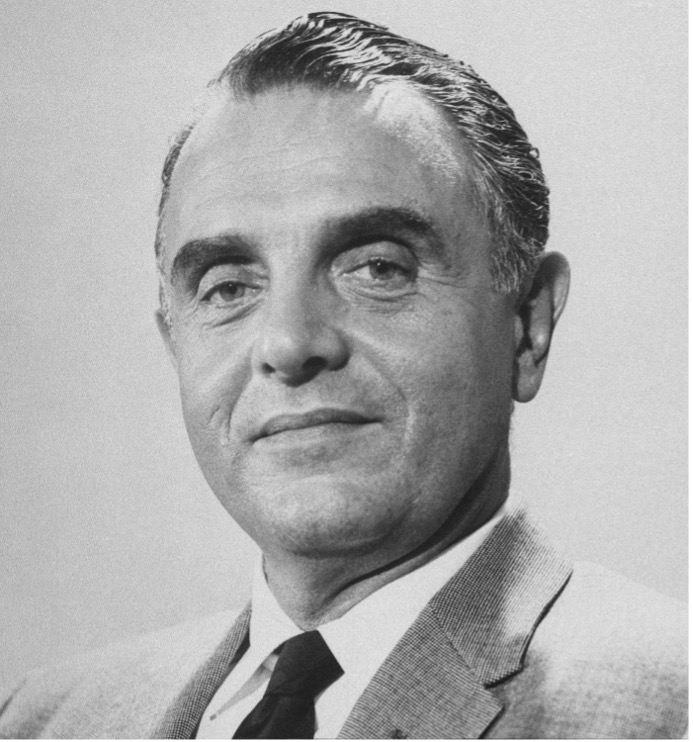
“Here you have a wealthy, cultured White Russian émigré who travels in the highest social circles -- he was a personal friend of Mrs. Hugh Auchincloss, Jackie Kennedy's mother, suddenly developing an intimate relationship with an impoverished ex-Marine like Lee Oswald. What did they discuss -- last year's season at Biarritz, or how to beat the bank at Monte Carlo?” – Jim Garrison [1]
Intro
Nine-year-old Jacqueline Kennedy knew him as “Uncle George.” He went horseback riding with her and bounced her on his lap. How did he become the most intimate friend of her husband’s alleged assassin?
Several years ago I began to envision George de Mohrenschildt as the central character in a miniseries that revolved around that simple question. It is my belief that one need not go to the Grassy Knoll, but to simply follow along the life of the man, and the rest of the story of the JFK assassination collapses around it. A microcosmic view of the larger picture unfolds. A visible web, often deliberately darkened and distorted by some of those who were supposed to illuminate it.
Garrison eventually met with George in 1968 and concluded he had no connection to the wider conspiracy, which he believed was devised in New Orleans with CIA-contact Clay Shaw et al. But while Garrison’s investigation eventually collapsed amid the weight of CIA infestation in 1969 with the acquittal of Shaw, the central mystery around de Mohrenschildt remained, and would soon become even more mysterious. When it was announced that he would appear before the House Select Committee on Assassinations (HSCA), established in 1976 to conduct a full investigation into the JFK and MLK assassinations, many were leaping to hear what the man had to say.
And then March 29, 1977 - the very day George learned he was asked to testify before the HSCA - he killed himself.
What was glaringly obvious before was even more so now. If the man knew nothing, and his entire relationship with the alleged assassin was but a series of odd coincidences, as the Warren Commission would have us believe, why on earth would he kill himself rather than testify to clear his name? Whether George (or someone else) pulled the trigger, the end result was the same. He was silenced like so many other witnesses deemed a little too inconvenient to the government narrative.
I think George would have been utterly astonished to learn that since that fateful day, several volumes have been devoted to him alone (the longest topping 785 pages).[2]
I realize the de Mohrenschildt mystery is old hat to most JFK researchers, many of whom figure there are bigger fish to fry with the looming government disclosure of “last remaining files.” What I hope to accomplish with this series of articles is to finally fit some of the old jumbled puzzle pieces together to recreate for the first time a fuller picture of those last two days. And add my own discoveries, unearthed while researching a miniseries script I’d been writing about the subject, to a tale most of the general public are not aware of at all, and will be surprised to hear of when told.
The End
Let’s begin at the very end, as many a Hollywood mystery. March 29, 1977. Detectives were collecting evidence from the body of a man in his mid-sixties, slumped in a chair with a rifle between his legs, in the hallway of a mansion in the ultra-exclusive enclave of Manalapan, Florida. A probable suicide.
It was as though Russian-born George de Mohrenschildt landed in the USA in 1938 already teetering on an endless high-wire act, twisting himself in all directions depending upon whom he was trying to appease or manipulate at any particular moment, in the funhouse hall of mirrors he perpetuated… until his nine lives ran out.
Yet when all his shapeshifter distortions are pared aside, George was actually quite consistent about what he had to say about his friendship with Oswald from the time of the JFK Assassination until he died. With two notable exceptions: a brief but indelible interval when, under great outside pressure, he caved in his testimony before the Warren Commission, disparaging his infamous friend (only to immediately afterward spend the rest of his life repudiating that testimony). And the other exception: an interval toward the end of his life, when under the influence of unknown drugs injected by a mysterious doctor, followed by many weeks of electroshock, he fled to Europe where (according to a signed affidavit[3]) he was allegedly further drugged by a slithery journalist in the Netherlands, and his broken mind spun all sorts of crazy hallucinated tales. As you might too, if they did this to you.
Outwardly, George, the former oil entrepreneur/ socialite/ intimate friend of Oswald, was currently residing as a temporary guest in a local mansion in the wealthy enclave of Manalapan, Florida, along with his daughter Alexandra, owned by her wealthy aunt.
Inwardly, George was broke, hiding, separated from his wife, and pleading with his few remaining friends to get him out of there, terrified that he would drag his daughter into his nightmare world.
Despite all, in the last few moments of George’s life, literally hours before he died, he became enraged enough to divulge his most closely guarded secret during a hotel interview with the late journalist, Edward J. Epstein.
Epstein had been trying for months to land this exclusive. He had met with George and his wife Jeanne nearly a year prior at their Dallas apartment and found George “quite despondent” and the heavily drinking Jeanne, “manic and out of control.”[4] George spent much of the meeting trying to placate his wife. Privately, the couple had mixed emotions about the newly-formed House Select Committee on Assassinations (HSCA), and expected to be called as witnesses. On one hand, this new round of exploration might clear things up for them. On the other, it might open up a whole new can of worms. This led to more arguments, drinking and internal fights.[5] Epstein’s arrival only added to the tension, and that first attempt went nowhere.
But now, strapped for cash, George himself had contacted Epstein, and Epstein offered him $1,000 a day for a four-day interview to appear in Reader’s Digest, a mass-market publication read by hundreds of thousands. It was an offer George leaped at. The article would be the lead to a book Epstein was writing on the JFK assassination. Alas, it was a book George would never get to read.
On March 28 & 29, 1977, George met Epstein at The Breakers Hotel in Palm Beach (along with Epstein’s assistant Nancy Lanoue). Over the following years, for reasons known only to himself, Epstein felt compelled to parcel out minuscule portions from this interview, perhaps the most important he would ever land (certainly the one with the most far-reaching implications). He would haphazardly sprinkle selected tidbits across several of his books, while omitting some of the most crucial details altogether. One can understand a journalist revising their earlier material upon uncovering new witnesses, but in this case, Epstein himself was the primary witness! Epstein would, in effect, commit the inexplicable act of bizarrely dumbing down his own exclusive findings.
Maybe it was Epstein’s conscience that got to him, or maybe he just got fed up holding everything back, but over the years he divulged many of the key parts he’d omitted from his own work to other journalists and investigators. Yet he never really came clean with everything in any one of those interviews nor in his own writings. The end result was that the historical record of what transpired was a hodgepodge patchwork. No article or book contained the totality of the story.
Years later Epstein would admit, “I had given up too soon,” [6] and he attempted a final effort to correct the record, including many of the omitted details, assembled in their proper order in 1992, buried in an afterword in his “Assassination Chronicles,” entitled, “The Man Who Really Knew Too Much.”[7]
But he still left many crucial parts out.
Now some 49 years after the fact, it is finally possible to reconstruct that fateful final interview by pulling all the scattered pieces together. The reason it’s important to set the record straight is that those interviews contain what I believe to be the proverbial “smoking gun.” It’s all there, people. Look no further.
Far from hiding, from the time immediately following the assassination, George de Mohrenschildt appeared to want to tell the full story of his relationship with Oswald, yet it was necessary for him to perform a delicate balancing act, simultaneously protecting his multiple business contracts, Intelligence connections, and his family, all of which intertwined in a complex web. Though he told some of what he witnessed, as self-protection, he wisely kept some of his cards concealed. But something would happen during that final interview that would push him over the edge. Some key details of the two days of interviews conducted by Epstein and Lanoue were derived by George’s biographer, Nancy Wertz Weiford, from an interview Epstein gave to Florida State Attorney David Bludworth immediately following George’s death.[8]
By Epstein’s account, the interview started off well. Unlike their previous meeting a year ago, George had pulled himself together and “exuded confidence and a positive attitude.” This time George would be alone, outside the controlling presence of his wife.
Epstein first led George through stories of his life before he met Oswald. One imagines George talked about his aristocratic childhood in Tsarist Russia, the Bolshevik Revolution, his escape to Poland, and his spell as a Polish Calvary Officer. Or perhaps he regaled the journalists with stories of his arrival into the upper echelons of American society, where he palled around with Jack Bouvier (Jackie Kennedy’s dad) on Wall Street and his idyllic summer as a guest at “Lasata,” the Bouvier estate in East Hampton, where he became “Uncle George” to nine-year-old Jackie. Maybe George mentioned his walking trip through Latin America on foot from the Texas border to the tip of Guatemala, where he witnessed the preparations for the Bay of Pigs Invasion, and his discoveries all over the world as a geologist for Standard Oil. I say, one “imagines” because who knows all the things George talked about during the 2 days of interviews. Attorney Bludworth told Mark Lane he didn’t believe them when Epstein and Lanoue later claimed to have only taken minor notes and hadn’t taped anything.[9]
According to Epstein, the waltz-down-memory-lane interview tactic was by design, so as not to spook de Mohrenschildt and set him at ease before Epstein moved in for the kill – George’s relationship with Oswald.
A Ticking Time Bomb
Though if putting George at ease was Epstein’s aim, he could not have done a worse job of obliterating everything he set out to accomplish with his next move. Though Epstein would later speak about what he did in an FBI interview the day after George’s death, he would never write about it himself. One can only imagine why.
Epstein had come to that first interview armed with an article about George from the Dallas Morning News, published a week earlier on March 20th, and supplied Epstein by his army of researchers at Reader’s Digest. Not just any article. A headline article. A devastating article that George was completely unaware of in Florida in those pre-internet days. Here is the article that Epstein handed to George, found folded in George’s left pants pocket after he died:
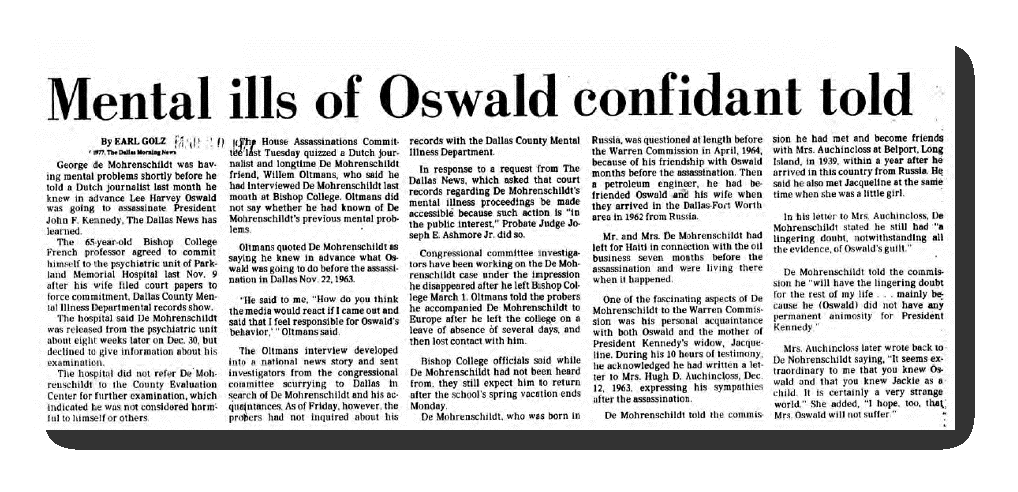
Earl Golz, Mental ills of Oswald Confident Told (Dallas Morning News, 3-20-77)
Lanoue reported that George’s hands trembled upon reading this.[10] One can only imagine.
The piece was one of many investigative articles on the JFK Assassination written by intrepid Dallas reporter Earl Golz, who had been following up on leads for years.
The article states…
George de Mohrenschildt was having mental problems shortly before he told a Dutch Journalist last month he knew in advance that Lee Harvey Oswald was going to assassinate President John F. Kennedy, the Dallas News has learned.”
The 65-year-old Bishop College French professor agreed to commit himself to the psychiatric unit of Parkland Memorial Hospital last Nov. 9 after his wife filed court papers to force commitment, Dallas County Mental Illness Departmental records show.
The hospital said De Mohrenschildt was released from the psychiatric unit about eight weeks later on Dec. 30th but declined to give information about his examination.
The hospital did not refer De Mohrenschildt to the County Evaluation Center for further examination, which indicated he was not considered harmful to himself or others [...] In response to a request the Dallas News, which asked that the court records regarding De Mohrenschildt’s mental Illness proceedings be made accessible because such act is “in the public Interest." Probate Joseph E. Ashmore Jr. did so.[11]
So much for privacy. No health insurance laws existed in 1977. According to Nancy Wertz Weiford, “… the newspaper claimed that the American people had a right to know everything about [George’s] his life, including private health data…”[12] and the Probate Judge agreed. All of George’s hospital files were relayed by Golz to the HSCA, which had been trying to locate him to testify, yet no one informed George his private papers were being released.
One must question the precise timing of this article and the rush to get it out, knowing full well that George would immediately be called upon to testify before the HSCA. The article makes it look like George was a mentally ill person in the midst of a nervous breakdown, extreme enough to require electroshock, the implication being he can’t really be trusted. Yet it fails to document the shadowy circumstances that led to that breakdown. One can’t fault the reporter. Golz only knew part of the story. And it wasn’t for lack of trying to dig up the rest. He’d been on the trail for years, writing many articles. In the end, he was manipulated like so many other pawns connected to this tale from Oswald on down. He’d been trying to interview de Mohrenschildt to get the rest of the story. The reporter had no idea he had just crafted a weapon that could be used for George’s demise.
George’s Suicide Threat
Following the Baron’s death, Epstein told detectives that prior to George’s interview, he had located one of George’s friends, Sam Ballen (another oilman), who indicated he had received a letter from George stating that George would “commit suicide if Epstein did not believe his story.” When asked to elaborate about what “his story” meant, Epstein said he took it to mean, “his relationship with Oswald, the Jewish Mafia, [and] FBI harassment,” among other things. He also stated he felt George was “being deceptive in many of his answers that were put to him, but he did not feel [George] was under stress and did not feel mentally deranged in any way.”[13] Part of which contradicts what Lanoue told State Attorney Bludworth two days later when she described George as trembling.[14] Keep in mind, Bludworth thought Epstein and Lanoue were the ones being deceptive when he questioned them.
One must question the ethics of a journalist who goes into an interview knowing the full gravity of how all this might impact his subject ahead of time, yet springs a devastating newspaper article like this on the subject anyway. How on earth could Epstein think that would go well?
George would stew overnight over Epstein’s Dallas Morning News article. In Part 2 of this series, we see George returning for the second day of interviews to hand Edward J. Epstein a bomb of his own regarding a certain CIA agent steering George to Oswald. George’s apartment break-in is also detailed, along with George’s manuscript pages containing a secret only known to the highest levels of government until it was declassified in 2000!
Click here to read part 2.
_________
-
Jim Garrison, A candid conversation with the embattled District Attorney of New Orleans (Playboy, October 1967) pp 59-178
-
Nancy Wertz Weiford, The Faux Baron: George de Mohrenschildt, (Lumiere, 2013) Joan Mellen, Our Man in Haiti: George de Mohrenschildt and the CIA in the Nightmare Republic. (Trine Day, 2012) Bruce Cambell Adamson, Oswald’s Closest Friend: The George de Mohrenschildt Story Vol. 1-6 (Self Published, 1995-?)
-
Willem L. Oltmans, Reporting on the Kennedy Assassination (University Press of Kansas, 2017) pp 256-257
-
Nancy Wertz Weiford, The Faux Baron: George de Mohrenschildt (Lumiere, 2013) p 613
-
Nancy Wertz Weiford, The Faux Baron: George de Mohrenschildt (Lumiere, 2013) pp 611–613
-
Edward J. Epstein, The Assassination Chronicles, (Carroll & Graf Publishers, 1992) p 564
-
Edward J. Epstein, The Assassination Chronicles, (Carroll & Graf Publishers, 1992) pp 556-559
-
Nancy Wertz Weiford, The Faux Baron: George de Mohrenschildt (Lumiere, 2013) pp 654-657 & Note #535 Florida State Attorney David Bludworth interview with Epstein, dated April 1, 1977.
-
Mark Lane, The Mysterious Death Of A Key JFK Witness (Gallery, Nov 1977) pp 112,114
-
Nancy Wertz Weiford, The Faux Baron, (Lumiere, 2013) p 656 & FBI Memo MM 820 90013/ MM 89-35 E F T O dated March 30, 1977
-
Earl Golz, Mental ills of Oswald Confident Told (Dallas Morning News, 3-20-77)
-
Nancy Wertz Weiford, The Faux Baron, (Lumiere, 2013) pp 649-650
-
Det. Thomas Neighbors, Sheriff’s Office Palm Beach County, Death Investigation (Report Case #77-11753, 3-30-77) p 10
-
Nancy Wertz Weiford, The Faux Baron: George de Mohrenschildt (Lumiere, 2013) p 656 & Note #535 Florida State Attorney David Bludworth interview with Epstein, dated April 1, 1977.
