
George de Mohrenschildt’s Final Interview: Part 2
Scattered Puzzle Pieces are Fitted Together
Day Two: March 29, 1977
Paranoia Over Dallas Morning News Article
by Dan Carbone
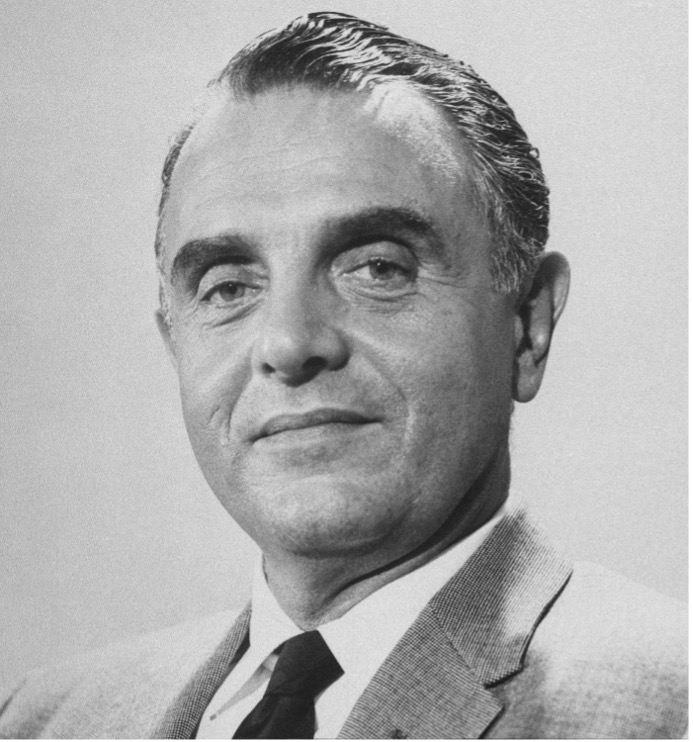
Although his daughter Alexandra had described George as “happy and normal” the morning before he left for the second day of interviews, it appears that was a cover. The second session didn’t start off well. George had been ruminating overnight about the Dallas Morning News and came to the meeting convinced government investigators were out to arrest him. The part of the article that freaked him out the most, other than the fact that all his personal records had been laid bare, was this:
The Oltmans interview developed into a national news story and sent investigators from the congressional committee scurrying to Dallas in search of de Mohrenschildt and his acquaintances.[1]
George interpreted this to mean there was a warrant out for his arrest. Epstein attempted to calm him and assured George he would look into it.[2]
Since he’d already been handed a devastating article that destroyed all his credibility, it appears George simply said to hell with everything. And with literally nothing left to lose, he told the story that makes the most sense about what transpired way back in 1962.
George’s Return of Serve
Regarding what followed, it’s worth quoting Epstein at length:
de Mohrenschildt had claimed that morning that he had been dealing with the CIA since the early 1950s. Although he had never been a paid employee of the CIA, he said he had “on occasion done favors” for government officials who were connected to it. In turn, these same officials had helped in his business contacts overseas… In late 1961— de Mohrenschildt could not pinpoint the date— he said had a lunchtime meeting in downtown Dallas with one of these connections, [Dallas CIA Head of Domestic Contact Service] J. Walter Moore [and] Moore purposely steered their conversation to the city of Minsk, where, as Moore seemed to know even before he told him, De Mohrenschildt had spent his childhood. Moore then told him about an ex-American Marine who had worked in an electronics factory in Minsk for the past year, and in whom there was ‘interest,’ since he was returning to the Dallas area. Although no specific requests were made by Moore, de Mohrenschildt gathered that Moore would be appreciative to learn more about Oswald's activities in Minsk.
In the summer of 1962, de Mohrenschildt heard more about this defector. One of Moore’s associates handed him the address of Lee Harvey Oswald in nearby Fort Worth and then suggested that de Mohrenschildt might like to meet him. He added, as if it was an inducement, that this ex-Marine had returned with a pretty Soviet wife.
Before finding some pretext to visit this couple, de Mohrenschildt called Moore again and satisfied himself that Oswald was still of interest to the American government. At this time, he was extremely busy trying to arrange for Papa Doc Duvalier, the Haitian dictator, to approve [an] oil exploration deal in that country. Some help from the U.S. Embassy in Haiti would be greatly appreciated by him, he suggested to Moore. Although he recognized that there was no quid pro quo, he hoped that he might receive the same sort of tacit assistance that he had previously received with [a previous contract he received in] Yugoslavia. "I would never have contacted Oswald in a million years, if Moore had not sanctioned it," he explained to me. "Too much was at stake."[3]
[…] Moore said that Oswald had been uncooperative with the FBI and refused to discuss his two years in Russia. From this conversation, de Mohrenschildt said that he assumed his task was to gain Oswald’s confidence, and then find out what he could about Oswald’s activities in Russia. In CIA parlance, this was to be an ‘unwitting debriefing.’[4]
In one fell swoop, George had not only returned Epstein’s serve down the baseline, but he also demolished the main thesis of Epstein’s forthcoming book – that Oswald was a Russian Intelligence asset (a line promoted until this day by the CIA).
A necessary sidebar: J. Walton Moore and de Mohrenschildt had an extensive relationship going back to 1957, when George was debriefed by Moore upon his return from a geological trip to Yugoslavia where he was sent by the US Government as a consulting geologist.
In his “leisure time,” George was attacked whilst in pursuit of artistic expression when he sailed out to sketch the private island of General Marshal Tito and was fired at by Tito’s security guards. Like any true artist, he didn’t allow a little adversity to get in the way of his artistic ambitions, and bravely returned to the island in an attempt to complete his latest masterwork -- and was promptly shot at again.
When George arrived back in Dallas, he was debriefed by Moore, and the geological information George provided “became the basis for at least ten reports that were circulated within government agencies.”[5] The two men struck up a professional as well as personal relationship. The de Mohrenschildts invited Moore and his wife to dinner at their place on numerous occasions, and Moore continued to debrief George upon his return from other geological assignments around the world.
Moore ran the CIA's Domestic Contact Division (DCD) in Dallas, and the DCD's mandate was to debrief traveling American citizens, scientists, and businessmen who volunteered information gathered abroad, just as de Mohrenschildt had done with Yugoslavia. Therefore, it makes total sense that Moore would ask GDM to debrief the “uncooperative” Oswald. Thus, the “unwitting debriefing.”
An Apartment Break-In Leads To A Bay of Pigs Secret
As the interview progressed, George continued to indict Moore.
Quoting Epstein:
After Oswald told George de Mohrenschildt that he had diary pages detailing his work in a Minsk electronics factory, de Mohrenschildt encouraged him to write a full memoir and offered to help get it published. When Oswald produced a draft, de Mohrenschildt borrowed it and according to him, made a copy for Moore.[6]
It should be noted this was during the time Oswald was employed by Jaggars, Chiles & Stovall, a Dallas-based photo plant known for map-making and confidential work for defense contractors where his extracurricular activities included creating a fake ID and blowups of himself in a peculiar costume in his backyard with a rifle, one of which he would gift to George (more on this photo later).
George told Epstein that his apartment was later broken into. A manuscript was rifled through, one where George had written about a walking trip he had taken with his wife across Latin America. Pencil marks were left on the pages, as one would make if they were focusing a camera lens. An entire article could be devoted to all the oddities of this trip. As to all that George’s Latin American manuscript contained, one can only speculate, as it appears to have been lost. But George wrote about a particular part of the trip in another manuscript called “I’M A PATSY! I’M A PATSY!” about his friendship with Oswald, which he had just completed in the months before his death and which was published in full in HSCA Report Vol XII.
On pages 278-279 of George’s manuscript, the reader will find this passage:
During our walking trip through Guatemala, where we happened to be there just before the Bay of Pigs, the town was full of crew-cut Americans, not speaking a word of Spanish, out of place. I told Jeanne “but these are Marines, or rather Marine pilots. What the hell are they doing here?” No question the same idea occurred to all the pro-Castro Guatemalans, and the country is full of them… And messages were sent on time to Fidel Castro.
In the 2014 annotated published version of George’s manuscript retitled “Lee Harvey Oswald, As I Knew Him,” this extremely important passage, perhaps the most important passage in the entire book, was sloppily removed from the main body of the manuscript and relegated to a footnote by the editor, Michael A. Rinella, apparently not recognizing its significance.[7]
Here’s why the passage is so important. Shortly after the Bay of Pigs incident, a secret investigative commission was established almost immediately by General Maxwell Taylor, sending a sharply critical report to Kennedy in June 1961. This was known as the Taylor Commission Report.
In the report, JFK would learn what George already knew: that the CIA was fully aware that practically everyone knew the invasion was going to take place ahead of time, yet no one told JFK. The theory advanced by journalists David Talbot and Russ Baker, among others, is that the CIA wanted the mission to fail to finally embarrass Kennedy into invading Cuba. Instead, an enraged Kennedy fired CIA Chief Allen Dulles and said he would “splinter the CIA into a thousand pieces and scatter it to the winds.” Unfortunately for JFK, the forces who really run the government had similar plans for him only a few months later.
The public would not see the full unredacted Taylor Report revelation until it was released in 2000![8] Yet its secrets were partly contained in George’s manuscript. An urgent message to Kennedy known only to the highest levels of Government. That Kennedy had been tricked.
In addition to the Latin America walking trip manuscript, at the time of the break-in, George still retained Oswald’s Russian Diary. George told Epstein he confronted Moore, demanding to know if he was being investigated because of his association with Oswald. Moore flatly denied it, stating Oswald was a “harmless lunatic” of no use to the agency. Moore’s assurances didn’t sit well with George. As he told Epstein, the very next day he wrote a letter to George McGhee, an old oilman friend of his, who now happened to be the Undersecretary of State, in an attempt to protect himself and show he was not hiding anything. The letter, saved in George’s CIA file, dated Oct 9, 1962, offered his Latin America manuscript to McGhee along with a not-so-veiled warning about the sensitive material it contained, which McGhee passed on to his superiors:
[Jeanne and I] came back with a great deal of important material both photographic and written observations on the least known parts of these seven countries… I have been told by my friends in Europe that they may send my typescript to the USSR where there is a great demand for travelogues and adventure stories […] Before I send my typescript to Europe, I would like to show it (also the maps and photos) to someone in the State Department interested in the situation existing in these seething countries […] I am willing to eliminate or change some parts which may be considered harmful to the interests of the United States, especially if the travelogue is to be published behind the Iron Curtain.[9]
Some read this as a threat. But I see it more as an urgent attempt to force a meeting. As if he’s saying, “Look, you don’t have to break into my place. I know something that you don’t know, and you need to know it. I’ll tell you exactly what I know.” Four months later, he would also write to JFK himself, offering his manuscript. Nothing came of it.[10]
Part 3 of this series continues with the 2nd day of interviews with George de Mohrenschildt and Edward J. Epstein, covering the other Oswald “Backyard Photo,” as well as revelations about the General Walker Assassination attempt, Epstein’s bugged hotel room and a chilling final comment from George.
Click here to read part 3.
_________
-
Earl Golz, Mental ills of Oswald Confident Told (Dallas Morning News, 3-20-77)
-
Nancy Wertz Weiford, The Faux Baron, (Lumiere, 2013) p 658
-
Edward J. Epstein, The Assassination Chronicles, (Carroll & Graf Publishers, 1992) pp 558-559
-
Epstein, Edward J. The JFK Assassination Diary: My Search for Answers to the Mystery of the Century (EJE Publications. Kindle Edition) pp 74-75
-
Edward J. Epstein, Legend: The Secret World of Lee Harvey Oswald (Reader’s Digest Press/ McGraw Hill, 1979) p 182
-
Epstein, Edward J. The JFK Assassination Diary: My Search for Answers to the Mystery of the Century (EJE Publications. Kindle Edition) p. 76
-
George de Mohrenschildt, Lee Harvey Oswald as I Knew Him, Edited by Michael A. Rinella (University Press of Kansas, 2014) p 292 Note #54
-
Vernon Loeb, Soviets Knew Date of Cuba Attack (Washington Post, April 23, 2000)
-
FBI file # 100-32965 Field Office 100-1689 submitted by Agent James F. Morrissey 3-27-64 pp 23-25
-
Russ Baker, Family of Secrets (Bloomsbury Press, 2009) p 104


