
The LA Times Buries the RFK Case-Again
By Kennedysandking.com
This is ridiculous. You're ignoring all the evidence that has come out long after the official story and trial happened that not only exonerates Sirhan but shows he was hypnotically controlled by CIA operatives, including the one holding RFK at the moment of the shooting. Everything you say about Sirhan was part of the CIA's carefully constructed cover story, but it doesn't match the reality of what happened. It's no wonder conspiracy theories abound when the average conspiracy theorist knows that Sirhan was in front of Kennedy and that witnesses put his gun muzzle 3 feet from Kennedy, yet Kennedy was shot from behind at a distance of an inch. The eyewitnesses weren't wrong or random - the four people who saw them both at the moment of the shooting saw exactly the same thing, and it doesn't match the official story. I spent 30+ years studying this and wrote a detailed, heavily footnoted against the primary record book. How long did the LA Times team on this spend? Sheesh. Btw - the newly released files show the CIA was deeply involved with the LAPD's investigation and sort of shoved their way in there. The CIA released a "dummy" file on Sirhan because they are STILL HIDING WHAT THEY KNOW. The media has lost all credibility in this country by refusing to go beyond the official lies in all the assassinations of the sixties and even more recent ones. Sirhan had no motive. The defense team GAVE him that motive because they didn't think a jury would believe he really couldn't remember. But the CIA used hypnosis and drugs in experiments and were able to get people to do things they could not remember. There's so much to say and no one with the guts to follow where the truth actually leads. btw - I'm not MAGA. Can't stand Trump. Lifelong Democrat. But the truth matters!!!
lisa pease
The above is Lisa Pease’s comment on a special program sponsored by the LA Times as part of their series entitled Crimes of the Times. This 37-minute presentation was hosted and written by Chris Gafford, and dealt with the assassination of Senator Robert Kennedy in Los Angeles in June of 1968.
Here is a link to the YouTube connection to the show. https://www.youtube.com/watch?v=lCcaf5pL7vM
If you are familiar with the Robert Kennedy case and Lisa’s work—especially her book A Lie Too Big to Fail--there is no need to watch the program. But for those who are not, Chris Gafford’s special deserves to be exposed to the ridicule that Lisa bestows upon it. And even more.
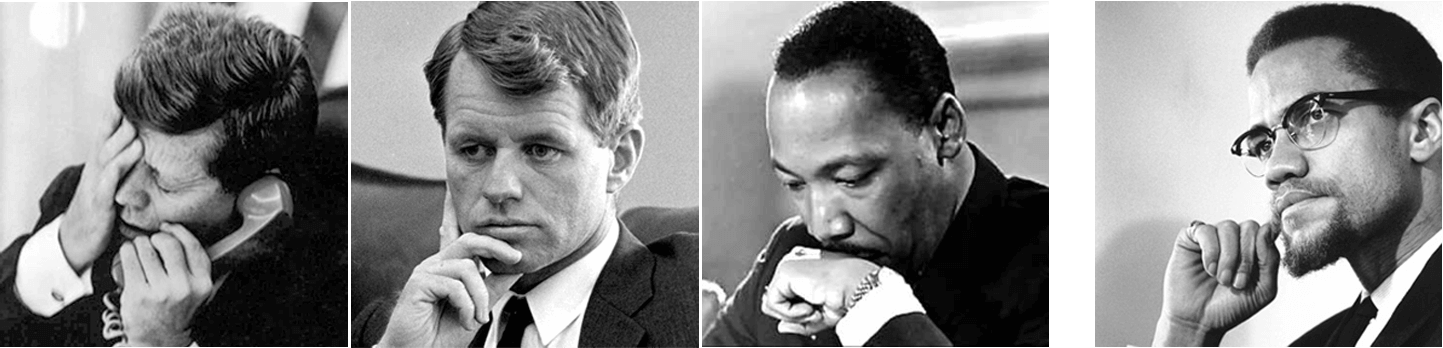
Gafford begins the show by proclaiming that Sirhan Sirhan was the assassin of Robert Kennedy in the kitchen pantry of the Ambassador Hotel the night he won the California primary. This shooting was the culmination of the major assassinations of the sixties: President Kennedy, Malcolm X, Martin Luther King just two months prior, and now RFK. Gafford does not say anything about the skepticism and criticism of the other cases. Or that—as David Talbot notes in his book Brothers-- RFK himself had instantly voiced doubts about the true circumstances of the murder of his brother.
Gafford calls Sirhan the assassin of Robert Kennedy mostly because he was convicted at his trial. There is no mention in the program of the name of William Harper. Which is a major excision. Why? Because Harper was an esteemed and veteran criminalist who did a lot of work for the Pasadena police. The only way one can leave out Harper is by not mentioning the name of DeWayne Wolfer.
Wolfer was a leading ballistics expert for the LAPD. To put it mildly, Harper did not think very much of Wolfer’s work. Harper had gotten in contact with Sirhan’s lead lawyer, Grant Cooper, and left a message. That message told Cooper not to accept Wolfer’s testimony as any kind of final word on forensic matters. Harper even told DA Evelle Younger not to do so. (The Assassinations, edited by James DiEugenio and Lisa Pease, p. 555) Cooper went beyond ignoring Harper’s warning. Sirhan’s attorney ended up stipulating to the evidence Wolfer and the LAPD presented against his client. In other words, Sirhan’s trial was really not about his guilt or innocence in the death of Robert Kennedy.
In these 37 minutes, there is no mention of either Harper or Wolfer. And we now try to explain why. Harper was so disturbed by the outcome of Sirhan’s trial—where he was found guilty and sentenced to death—that he visited the LAPD archives afterward in 1970. He wanted to examine the evidence himself, without Wolfer’s spin. He came to a rather startling conclusion. He stated that one of the victim bullets and the RFK neck bullet did not match and were not fired from the same gun. He further discovered that one of the test bullets Wolfer fired had the wrong gun number on it. The serial number of the alleged murder weapon was H53725. The serial number on the evidence envelope for the test bullets was H18602. These disclosures render dubious Wolfer’s claim at trial that ”…no other gun in the world fired the evidence bullets.” (ibid, pp. 556-57)
Wolfer claimed to have done all sorts of tests and examinations on the ballistics evidence. Yet there are no such records to back up these claims, either in written form or in pictures. As Lisa Pease wrote, “…it is beyond belief that Wolfer just forgot to record his examinations, and suggests instead that perhaps the examinations were not producing the desired findings.” (ibid, p. 559)
Marshall Houts was a lawyer and former FBI agent. He was also familiar with Wolfer’s poor record. He wrote to Younger:
Wolfer suffers from a great inferiority complex for which he compensates by giving the police exactly what they need to obtain a conviction. He casts objectivity to the winds and violates every basic tenet of forensic science and proof by becoming a crusading advocate. (Pease, A Lie Too Big to Fail, p. 210)
In an affidavit, Harper really applied the coup de grace to Wolfer’s work. He wrote that two guns were involved in the RFK murder, one positioned behind RFK and one in front of him. Kennedy was killed by the gun from behind him. Harper then concluded in a rather quietly thunderous manner: “It is extremely unlikely that any of the bullets fired by the Sirhan gun ever struck the body of Senator Kennedy.” (ibid, p. 205)
In other words, the trial that Gafford relies upon was a miscarriage of justice. And for Cooper to have accepted Wolfer’s testimony was a type of malpractice that bordered on negligence. What can one say about a program that never mentions any of this?
How did Harper come to his conclusion that there were two firing positions in the pantry that night? Besides his own ballistics work, there was the autopsy report of Thomas Noguchi. Which the late Cyril Wecht once deemed as the finest medico-legal autopsy he had ever read. Noguchi placed the fatal shot into Kennedy’s skull at a range of “one to one and a half inches”. The other wounds in RFK were at a distance of “contact” to “one inch”. (Philip Melanson, The Robert F. Kennedy Assassination, p. 32) These findings were so problematic to the official story that Noguchi later told a reporter that:
…he was approached by an unnamed assistant DA before entering the grand jury room and was asked to change his distance finding from one to three inches to one to three feet. (ibid)
Why did they want Noguchi to alter his testimony? Because it conflicted with what LAPD considered its 5 best witnesses. Those people all placed Sirhan and his weapon as “…one and a half feet to six feet from Kennedy, not point blank as the technical physical evidence had concluded.” (ibid) One of these witnesses, Karl Uecker, said definitively:
There’s no way that the shots described in the autopsy could have come from Sirhan’s gun…Sirhan never got close enough for a point blank shot. Never! (Melanson, p. 33)
The other very serious problem is that—as Uecker also stated-- Sirhan was always in front of Kennedy. Yet Noguchi’s autopsy stated that all the projectiles that hit RFK came from behind and at extreme upward angles. Uecker is an important witness because he actually had his hands on Sirhan’s gun hand. (ibid, pp. 34-36) After surveying the eyewitness testimony, Philip Melanson wrote:
Kennedy never turned his back to Sirhan nor did the assailant have a path to Kennedy’s right rear side, even if Kennedy was shaking hands. (ibid, p. 36)
The autopsy created insurmountable problems for the official story. And furnished much exculpatory evidence for Sirhan’s defense. But since Grant Cooper stipulated to the prosecution’s evidence, these wide holes in the prosecution’s presentation were not pointed out. For a further example, since the distance was so close, Sirhan would have had to deliver fatal shots in two different planes of fire. That is, he would have had to move the gun either up or down. Which none of the witnesses saw. Also, since the bullet paths were upward, how could Sirhan deliver them if his arm was parallel to the floor, as the witnesses said it was? (Ibid) It’s hard to fathom, but the LA Times report ignores just about all of this.
In addition to these key evidentiary points which are so important, there is also the problem of Gafford’s sources. These are a man named Eric George, the late Mel Ayton and Dan Moldea.
Eric George is the son of jurist Ronald George. Before becoming a judge, Ronald George successfully defended the conviction appeal of Sirhan. Naturally, Eric is eager to argue for that decision. Mel Ayton was an incontinent defender of the official stories in the JFK case, the MLK case and the RFK case. (Click here for a review of his work https://www.kennedysandking.com/john-f-kennedy-articles/ayton-review) Dan Moldea was a critic of Oliver Stone’s film JFK, and although once dubious about the RFK official story, he later became a stalwart defender of the verdict. As the reader can see, Gafford has loaded up the program, down to his quoted sources.
One of the targets of the program is Robert Kennedy Jr. The program pretty much blames him for any controversy about Sirhan’s guilt. This is simply not the case. Long before he took up the cause of Sirhan’s innocence, there were critics of the official story who got some attention. Just to mention a few, there was Lillian Castellano, who graced the pages of the legendary LA Free Press. She argued that there were too many bullets fired in the pantry to have all come from Sirhan’s eight-shot weapon. There was William Turner, who co-wrote a book that was the first overall critique of the case, and essentially drove holes into all parts of the official story. Then there was Phil Melanson, who wrote or co-wrote at least three books on the RFK case. Most currently, there is Lisa Pease, who first wrote a landmark two-part essay for Probe Magazine, and then the previously mentioned book on the case. So if Robert Kennedy Jr disagrees with the official story, it’s because he is well read in the critical literature on the case. Which is conveniently left out of the program.
Moldea actually says that he managed to counter all the criticism about the ballistics in the case in his book, The Killing of Robert F. Kennedy. This writer reviewed that volume, and spent 21 pages showing that Moldea did no such thing. (DiEugenio and Pease, pp. 610-31) His attempt to solve all the problems was faintly humorous: with RFK’s body flying 3 feet toward Sirhan across the room, a remarkable movement which no one saw. And, in fact, most of the witnesses said RFK fell backward. But with Moldea, we are to somehow think that RFK was propelled forward toward Sirhan about three feet so he could be shot at close range--and then, somehow and ultimately on his back about 4-5 feet, since that is where and how he was photographed. As this author wrote back then, can no one really have seen such an acrobatic feat?
There is also no mention in the program of Special Exhibit Ten. Which, again, shows just how selective the show is. This was a secret comparison photograph made between the RFK neck bullet and a test bullet fired from the gun Sirhan allegedly used. It was only to be utilized if the case went to trial again. But it was later discovered that this was not really what the picture represented. It was a comparison between the RFK neck bullet and a victim bullet. (DiEugenio and Pease, p. 564) But it was even worse than that. Because as Sirhan researcher Lynn Mangan found out upon further inspection, the Kennedy neck bullet originally bore the marking ‘DWTN’ on the base, and the victim bullet bore only a ‘6’. Mangan found out that the true original markings were respectively, ‘TN 31’ and ‘X’. As Lisa Pease noted, “Someone had switched the bullets and then created the photograph.” Which begs the question: Did Wolfer ever get a match between the gun in evidence and an RFK bullet? (ibid, p. 565)
If one can comprehend it—and you can by now-- the Girl in the Polka Dot Dress is not in the program. Over a dozen witnesses saw this striking-looking woman with Sirhan that night at the Ambassador Hotel. And she is the last person that Sirhan recalls talking to, as she shared coffee with him. She then was standing closely next to him in the pantry, it looked like she was almost holding him. (ibid, p. 585) After the shooting, unlike virtually everyone else, she frantically ran out of the room. As she escaped down the stairs, three witnesses said she stated, “We shot him! We shot him!” Two were the Bernstein couple. The other was Sandy Serrano, who talked about it live on TV with reporter Sander Vanocur that night. (Melanson, pp. 99--100) Earlier that day, she had told a man she met that the people she saw were “out to get Mr. Kennedy tonight at the winning reception.” (DiEugenio and Pease, p. 590)
The fact that she was wearing a polka dot dress, was seen with Sirhan multiple times, was sharing coffee with him before they went into the pantry, and then ran out of the room and said what she did, this is all strong evidence that Sirhan was hynoprogrammed and set up to do what he did. And the work of journalist Fernando Faura indicates that the girl knew she was up to something lethal, was reluctant to do it, and was looking to get out afterward. (DiEugenio and Pease, pp. 589-91)
And when one factors in the work of Harper and Noguchi, it appears that Sirhan was performing a kind of diversionary function for the real killer from behind. That is quite a large piece of the puzzle for the show to leave out.
But what does one expect from the LA Times?
(Thanks to reader Jeff Hansen for alerting us to this video in the first place)


