
Did Shirley Martin Deserve This?
By James DiEugenio
For a rather mild book that is not even about the JFK assassination, Kaitlyn Tiffany’s The Housewives’ Underground has now elicited a second violent reaction in the MSM. We already noted the piece by Ash Carter in Air Mail where the author did just about all he could to heap scorn on the first generation of Warren Report critics. After noting all the shortcomings in Carter’s article, I then wrote him a short letter about what he should really be considering in the way of evidence. (Click here https://www.kennedysandking.com/john-f-kennedy-articles/an-open-letter-to-ash-carter)
Now there has been another violent MSM reaction over the Tiffany book. This was Jessica Winter’s piece in The New Yorker of August 6, 2026. This particular outburst is aimed at Shirley Martin, one of the two main supporting characters in the book--the other being Maggie Field. (The lead character is Sylvia Meagher.) Apparently, the idea that Martin would pack her kids into her car and drive 5 hours to Dallas to investigate the JFK case—that was too much for Winter. And Martin’s first visit took place even before the Warren Commission heard its first witness. It was in January of 1964. (John Kelin, Praise from a Future Generation, p. 65, e-book version)
Why did Martin take her four kids with her? Because she was homeschooling them. To her, this was part of their learning experience. (ibid) But also hers. Because as a result of the Kennedy assassination, she now subscribed to both the New York Times and the Dallas Morning News. Martin had worked for Kennedy in the 1960 election. She and her daughter Vickie opened a Democratic headquarters in the very small town of Hominy, Oklahoma—population of 3,000 in 1960. She had read up on Senator John Kennedy, and she liked what she learned. After he won his narrow victory, Martin wrote press secretary Pierre Salinger, warning him to watch out, since losing candidate Richard Nixon might call for a recount. Salinger actually wrote her back on this. (ibid, p. 67)
Shirley Martin did some valuable work in her several travels to Dallas. She timed how long it would take Oswald to go from the Texas School Book Depository back to his room on Beckley Street after the shooting. She talked to a Beckley landlord and learned Oswald was making phone calls from that rooming house and speaking in a foreign language while he did. (ibid, p.66)
She tracked down Dealey Plaza witness Jean Hill. In an important phone interview Martin did with her, Hill unloaded some gripping information. First, unlike what the Warren Report would later hold, she did not hear just 3 shots. She said there might have been as many as six shots. She also said that her friend Mary Moorman had taken a picture of the Texas School Book Depository around the time of the shooting. She had seen it, and there was no one in the so-called sniper’s nest. She said Warren Reynolds had been a witness to the murder of patrolman J. D. Tippit. He was not interviewed by the FBI until two months later. He would not identify Lee Oswald as the killer. He was then shot afterward. She also added that she saw a man running from one side of Dealey Plaza towards the trestle. She thought he might have been Jack Ruby. Finally, she told Martin that Moorman would likely not talk to her. They had been getting threatening phone calls, advising them to be quiet. When they went to the Dallas Police to complain, they got the brush-off about it. (Kelin, p. 68)
But Martin did not just investigate the murder of President Kennedy.
She was also one of the first to talk to Acquilla Clemmons. Clemmons was a witness to the fatal shooting of Tippit. She told Martin and her daughter Vickie that she had been approached by someone she thought was with the police, and this man told her she should not talk about what she saw. But she did tell them that she knew Tippit and she said he was “a pretty nice guy.” (Joe McBride, Into the Nightmare, p. 492)
According to Clemmons, the killer could not have been Oswald. Because she said two men were involved, and neither one fit Oswald’s description. She said the actual gunman was short and stocky. The other man was tall and wore yellow Khaki trousers and a white shirt. She said they were on opposite sides of the street. They seemed to be in communication with each other, but she could not say for sure if they were together. (McBride, p. 493)
One would think this kind of crime description would merit being visited by the FBI or the Warren Commission. According to Clemmons, such was not the case. She only had a visit from what she thought was a local policeman telling her to be quiet. (Kelin, p. 96) But according to her, they also said if she did talk, she might be in physical danger. It was Martin who put Mark Lane in contact with Clemmons. Lane convinced her to do a filmed interview. Martin told Meagher she had taped her discussion with Clemmons and she thought it was the source for reporter Dorothy Kilgallen’s published interview with her—although the reporter did not name Clemmons. (McBride, p. 493)
One of the things that convinced Martin something was wrong in the Kennedy case was what the police had apparently done with Clemmons. In addition to requesting she not talk, they never turned her over to the Warren Commission. Clemmons did not appear before that body. This is why Martin once said the Dallas Police were like the Keystone Kops in the JFK case. (Kelin, p. 68). Therefore, someone had to really investigate the crime to uncover what had not been done. Which was a lot. For instance, Martin did not think the rifle in the backyard photos was the same one the Commission produced. (Kelin, p. 70)
In addition to the above, on the advice of Vince Salandria, Martin interviewed Father Oscar Huber. Huber had seen Kennedy’s corpse for last rites, and he said he saw a wound over the left temple. (Kelin, p. 121) Martin also placed Lane in contact with Marguerite Oswald, who asked the lawyer to represent her son before the commission. Lane agreed to do so, but the commission would not allow it. Martin was also in direct contact with Ruth and Michael Paine. Ruth said that Martin both called her and mailed her letters. Ruth Paine informed on Martin’s visits to the FBI. (Ibid, pp. 70-71) I
In a stark tragedy, Vickie Martin died as a result of an auto accident in 1967. Lane thought so much of her and Shirley that he dedicated his second book, A Citizen’s Dissent, to Vickie. (Kelin, p. 421)
One would think that an American citizen doing all the above on her own for no financial reward and little or no notoriety, that this kind of volunteer action would be praiseworthy. After all, it was pretty clear that the local police and the FBI were not really investigating the case. And further, Martin was getting some very interesting results, which contradicted the official story. That would be notable on its own. Yet, for whatever reason, Jessica Winter never mentions any of her achievements—as noted above—in her New Yorker article. To uncover and then investigate witnesses who were told to be quiet, who were being threatened, her early understanding that someone or some group was fiddling with the evidence in the case--somehow none of these achievements seem important to Winter.
Instead, what does Winter do? She uses the book by Richard Warren Lewis and Larry Schiller, The Scavengers and Critics of the Warren Report, as a source to begin her belittlement of Martin. This is inexcusable. Anyone who reads that book will recognize it as a deliberate hatchet job on the first generation of critics. Which was in keeping with Schiller’s role in the case. He was a frequent informant for the FBI, 47 pages worth of informing—this writer has seen them. Yet Winter says that Martin was given much space in the Lewis/Schiller book and that she came off “as a narcissistic kook.” Well, what does one expect from a smear job by a prolific FBI source on the JFK case? And to use that book, and to not inform the reader of Martin’s real achievements tells us a lot about where Winter is coming from.
Which Winter then describes herself. Consider the following passage:
It is generally understood today, as it was not understood sixty plus years ago, that those who subscribe to conspiracy theories tend to do so in order to make sense of an unstable reality, to feel a modicum of stability and control, to find a sense of belonging in a group.
First of all, the idea that President Kennedy was killed by a conspiracy is not a theory. It is a fact that the Warren Commission covered up; by smearing the critics, people like Schiller and Lewis aided the Commission. Second, there is no evidence I can see that makes Martin into some kind of misfit. Third, the “belonging in a group” effort came not from any personality quirk, but from the JFK case. The people independently investigating that case at that time quite naturally either ran into each other or sought each other out. They wanted to share information. One nexus point, which Winter does not mention, is through M. S. Arnoni’s magazine The Minority of One. That publication was one of the few that printed articles and letters on the JFK case.
But Lewis and Schiller provide Winter’s launching point for her real destination. Somehow, the early Warren Commission critics are now to be related to the QAnon movement and the anti-vaxxers. Yet even she says that the Commission’s early critics bear little resemblance “ to these more recent strains of hysteria”—for instance, today people have the internet and do not have to drive 300 miles to Dallas.
Being a critic of the Warren Commission was not an act of hysteria. It was a matter of painstaking discernment of a faulty factual basis. First, by going through newspaper and other published accounts, and then the Warren Commission volumes. Which Martin purchased.
Winter then tries to balance things out a bit by saying that the critics were right in saying the Commission arrived at an already decided-upon conclusion, there was mishandling of evidence, and that Oswald did do some rather weird things in the last couple of years of his life. This is only momentary.
Right afterward, she then winds up to deliver her Sunday punch. She quotes Martin as wisely predicting that if America does not do anything about what happened to JFK in Dallas, it could happen again to Bobby Kennedy in another city. Now any fair-minded person would have to give Martin credit for that prediction. After all, she made it a full 18 months before Senator Robert Kennedy was murdered in Los Angeles. As Lisa Pease and others have shown in detail, that crime was also covered up. But Winter does not do that. In fact, she does not even refer to it. And there is not even one sentence of appreciation for Martin’s insight.
What does she do instead? She uses it to go ahead and relate Shirley Martin to Robert Kennedy Jr. and his followers who are skeptical about vaccines. How one can make such a transgenerational leap from that pithy prediction amid the four major assassinations of the sixties, to the Covid crisis, that is simply off the wall. But it’s just as bad as her ending. In which she says, “We are all of us looking for meaning to fill our empty lives, and it takes heartbreaking courage to admit when there’s none to be found.”
Which is thorough malarkey. Shirley Martin and the early critics were not looking for meaning in their lives. They would have been much better off maintaining those normal lives. What they were looking for is what really happened on November 22, 1963. Because the MSM and the Warren Commission were not providing any credible answers. Not only did Oswald not kill President Kennedy, but no one seemed to notice something else that quickly happened. Namely, that President Johnson reversed Kennedy’s policy in Southeast Asia. He first declared war on North Vietnam in 1964, and then shipped 175,000 combat troops to Indochina by the end of 1965. On the day Kennedy was killed, there was not one in theater. That drastic escalation eventually led to 3 million Vietnamese and 58,000 Americans being killed. And if one adds in Richard Nixon’s moronic invasion of Cambodia, that makes 2 million more.
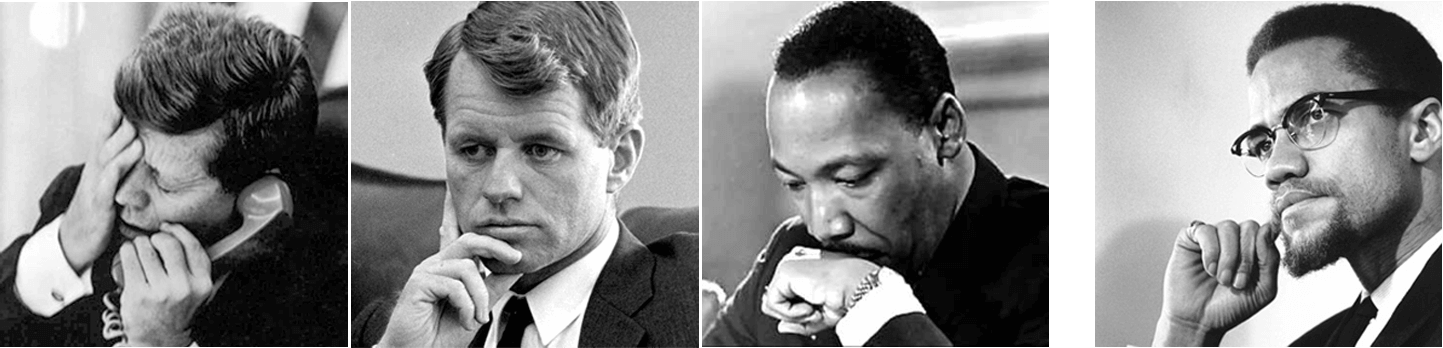
Four major political leaders were murdered from 1963-68. All under the most suspicious circumstances. To say the least, this made for some profound changes in American life. To try and dismiss what happened as the aimless meandering of a lost housewife wandering around searching for meaning is one big reason the MSM has lost its credibility. Winter’s article is an object lesson as to why.


