

Preamble
On April 1, 2026, Kennedy’s and King published our 3-part article, “The War On Oliver Stone’s JFK Records Act” [Part I, Part II, Part III]. Prior to that, Kennedy’s and King published Andrew Iler’s two ground-breaking articles on the Assassination Records and Review (ARRB) and their final legal orders on postponed assassination records [Part I, Part II]. Further, we had written to Representative Anna Paulina Luna requesting oversight of the JFK Records Collection in its entirety (9/29/2025 letter to Rep. Luna), including the duty of the National Archives (NARA) to release all of the ARRB’s assassination records, including its final release orders, and also finally publish a complete and transparent inventory and index of each assassination record ever handled at the National Archives.
Fortunately, those articles and our letter were well received by the JFK research community and have now made an impression with Representative Luna’s Task Force on Declassification of Federal Secrets.
On June 9, 2026, we were invited to meet with Representative Luna and her staff in Washington, D.C. to present our findings and recommendations in person. Accompanying us was Jeff Crudele, host and creator of the podcast “JFK The Enduring Secret”, who has an excellent grasp of the issues and had made key contributions to our September 29, 2025 letter to Representative Luna.
We are pleased to report that our meeting with Representative Luna was quite productive. We were more than impressed with the energy and attention that Representative Luna gave to the transparency issues surrounding the JFK Records Collection and the law that requires a complete and accountable release of assassination records.
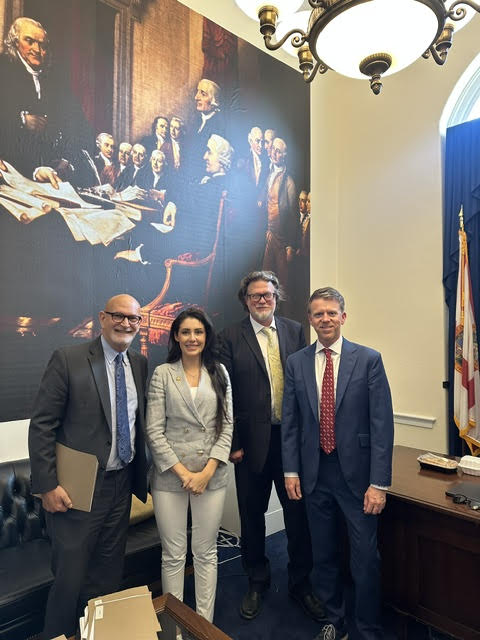
Jeff Crudele, Rep. Anna Paulina Luna, Andrew Iler and Mark Adamczyk on June 9, 2026, at her Capitol Hill office
Below you will see the meeting brief and recommendations that we presented to Representative Luna at the meeting. Representative Luna showed positive interest in the recommendations outlined in the brief, and we committed to lending further assistance in any way that is helpful to Representative Luna and her excellent team.
Meeting Brief and Recommendations
June 9, 2026
Representative Anna Paulina Luna
226 Cannon House Office Building
Washington, DC 20515
Dear Congresswoman Luna:
RE: CONGRESSIONAL OVERSIGHT OF THE JFK RECORDS ACT AND
JFK ASSASSINATION RECORDS COLLECTION
Thank you for granting us the opportunity to speak to you directly about the ongoing issues of non-compliance regarding the JFK Records Collection Act and known deficiencies in the JFK Records Collection in custody at the National Archives. Many of the problems that are outlined in this brief have been conveyed to you and other members of Congress over the past year in prior correspondence. We appreciate your leadership in the declassification of the JFK Records and believe that Congress must address these issues in the Task Force’s Final Report in order to meaningfully restore public faith in the government’s handling of the records pertaining to the assassination of President John F. Kennedy.
At the conclusion of Oliver Stone’s 1991 film, JFK, the public was made aware that the files of the House Select Committee on Assassinations (HSCA) were locked away until the year 2029. The overwhelming public response to this unjustifiable secrecy led to the unanimous bipartisan passage of the JFK Records Collection Act only 10 months later.
The JFK Records Act imposed a presumption of immediate disclosure for all government records related to the assassination of President Kennedy. To ensure this would happen in an independent, accountable and enforcement manner, this powerful declassification law created the Assassination Records Review Board (ARRB), which operated from 1994 to 1998. The ARRB declassified millions of pages of assassination records under the precise standards of the Act, and as discussed in the Reference Documents linked below, the ARRB faced significant challenges and resistance.
Last year, the House Task Force on the Declassification of Federal Secrets was able to deliver what we believe was truly groundbreaking disclosure regarding the JFK Records Collection. During his May 20, 2025, under oath testimony to the Task Force, Judge John Tunheim, the former Chair of the ARRB, spoke to many of the significant problems that have obstructed and prevented the fulfillment of the mandate of full disclosure of the JFK assassination records and compliance with JFK Records Act. This consequential testimony, now part of the Congressional record, provides a strong foundation for oversight action. Specifically, Judge Tunheim advised the Task Force that:
- The ARRB issued more than 27,000 final agency orders for the release of assassination records where agencies sought postponement.
- At the time of the mandated 2017 final release date (under the Act), there should have only been about 1,500 redactions left to deal with.
- Many of the newly released (2025) records were never seen by the ARRB, and were assassination records transferred to NARA “at a later time.”
- It did not take a rocket scientist to figure out that they (agencies) were waiting out the ARRB’s term.
Judge Tunheim has been clear in other public forums that, based on a close review of assassination records made available to the ARRB, there was no longer any reason to protect any approved postponements as of 2017, and certainly not in 2026.
Rather than dealing with a small number of remaining redactions in 2017, as Judge Tunheim stated, what we have seen instead is a rolling release of tens of thousands of records by NARA since 2017. Further, none of these releases is tied to the legal orders issued by the ARRB in the 1990s or to a subject guidebook or uniform index of the entire JFK Records Collection as required by the Act.
As explained below, we believe the unavoidable oversight issue today is that auditing and final disclosure is needed for three (3) distinct tranches of assassination records:
- pre-JFK Act transmissions of records to NARA by agencies, including “sequestered” collection(s) of legislative investigation records;
- records transmitted to NARA after passage of the Act on October 26, 1992 and subject to review, postponement and final release decisions of the ARRB; and
- records transmitted by government offices and agencies to NARA after September 30, 1998, which avoided mandatory ARRB independent review under the standards of the Act in their entirety.
THE JFK RECORDS COLLECTION – CURRENT STATUS UNDER THE LAW
What has become apparent since the termination of the ARRB’s mandate on September 30, 1998, and now more than eight (8) years past the October 26, 2017 statutory deadline to release all of the JFK assassination records, is that there has been a systemic breakdown with respect to ministerial duties mandated by the JFK Records Act. Specifically, the Archivist of the United States and NARA are obligated to maintain a functional inventory and index of all assassination records in the Collection pursuant to section 4(a) of the Act, and to administer the legal orders issued by the ARRB in respect to the public disclosure of the assassination records it reviewed between 1994 and 1998.
Fortunately, Congress retains jurisdiction over the JFK Records Collection at the National Archives and is therefore able to take strong action that will result in compliance with the law and full disclosure of all assassination records to the public.
SECTIONS 4(e) & 7(l) – OVERSIGHT JURISDICTION
Sections 4(e) and 7(l) of the JFK Records Act specifically mandate that the House and Senate Oversight Committees shall have continuing oversight jurisdiction of (a) the JFK Records Collection in the custody of NARA, and (b) the disposition of the postponed assassination records after the termination of the ARRB pursuant to the ARRB’s Final Determinations.
To date, neither the House or Senate Oversight Committees have held any oversight hearings with respect to the JFK Records Collection or the disposition of the more than 27,000 legal orders issued by the ARRB during its operations between 1994 and 1998. We hope this will change after considering the compliance issues and recommendations discussed herein.
SECTION 4(a)(2) — THE JFK RECORDS COLLECTION DEFINED
The mandatory contents of the JFK Records Collection remains a topic of public speculation and confusion. To clarify, the JFK Records Collection by law, as defined in section 4(a)(2) of the JFK Records Act, shall definitively include:
- All assassination records that were transmitted to the National Archives or disclosed to the public in an unredacted form prior to the date of enactment of the Act (October 26, 1992); and
- All assassination records that are required to be transmitted to the National Archives under the JFK Records Act from October 26, 1992 and beyond, including records postponed (from immediate disclosure) by the ARRB under the Act, and records transmitted to the National Archives after the ARRB terminated its operations on September 30, 1998.
The Collection, by definition under the JFK Records Act, shall also include:
- A central directory of identification aids created for the tracking of each record transmitted to the Archivist, to result in the creation of a uniform system of electronic records; and
- All records of the ARRB.
Critically, section 4(a)(1) requires the Archivist to prepare and publish a subject guidebook and index to the entire JFK Records Collection, as defined above. This amounts to a full and complete inventory of all assassination records held by NARA, including the disclosure status of each record.
SECTION 12(b) – FINAL CERTIFICATION OF THE JFK RECORDS COLLECTION BY THE ARCHIVIST OF THE UNITED STATES
Section 12(b) of the JFK Records Act mandates that “The remaining provisions of this Act shall continue in effect until such time as the Archivist certifies to the President and the Congress that all assassination records have been made available to the public in accordance with this Act.”
In order to legally certify complete disclosure of all assassination records to Congress and the President as required by section 12(b) of the JFK Records Act, the Archivist must account for and make public the mandated JFK Records Collection in its entirety.
As discussed above, the foundational starting point for the Archivist’s certification of complete disclosure is section 4(a) of the JFK Records Act. Without accounting for and disclosing the JFK Records Collection in its entirety, the public cannot be satisfied that all assassination records have in fact been released or properly withheld under the JFK Records Act.
OVERSIGHT - THREE (3) DISTINCT TRANCHES OF RECORDS
Practically, there is a path forward for House and Senate Oversight to ensure a transparent and complete release of the entire JFK Records Collection.
First, the 27,000 ARRB final release orders (known as “Final Determination Notifications, or “FDNs”) establish a legal record of detailed postponement decisions made by the ARRB between 1994 and 1998. Following FOIA requests and in-person searches for the FDNs at the National Archives in College Park, less than 3 percent of the FDNs have been accounted for at NARA. The Archivist must be questioned on the whereabouts and administration of these final release orders of the ARRB and the disclosure status of each associated postponement contained in those records. As a result of the ARRB Final Determinations not being made publicly accessible as required by the Act, the public has been deprived of its right under the law to seek judicial review of the ARRB’s final agency actions and to ensure compliance with the law.
Second, it is necessary to audit and create an inventory of all assassination records that were transferred to NARA by originating agencies before the JFK Records Act was enacted on October 26, 1992. Under the JFK Records Act, assassination records placed at NARA prior to the Act were not required to have a record identification form (RIF) number, and critically, were not subject to review by the ARRB. Internal agency memoranda from early 1992 regarding the HSCA-CIA Sequestered Collection show that transmissions to NARA during this early time period require particular scrutiny and oversight. An audit and inventory of these early records transmissions is the only way to ensure that these records are now indexed and publicly facing, or if they remain sequestered.
Third, available records corroborate Judge Tunheim’s statement that sensitive assassination records were transmitted to NARA “at a later time” (e.g. after the September 30, 1998 closure of the ARRB). This group of records did not go through review under the exacting standards mandated by section 6 of the Act at all. As a result, any redactions or withholding done after September 30, 1998 would have been done solely by the agencies seeking continued protection of their own assassination records, which is contrary to the Act. Regardless, section 5 of the Act required an identification aid (and RIF number) for each record in this group for tracking purposes and mandatory periodic review to downgrade and declassify these records under the standards applied by the ARRB.
Without an accountable inventory and index of this last group of records, the public has not been able to identify exactly the number and identity of documents transferred to NARA after the ARRB’s mandate terminated. The absence of the mandated inventory and index of records creates a black hole of unaccountability, as the public has no way to verify whether post-ARRB releases by NARA represent a full or partial disclosure of remaining withheld assassination records.
FINAL REPORT OF THE TASK FORCE – OVERSIGHT RECOMMENDATIONS
Congress must protect the legislative intent at the very core of the JFK Records Act which mandated an enforceable, accountable and independent process for the public disclosure of all assassination records. The rubber hits the road for Congress’ statutory responsibilities under the Act when it comes to ensuring that the Archivist of the United States does not illegitimately certify the fulfillment of the Act and that all assassination records have been released without the crucial legally mandated requirements for such certification being achieved.
There must be a full and up-to-date inventory/index/directory of all of the records in the Collection pursuant to section 4(a) of the JFK Records Act. This inventory must ensure that all of the records are accounted for and inventoried from:
- records transmitted to NARA prior to October 26, 1992;
- records collected and reviewed pursuant to the JFK Records Act between October 26, 1992 and September 30, 1998 (including all of the ARRB records i.e. the original ARRB file folders for each assassination record and all ARRB Final Determinations for each record reviewed by the Review Board);
- records transmitted to NARA after the ARRB terminated its operations on September 28, 1998; and
- records that have been withheld by agencies (including operational records of the CIA identified by the ARRB) and records still held and sequestered in the Legislative Archives. This includes the HSCA-CIA Collection and the collection of Senate Select Intelligence Committee (SSCI) records generated by the Church Committee and Schweiker-Hart subcommittee, all of which are assassination records to be indexed and publicly disclosed in the JFK Records Collection at NARA despite any conflicting rule or resolution with respect to these Congressional investigations between 1976 and 1979.
The U.S. Government Accountability Office (GAO) is ideally situated to conduct an audit on the JFK Records Collection to ensure compliance with the Act and in respect to both the accuracy of the inventory of records and the completeness of the public disclosure of all assassination records. The GAO has been previously engaged to conduct oversight of NARA’s compliance with its legal mandates in other areas not related to the JFK Records Collection.
Respectfully, Congressional oversight of the JFK Records Collection should include the following measures:
- Engage the U.S. Government Accountability Office (GAO) to undertake a thorough audit of the JFK Records Collection at the National Archives in order to ensure the accuracy and completeness of the Collection’s inventory and that every record has been publicly disclosed before a certification by the Archivist of the United States is accepted by Congress.
- Require the immediate release of all the ARRB Final Determination orders as required by the Act.
- Release all records of the ARRB, including Lotus Notes electronic records and review tracking system, audio recordings of closed meetings, and all original file folders for each assassination record.
- Remove any special rules or resolutions for the sealing and/or sequestering of congressional investigative records and release all records of the Church Committee, Schweiker-Hart sub-committee and the HSCA, including staff notes and all transcripts from executive sessions.
- Pursue known to exist Bethesda autopsy records and evidence. A list of such known records is provided in a separate document prepared by Douglas Horne, former Senior Military Analyst for the ARRB.
- Require the Department of Defense, including military intelligence, to release all assassination records.
- Require the release of all of the records of the National Archives and Records Administration regarding the assassination, including but not limited to:
- Transmittal data and receipts for all assassination records;
- Internal NARA policies, procedures, memorandum, and legal memoranda and opinions regarding the JFK Records Act and the JFK Records Collection; and
- Correspondence with other federal agencies regarding assassination records and the JFK Records Collection.
- Question past and present senior Archivists at NARA under oath regarding:
- The handling and administration of the ARRB’s Final Determination release orders; and
- Records transferred to NARA after termination of the ARRB on September 30, 1998, including disclosure of a complete inventory and specific reasons for internal postponement decisions from September 30, 1998 until present day.
- Reconstitute or appoint a new temporary ARRB or similar independent agency to handle final declassification decisions of every postponed record in the fully-indexed Collection not reviewed by the original ARRB and which still may require legitimate protection under the standards of the JFK Act (if any).
CONCLUSION
We again thank you for this opportunity to meet with you and your staff to discuss these vitally important issues regarding the ongoing compliance issues impacting the JFK Records Collection and fulfilment of Congress’s clear mandate established by the JFK Records Act. We have included a Reference section below with links to documents that may assist you and the Task Force by providing evidence and further details of the problems that we have identified in this brief. We offer our continuing assistance with ensuring that the issues and recommendations outlined above are fully and accurately included in the Task Force Final Report.
Yours very respectfully,
Mark Adamczyk Jeff Crudele Andrew Iler
REFERENCE DOCUMENTS
- 2025.09.29 – Letter From Adamczyk/Crudele/Iler to Rep. Anna Paulina Luna
https://jfkchokeholds.com/wp-content/uploads/2025/09/Dear-Congresswoman-Luna-09_29_2025.pdf
- 2025.09.12 – Letter from Oliver Stone to Secretary Marco Rubio
- 2025.09.12 – Letter From Doug Horne to Rep. Anna Paulina Luna
- 2026.04.19 – Letter from Jim DiEugenio to Rep. Anna Paulina Luna
- Part I – The War On Oliver Stone’s JFK Records Act
- Part II – The War On Oliver Stone’s JFK Records Act
- Part III – The War On Oliver Stone’s JFK Records Act
- Part I – Critical ARRB Final Determinations Buried and Ignored
- Part II – Critical ARRB Final Determinations Buried and Ignored
Draft Request Letter to the U.S. Government Accountability Office
Chair, Task Force On the Declassification of Federal Secrets
226 Cannon House Office Building
Washington, DC 20515
Comptroller General of the United States
U.S. Government Accountability Office
441 G Street, NW
Washington, DC 20548
Subject: Request for GAO Audit of the JFK Assassination Records Collection at NARA
Dear Comptroller General Dodaro:
Pursuant to the President John F. Kennedy Assassination Records Collection Act of 1992 (Public Law 102-526, the “JFK Act”), I request that the Government Accountability Office conduct an independent audit of the JFK Records Collection maintained by the National Archives and Records Administration (NARA).
The audit’s primary objective should be to verify the creation and public availability of an accurate, complete, and searchable inventory, index, and catalog of all assassination records in the Collection. This is a necessary prerequisite before the Archivist of the United States can certify, pursuant to Section 12(b) of the JFK Act, that all assassination records have been made available to the public in accordance with the Act.
Specifically, the audit should assess:
- Whether NARA maintains a full and accurate public index/catalog/inventory of all records transferred to the Collection, including those identified before, during, and after the Assassination Records Review Board’s work.
- Compliance with the JFK Act’s requirements for organization, identification, and public disclosure of records.
- Any gaps in completeness, search processes by originating agencies, or public access tools.
I appreciate GAO’s longstanding expertise in evaluating federal records management and agency compliance with statutory mandates. Please advise me if additional information is required to initiate this review.
Thank you for your attention to this important matter of public transparency and historical accountability.
Sincerely,
Representative Anna Paulina Luna
Chair, Task Force On the Declassification Of Federal Secrets
[Contact Information]


