
Truth and Lies: Who Killed JFK? - Part 4
Upon Oswald’s return from Mexico City, the program says that, somehow, there was a big mistake made by the CIA in not following up on him after he allegedly visited both the Cuban and Soviet embassies there. Which is a highly problematic thesis. As stated previously, if--as the show says--the CIA had surveillance on Oswald in Mexico City, then why have they never been able to produce a picture of him at either embassy? And why could they not send a proper voice tape of his up to Dallas for the FBI agents questioning Oswald in detention?
All the indications from the declassified record indicate that the CIA was taken by surprise when confronted by the alleged presence of Oswald in Mexico City. At first, they could not confirm he was there, how he got there, or how he left. They talked to their men inside the Cuban embassy with negative results; they sent the wrong pictures up to the Commission; they even said their cameras were not working on the days he was there etc. (James DiEugenio, The JFK Assassination: The Evidence Today, pp. 294-97) They then tasked the job of putting together an ersatz trail for Oswald to their friends in the Mexican security forces, the DFS. (For example, see John Armstrong, Harvey and Lee, pp. 678-84)
This confusion over Oswald upon his return may have been partly perpetrated by CIA counterintelligence chief James Angleton. His office put out two different cables with false descriptions of Oswald on October 9th and 10th. One was for use inside the CIA. The other went to the FBI, the State Department and the Navy. In fact, it was not until months later, during the Warren Commission inquiry, that even CIA people realized the latter description was wrong. Both cables said Oswald was age 35, with an athletic build, about 6 feet tall with a receding hairline, and the former said he was bald on top. (John Newman, Oswald and the CIA, pp. 398-99) But also, the information about Oswald himself was curtailed in the internal CIA memo. It only covered the information the Agency had up until May 1962. In other words, Oswald’s important activities in New Orleans were cut out. (Newman, pp. 403-05)
This is all relevant to the point the program is making about the tracking of Oswald upon his return from Mexico City. As is the inexplicable removal of the FBI’s Flash warning from the Oswald file. That removal happened on the day the first cable went out, October 9th. That act stopped information on Oswald from being sent to the Espionage Section of Division Five. What makes it even more odd is this: it had been in effect since Oswald’s defection in 1959. (The Assassinations, edited by James DiEugenio and Lisa Pease, p. 222)
Needless to say, none of this is in the ABC special.
II
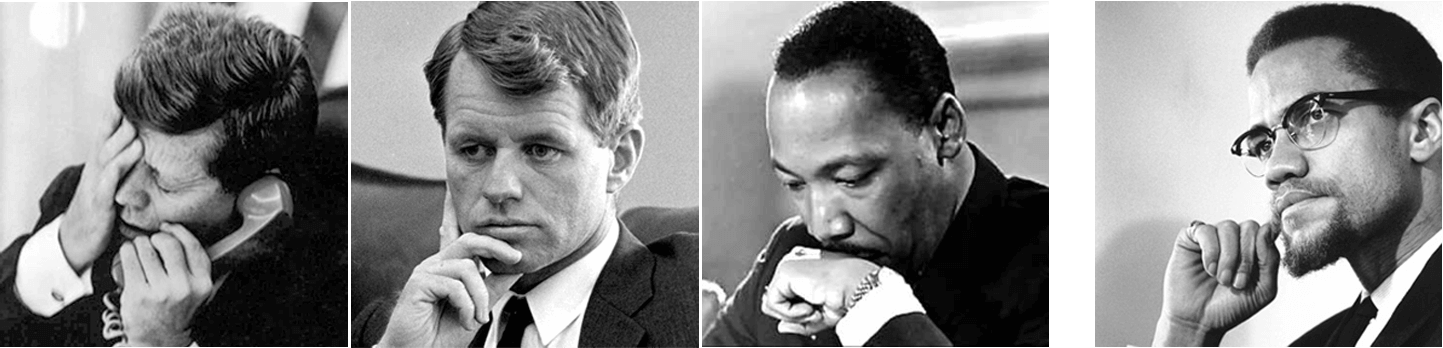
The show tells us that Robert Kennedy knew about the CIA/Mafia plots to kill Kennedy. This is a half-truth. It implies he was somehow involved with them, or knew about them from the start, and took no exception. This is another rather large intellectual failing of the program. The CIA’s internal report on the plots, called the Inspector General Report, has been declassified since about 1995. It is the lengthiest and most revealing document we have on that matter. It very clearly says that the CIA had no presidential approval for the plots, from Kennedy or anyone else. (See IG Report, pp. 132-33)
Further, it shows that Robert Kennedy only found out about them by accident. Because of a rather stupid security breach by one of the mobsters involved, Sam Giancana, in Las Vegas and their coordinator, Robert Maheu. Through this, the FBI found out about the plots. And this is how the info was then relayed to RFK. (Ibid., pp. 57-59) Bobby then requested a briefing, since he did not know anything about the subject. He was upset when he was informed of their length and nature. He told his CIA briefers they should never do anything like this again without telling him. The CIA agreed. But the briefers knew this was a lie, as another phase of the plots was being enacted at the same time. (Ibid., pp. 62-65)
From here, the show now jumps to the premise that RFK suspected that Fidel Castro was involved in the killing of his brother. The best discussion about Bobby Kennedy’s beliefs about who was culpable in his brother’s assassination is in David Talbot’s book Brothers. Bobby Kennedy’s immediate reaction to the news of the assassination was that he was suspicious of three groups: the CIA, the Cuban exiles, and the Mob. He called the CIA Director John McCone, he called in an exile, Harry Williams, and he phoned two of his men on the organized crime/Jimmy Hoffa beat, Julius Draznin and Walter Sheridan. (Talbot, pp. 6-12) There is no mention of him suspecting Castro. And I have never seen any credible report or biography that says RFK ever felt that way. Probably because he knew about his brother’s attempt to establish a rapprochement with the Cuban leader in 1963.
What is remarkable about Bobby’s immediate suspicions is that they correspond to what many notable writers and researchers later decided was likely the case. Namely, that there was substantial evidence that the CIA and Cuban exiles were setting up Oswald in advance. This began in New Orleans in the summer of 1963, and then culminated in Dallas after whatever happened in Mexico City. Those two venues—New Orleans and Mexico City-- provided some highly inflammatory information to make the public think that Oswald was a communist who was then enlisted for the Kennedy assignment. And this was bombarded into the media the night of the assassination.
The facts are that RFK saw through all of this as the mirage it was.
III
Which leads us to ABC’s treatment of Jack Ruby. The show relies on the late Breck Wall to say that Ruby did what he did—killed Oswald in the basement of the Dallas Police Headquarters—because he wanted to be a famous person. (Similar to what the show says about Oswald) They then have Rabbi Hillel Silverman say that Ruby was now in his own mind a hero, perhaps even a martyr. They even trot out the Jackie Kennedy excuse: Ruby killed Oswald to spare Jackie Kennedy the ordeal of testifying at Oswald’s trial. About 47 years ago, author Seth Kantor wrote that Ruby himself told Joe Tonahill that this Jackie Kennedy story was never his idea. It was something made up by his first lawyer, Tom Howard. (The Ruby Cover-Up, p.238)
Incredibly, the show glides over the information that Jack Ruby had manifold organized crime connections. It excuses this by saying that many of us do. This is another instance of unintentional humor on the program’s part. Jack Ruby began his career in Chicago as an underling for the Capone gang. He was also associated with a mob-influenced union, which was involved with violent shakedown operations. Ruby was then part of the Chicago mob moving into Dallas in 1946-47. In fact, the man who was arranging this movement said that Ruby would be moving into Dallas to open a restaurant which would have a second-floor gambling house. And that would serve as a front for Chicago operations. (Henry Hurt, Reasonable Doubt, pp. 172-73) There is an FBI report from 1956 stating that a narcotics runner claimed to have gotten clearance to operate in Dallas /Fort Worth through Ruby. Ruby was also involved, as previously stated, in illegal gambling operations in the Dallas/Fort Worth area. (Hurt, p. 175)
But, beyond that, Ruby was an acquaintance of Lewis McWillie. McWillie was a casino manager for Santo Trafficante in Havana. Ruby visited McWillie on the island, and there is evidence that Ruby visited Trafficante while the Florida mobster was held in detention by Castro. Ruby had once mailed McWillie a handgun. (Michael Benson, Who’s Who in the JFK Assassination, p. 456, p. 272)
This is quite relevant to the JFK case because Trafficante was one of the three mobsters that Robert Maheu recruited for the CIA in their attempts to kill Fidel Castro. A former girlfriend of McWillie, Elaine Mynier, said he was always in the money and had a bodyguard living with him. She saw him with Ruby more than once. And she said it was her impression that Ruby would do anything for McWillie. (Kantor, p. 252) Ruby himself said that McWillie was his idol. (Op cit, Benson)
When we then add in the facts about Ruby’s prolific connections to the Dallas police, and his involvement with CIA gun-running activities into Cuba, then one can connect some dots rather easily. (Sylvia Meagher, Accessories After the Fact, p. 423; Hurt, pp. 401-05) Which ABC apparently does not want the viewer to do.
IV
Dale Myers is then brought on to do two things. First to say that in all the years he has been working this case—decades upon decades—he somehow could not find evidence of a frontal shot to JFK. The program does not mention the previously noted 42 witnesses at Bethesda and Parkland who saw a baseball-sized, avulsive hole in the back of Kennedy’s skull. That is good evidence of a shot from the front. And one of those witnesses is someone they have on the show, Dr. Ronald Jones from Parkland. (Gary Aguilar, Murder in Dealey Plaza, pp. 198-200) Nor does the show mention, as Josiah Thompson describes in Last Second In Dallas, the blood and tissue and brain spatter forcefully flying to Kennedy’s left onto the cyclists riding next to him.
One of the comments on the show is that somehow Time-Life’s attempt to conceal the Zapruder film from the pubic contributed to cynicism about the JFK case. I did not understand what this meant. Because one of the trickiest tactics ABC uses is to curtail the showing of the Zapruder film. The film is cut before it reaches Z frame 313. If you do that, then you fail to show the bullet impact of JFK’s head exploding, and him rocketing backward with such force that he bounces off the back seat. This convinced millions in 1975, when it was first shown on TV, that Kennedy was hit from the front. By the way, it was shown by Geraldo Rivera on his ABC program. According to the late Jerry Policoff, the network did not want Rivera to show the film. He then threatened to call a press conference, to tell the media about the pressure, and show the film to the assembled media.
I don’t even want to talk about the recycling of Dale Myers and his computer simulation of Kennedy’s murder, which somehow demonstrates the single bullet theory is now made true. This pastiche has been wrecked at least four times: by Pat Speer, Bob Harris, Milicent Cranor and Dave Mantik. It’s an all too typical example of computer GIGO. As Speer notes, Myers moved Kennedy’s back wound up and then turned JFK into some kind of hunchback in order to camouflage the mislocation. And that is just one thing he did. (Click here for Speer https://www.patspeer.com/chapter12canimania)
To me, Myers has become the new unofficial David Belin. A man you tune out whenever he opens his mouth on the JFK case.
Barbara Perry, a University of Virginia historian, is then brought on to say that all the controversy in the JFK case created fodder for Oliver Stone. Like many things in the film, I did not understand this comment. The doubts about the Warren Report were around for decades prior to 1991 and Stone’s film JFK. In spite of the fact that the MSM had tried to hide them on many occasions. And after about 1967, the polls showed that the majority of the public did not buy the Warren Commission. But to take one example, Josiah Thompson’s 1967 book Six Seconds in Dallas was on the cover of the Saturday Evening Post. That cover headline read “Three Assassins Killed Kennedy”. In 1966, Life Magazine had asked the question on its cover, “Did Oswald Act Alone? A Matter of Reasonable Doubt.” And there had been films on the subject also, like Executive Action, which was a fairly popular picture with a distinguished cast, including Burt Lancaster and Robert Ryan.
What Stone’s film did was to place all those doubts and serious evidentiary problems into a cohesive, true-life narrative. One which had plentiful back up, as noted in the volume which accompanied the picture, JFK: The Book of the Film. For many reasons, the MSM did not want to hear about this since it would bring into question their allegiance to a paper-thin cover story.
Which relates to another topic—actually, a couple of them about Perry, one related to the film under discussion. For whatever reason, Perry spoke at the 60th anniversary CAPA conference in Pittsburgh. She said two dubious things. The first one was that Kennedy came late to the civil rights issue. Which is a staple among MSM historians, even though it is not true. For example, on the night Kennedy was inaugurated, he called up his Treasury Secretary, Doug Dillon, and asked him: Why were there no black faces in that Coast Guard parade today? Dillon said he did not know. Kennedy told him to find out.
Because of this, at his first cabinet meeting, Kennedy asked everyone to bring a chart to the next meeting, enumerating all the minority people in their departments, and where they stood on the hierarchy scale. When Kennedy got the charts, he was surprised at how few there were. But also how they were mostly located near the bottom, that is, in clerical and custodial work. As a result, in March of 1961, Kennedy signed the first affirmative action executive order. Does anyone think that 45 days is a long time to act on civil rights? In fact, Kennedy did more for civil rights in three years than Roosevelt, Truman and Eisenhower did in three decades. (Click here https://www.kennedysandking.com/reviews/the-kennedys-and-civil-rights-how-the-msm-continues-to-distort-history-part-1)
At that Pittsburgh Conference, Perry suggested that Kennedy was not really withdrawing from Vietnam at the time of his death. ABC suggests that somehow Oliver Stone came up with the idea that Kennedy was getting out of Vietnam, as expressed in his 1991 film JFK. Again, this is simply not accurate. Back in the sixties, Jim Garrison was consulting with an Ohio University professor who wrote him a 26-page letter on the subject. That letter was at pains to show how Kennedy’s death had escalated the Vietnam War.
In 1971, the Gravel edition of the Pentagon Papers contained a section entitled “Phased Withdrawal of Forces 1962-64”. Howard Zinn and Noam Chomsky edited the volumes, and Peter Scott read and made a contribution to the set. Scott thought that particular section on withdrawal was worth writing an accompanying essay about. Zinn and Chomsky initially objected, but Chomsky relented, and Scott’s essay was included in the Beacon Press series. It was later published in Ramparts, and was included in more than one anthology in different forms, e.g., the 1976 collection Government by Gunplay. Fletcher Prouty had also written an essay on the subject in the 1980s. So when Stone included the concept in his film, it was not like it was something out of the box, brand new.
Stone relied on Prouty and John Newman for his information. Prouty actually worked on Kennedy’s withdrawal plan through his boss, General Victor Krulak. Newman had been preparing a doctoral thesis based on this subject matter for a number of years. It was published as a book in 1992 called JFK and Vietnam. That book had a large impact, e.g., it was reviewed by Arthur Schlesinger in the New York Times on May 10, 1992. And it remains one of the most authoritative narratives on the subject. In the intervening years, other authors have followed in the Newman/Prouty footsteps: James Blight, Gordon Goldstein and David Kaiser, among others. And they have furthered and deepened our understanding of Kennedy’s intent. In this reviewer’s opinion, Kennedy’s withdrawal plan has the status of historical fact today. And it is also a fact that Lyndon Johnson knowingly reversed that plan.
ABC used Oliver Stone's appearance in advertising for the show. It also promised, in the trade publication MemorableTV, that unlike other JFK retrospectives, it would "focus on newly released documents". In fact, that is what Stone and I tried to talk about, particularly the work of the Review Board. Virtually none of that made it into the show. Jeff Morley, Stone and I were interviewed for approximately 150 minutes. Compare our air time with that of Dupre, Garrett and Myers, and you will see the agenda the program had. As a result, ABC has put forth a backwards, timid, tawdry effort on the JFK case. Especially considering it is 2025. As I have said elsewhere, this will now join the hall of infamy on the subject, along with Peter Jennings’ 2003 effort, Dan Rather and Walter Cronkite’s 1967 4 part special, and the initial September 1964 programs by CBS and NBC. That is not a club anyone should be proud of joining.
Click here to read part 1.


