
Evaluating Claims of Zapruder Film Alteration
Part 1: Technical and Historical Foundations
by Craig Bouzarth
Extraordinary claims require extraordinary evidence
Carl Sagan, Cosmos
Introduction
In late 2023, I began investigating claims that the Zapruder film was altered to conceal evidence of a conspiracy surrounding President Kennedy’s assassination. I initially regarded alteration as the more likely explanation. After reviewing the principal arguments, conducting photographic experiments, examining higher-quality film materials, and studying the film’s early copying history, I reached the opposite conclusion: I have found no persuasive evidence that the surviving Zapruder film underwent the alleged content alteration, and I have found convincing technical reasons why it could not have been altered.
That conclusion does not mean the assassination was not a conspiracy. I continue to believe that it was.
This article addresses a narrower question, namely whether the surviving film is credibly explained as a content-altered reconstruction created with the technology, personnel, and time available in November 1963.
Two questions addressed in the article are often blended together: whether alteration was technically possible in some abstract sense, and whether the surviving record supports a specific alteration process that could have happened under the known weekend chronology.1
Later installments will examine specific alteration claims, beginning with line-profile analyses, in light of the constraints presented here.
Prior Technical Reviews and Consultations
Before presenting my analysis, I will briefly identify several consultations and technical assessments that informed this research. They may be useful to other researchers. However, they do not substitute for the evidence presented below.
Dr. John Costella and I have reviewed each other’s findings and discussed the issues at length. He told me he believes we largely agree. The main point of disagreement is whether a full-film fabrication using Zapruder’s camera model in an optical printer could have been completed within the available time frame. Mutual time constraints prevented us from discussing this issue further.
Roland “Rollie” Zavada, whom the Assassination Records Review Board (ARRB) engaged through Kodak to analyze the Zapruder film, later conducted his own investigation into the alteration controversy. I spent a day with Zavada in September 2025, months before his death.[L1] He shared many of his personal files with me,[L2] including his scan of a second-generation copy of the Zapruder film, hereafter the “4K Scan.” After many hours of discussion at that meeting as well as during numerous phone calls, he told me he agreed with my work.
Zavada reviewed former ARRB analyst Doug Horne’s arguments regarding alteration. I agree with Zavada’s review[L3], with very minor exceptions.
Film historian and professor Raymond Fielding reviewed Zavada’s work. Alteration proponents often cite Fielding’s work as evidence that the necessary techniques existed. Zavada, an avid pilot, flew to Florida to meet with Fielding and showed him high-quality Zapruder images. Zavada writes on page 18 of his response to Doug Horne,[L3] “My analysis described below has been reviewed and concurred to by Professor Raymond Fielding.”
Furthermore, Fielding later reviewed alteration proponent and postproduction expert David Healy’s work. Fielding wrote to Zavada[L4], stating that he disagreed with Healy’s thesis and considered it “technically naive.”
Zavada reviewed the claim of alteration made by fellow Kodak alum Dr. Rod Ryan, as detailed in Noel Twyman’s book. Ryan told Zavada he was uncomfortable with Twyman’s reporting. Ryan’s opinion was based on a black-and-white image. Zavada reports that Ryan’s opinion changed[L5] after Ryan microscopically examined the film at the National Archives and Records Administration (NARA) with Zavada.
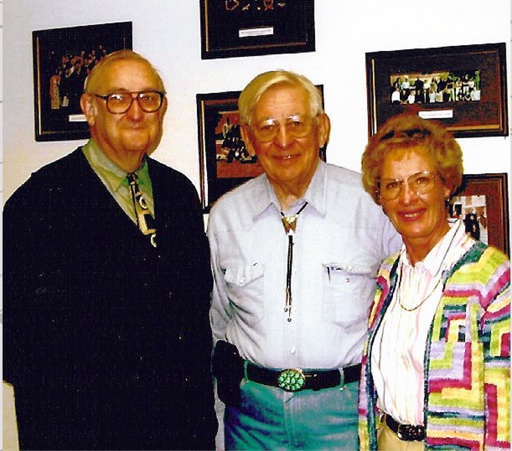
Figure 1. Fielding with Rollie and Carol Zavada. (Source: Zavada)
|
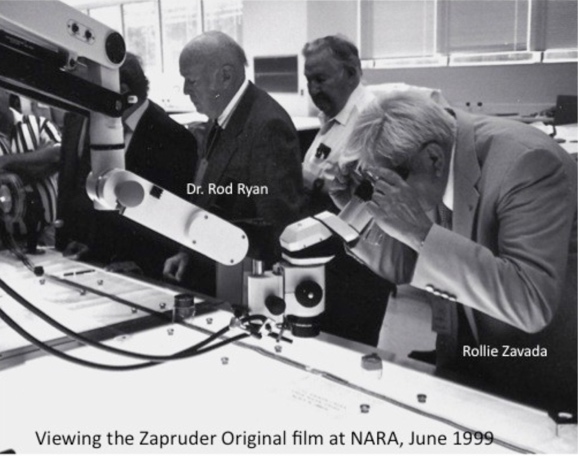
Figure 2. Ryan and Zavada at NARA. (Source: Zavada)
|
Thom Whitehead, along with Sydney Wilkinson, ordered a third-generation negative copy from NARA. Whitehead cites dozens of Hollywood experts he contacted who support the alteration hypothesis. As a counterpoint, I have spoken with film experts who disagree with that hypothesis.2 Expert headcounts do not settle a technical question. What matters is whether anyone has specified a viable method.
The sections that follow move from broad practical constraints to specific technical tests. First, I address motive, means, and opportunity. I then explain the film, camera, copying, and scanning factors that can create apparent anomalies. Finally, I apply those constraints to the optical-printing theory most often offered to explain alleged alteration.
Motive, Means, and Opportunity
With those consultations in view, the threshold question becomes practical rather than ideological: did the alleged alteration have a plausible motive, a demonstrated means, and a realistic opportunity within the available time?
Motive
The alleged motive for altering the film was to conceal details of the assassination that were inconvenient or pointed to a conspiracy. Given the history of covert actors, this motive must be taken seriously.
Removing any depiction of the presidential limousine slowing or stopping could conceal an embarrassing Secret Service failure to follow protocol. A more serious possible motive would be to conceal evidence that the limousine slowed or stopped to facilitate the shooting.
Masking the posterior head wound could be justified as hiding a blowout caused by a frontal bullet entry, even though a false narrative could have been developed to explain away this fact. Any proposed alteration motive must also explain why the conspicuous rearward movement commonly described as “back and to the left” remained in the Zapruder film.
Means
The most commonly proposed method for altering the film would involve an optical printer and an animation stand. This method has been used to alter the projectable area of motion-picture content. The Zapruder camera, however, also exposed the area between the film perforations and left identifiable frame-to-frame signatures, including ghostlike overlap from the previous image.
That matters because the perforation area is not just an incidental border; it is part of the film’s physical record. Any attempt to alter the visible image while preserving the perforation-region evidence would be far more difficult than the theory suggests. The challenge is not merely copying the projected image and the normally uncopied perforation region, but doing so without disturbing the unique signatures that link one frame to the next and without producing the visible frame-to-frame transitions that optical printing creates.
Opportunity
Some argue that the alteration could have occurred over many months. Three bodies of evidence make that scenario difficult to reconcile with the record: early viewings, the dirty-dupe negative, and the National Photographic Interpretation Center (NPIC) briefing-board material.
First, a wide range of people saw the film almost immediately, including Kodak personnel, Time-Life and CBS representatives, government agents, and two of Zapruder’s attorneys[L6].
Second, a dirty-dupe negative made for Time-Life has been located at the Sixth Floor Museum at Dealey Plaza. Zavada said his inspection found no missing frames in that early copy when it was compared to the surviving film at NARA. He also noted that markings on the film corresponded to Life’s published frame selection. In Zavada’s oral history at the Sixth Floor Museum[L7], he described the contents of this dirty-dupe negative as very damaging to alteration theories.
Third, the briefing boards produced during the second of the two events at NPIC that weekend show images identical in content to the extant NARA film, and the frame numbers do not indicate any removed content. A detailed analysis of the frame numbers is available here[L8].
The briefing-board material provides independent evidence that at least 55 frames selected as important by NPIC correspond in content and numbering to frames in the extant sequence. It does not by itself account for every frame. If the dirty-dupe negative is also accepted as contemporaneous and complete, however, the combined evidence appears to account for the full sequence.
![Figure 3. Briefing-board panel 4 from the second NPIC event. (Source: Midnight Writer News[L9])](/images/2026/Bouzarth/p1_image3.png)
|
![Figure 4. Notes from the same event identifying consistent frame numbers. Ben Hunter and Homer McMahon identified their own handwriting on both sides of the page. (Source: maryferrell.org[L10])](/images/2026/Bouzarth/p1_image4.png)
Figure 4. Notes from the same event identifying consistent frame numbers. Ben Hunter and Homer McMahon identified their own handwriting on both sides of the page. (Source: maryferrell.org[L10])
|
Altering the film would require specialized Hollywood talent skilled at making content changes to movies. As Healy and others have noted, such artists tended to guard their techniques fiercely to prevent competition. The belief in alteration taking place on the assassination weekend requires the assumption that rushed security clearances, travel arrangements, equipment customization, and careful artistic work all occurred during the extraordinary disruption of that weekend.
Technical Foundations for Evaluating Alleged Alteration
When determining whether a film has been altered, one must consider technical details that are easily overlooked but can become decisive. Because many readers will be unfamiliar with film technology, this section identifies the technical factors most relevant to evaluating apparent anomalies.
This section is divided into three groups:
1.Image-formation limitations
2.Camera-specific characteristics
3.Copying and digital reproduction issues
1. Image-Formation Limitations
Plain-language summary: The original film was shot on a low-resolution home-movie stock with limited ability to capture fine detail, fast motion, or both bright and dark areas at the same time. Many features that look like anomalies or alterations are the normal physical results of these limits: motion blur that expands bright objects and shrinks dark ones, hard-edged shadows, and complete loss of detail in deep shade or bright highlights. Our eyes and brains automatically fill in missing information, which can create false certainty about what the film actually recorded.
What Low Resolution Can and Cannot Show
Under ideal conditions, Kodachrome II Double 8 movie film can resolve the rough digital equivalent of 900 horizontal pixels across the projectable part of the image.3 Poor lighting, motion blur, and consumer-grade lenses can further reduce resolvable detail. The shaded portion of JFK’s head in frame 317 occupies the very rough digital equivalent of 25 horizontal pixels. On the film, the shaded part of his head occupies about 0.14 mm, about the thickness of painter’s masking tape. This scale invites a Rorschach-like trap: researchers may interpret low-detail visual ambiguity as definitive content even when other explanations remain equally plausible.
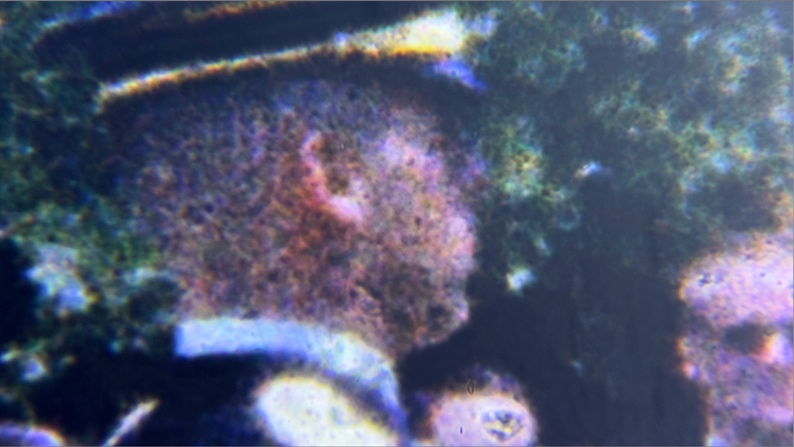
Figure 5. Ideal image (well exposed, focused, and motionless) of a soldier occupying about the same amount of the frame as JFK’s head in the Zapruder film. (Source: The author’s microscopic capture of Kodachrome II home-movie footage purchased on eBay)
|
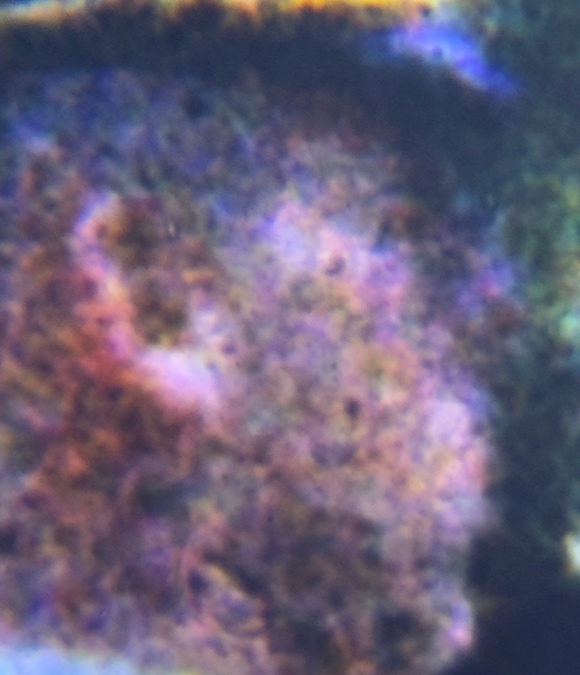
Figure 6. When we enlarge this same image, we realize how little detail there is. Our brains are adept at fabricating missing detail. (Source: See Figure 5)
|
Slow Shutter Speeds
Consumer films from the 1960s, such as Kodachrome II, required relatively long exposure times. As a result, motion blur and other effects were far more prevalent than in modern equivalents.
When motion is captured at slow shutter speeds, bright areas usually expand while dark areas contract.4
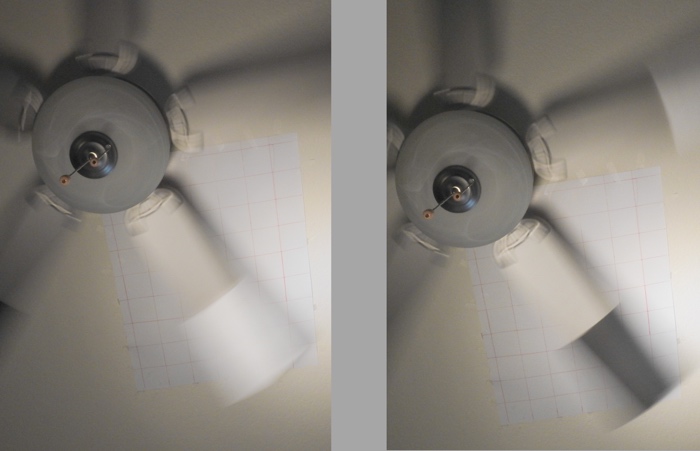
Figure 7. White paper on a fan blade expands while black paper contracts. (Source: Photo by author)
|
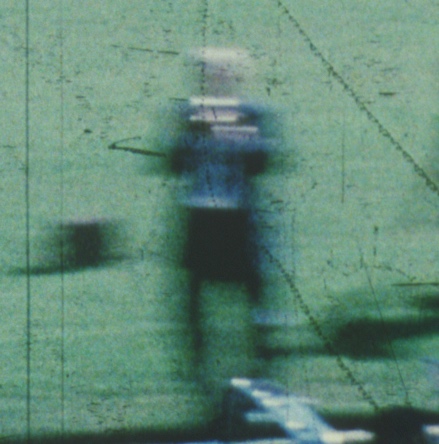
Figure 8. Altgens’s legs contract while his head and camera expand. (Source: Zavada 4K Scan of Frame 345)
|
Motion blur can also produce ghostlike optical illusions, such as light objects appearing to impinge upon darker areas. The severity of these anomalies depends on the subjects’ relative speed, lightness, and contrast.
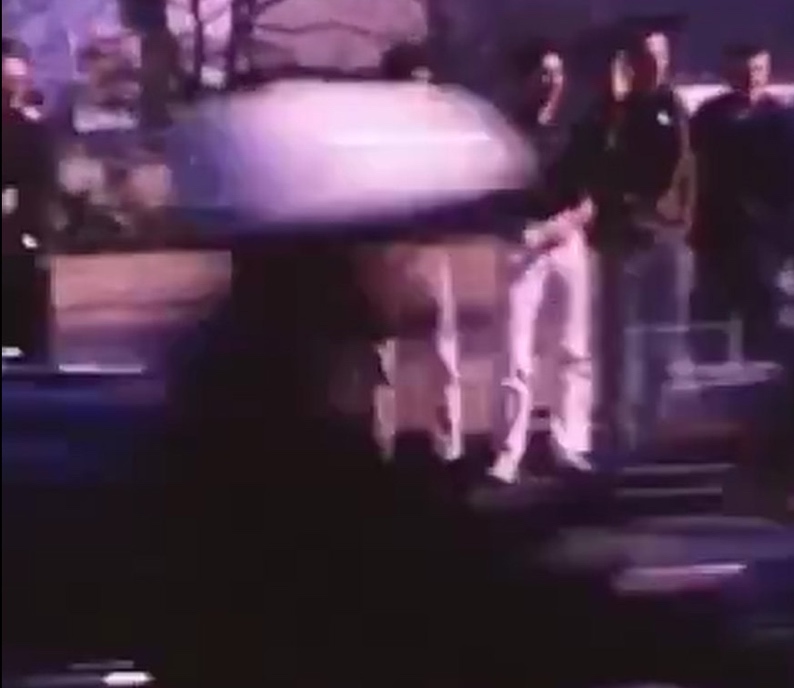
Figure 9. White pants of a spectator impinge upon the motorcycle officer’s face. (Source: Keith Griffith, The Sixth Floor Museum)
|
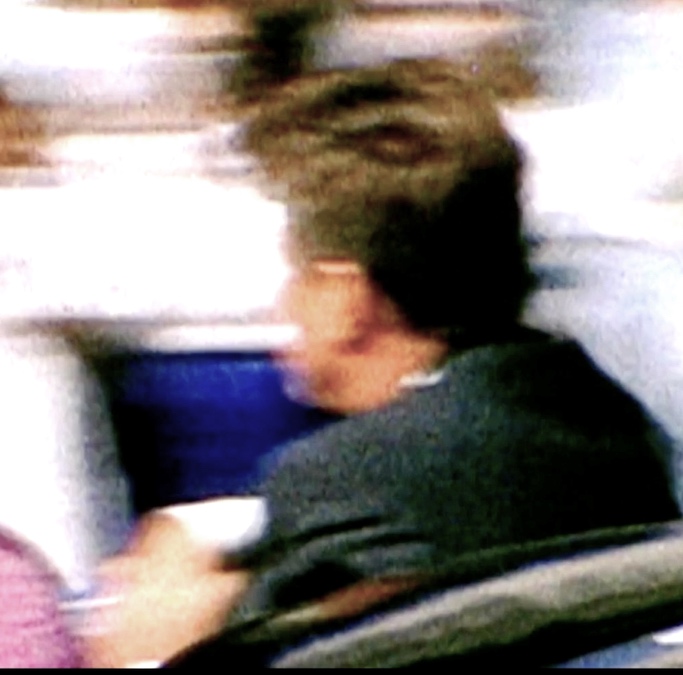
Figure 10. JFK’s face appears anomalous. Also note a sharp posterior head shadow. (Source: George Jeffries, The Sixth Floor Museum)
|
Kodachrome II’s low resolution exacerbates nonuniform motion blur, such as that produced by jerky camera panning combined with independent passenger movement. That combination can shift apparent object edges from frame to frame, reducing the reliability of photogrammetric measurements that assume stable boundaries.
Limited Light Range
Every photographic material can record only a limited span of brightness at one time. Anything brighter than the top of that span records as featureless white; anything darker than the bottom records as featureless black.
The photographer’s exposure setting decides which slice of the scene falls inside the span, and whatever detail falls outside it is not recorded at all. No later processing can recover it.
For Kodachrome II, that span was about eight stops, where each stop is a doubling of brightness. Tonal separation degrades well before either end, so the range that carried usable detail was narrower still. Larger figures are sometimes quoted for this same film, and they don’t conflict. They measure a different quantity, and a supplement[L11] sets out which figure answers which question.
Kodak said as much in its own instructions.5 The exposure guidance packaged with this film gave the home movie maker one setting for a subject standing in bright sun and a noticeably different setting for a subject standing in open shade, a gap of about three doublings of brightness. Kodak was telling users to choose one or the other, because a single setting would not serve both. A sunlit street with people standing in shade easily spans ten doublings or more, and Elm Street at midday added abundant chrome to the problem. The scene ran past what the film could hold.
Our eyes do far better, and they keep readjusting as we look around. That is part of why a scene that was perfectly legible to a bystander in Dealey Plaza can come back from the film lab as a bright street with black holes in it.
Zapruder was filming a sunlit street, and his camera’s meter set the exposure accordingly. Everything darker than the low end of the film’s dynamic range was first compressed in tone, then vanished. The shaded interior of the limousine, the far side of a head turned away from the sun, and the recesses of a wound all fell into that region. Copying makes it worse: each generation of duplication raises contrast, narrowing the range further, so a shadow that held faint detail on the camera original can be solid black generations later.
This bears directly on how the film gets read. A researcher may look at a dark region in a Zapruder frame, find no detail inside it, and conclude that something was painted or masked there. But a dark region with no detail is what this film produces whenever the subject falls below its range. The absence of information is not evidence of added opacity. It is the ordinary behavior of a film with a short brightness range, and it appears throughout the shaded portions of the frame, including in places no one has suggested were altered.
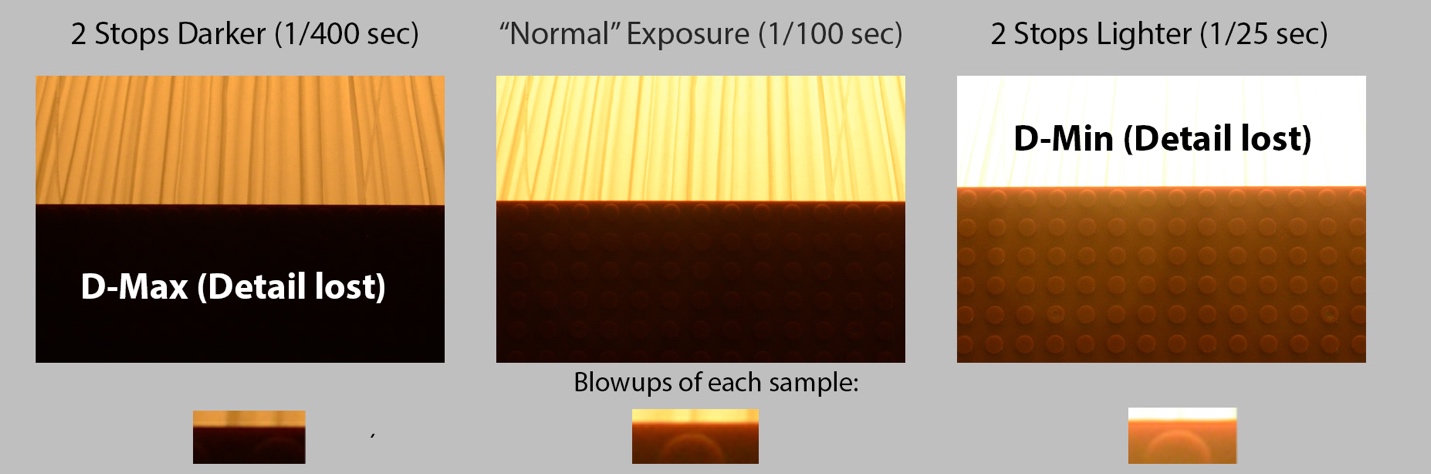 |
Figure 11. Photos show the loss of detail at either extreme of the dynamic range. A Lego block below a lampshade was photographed at different exposures. (Source: Photo by author)
Why Head Lighting Can Mislead
Lighting can be fickle, especially on a curved head. The limited dynamic range of Kodachrome II aggravates this effect.
The same ambient light can produce vastly different brightness levels when the head’s position changes slightly. Also, shading on the head sometimes makes the hair appear inconsistent with its known appearance.
![Figure 12. Notice the different areas of head darkness caused only by slightly different head positions. (Source: YouTube[L12])](/images/2026/Bouzarth/p1_image12.jpeg)
Figure 12. Notice the different areas of head darkness caused only by slightly different head positions. (Source: YouTube[L12])
|
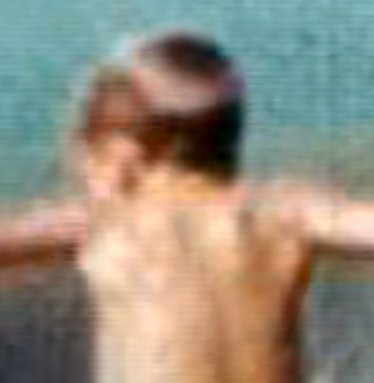
Figure 13. Kodachrome II frame of the author midflight off a high dive in the 1960s. The frame does not accurately portray the author’s short, consistently blond hair. (Source: Author’s archive)
|
Some researchers claim that the sharp shadow on JFK’s head after the fatal shot constitutes evidence of alteration.
I have reviewed countless archival films in search of instances of sharply edged shadows. I found that factors increasing the prevalence of hard edges include low resolution, narrow dynamic ranges, focus issues, and motion blur. Even with today’s technology, hard edges are still found, albeit far less often than in 1960s consumer-film footage.
We rarely notice them in modern professional productions because the set lighting, film, and camera equipment are highly controlled. Modern postproduction color grading of historical film scans can artificially amplify or soften the perceived severity of these shadows.
![Figure 14. Head shadow of JFK in Fort Worth on the day of the assassination. (Source: YouTube[L13])](/images/2026/Bouzarth/p1_image14.jpeg)
|
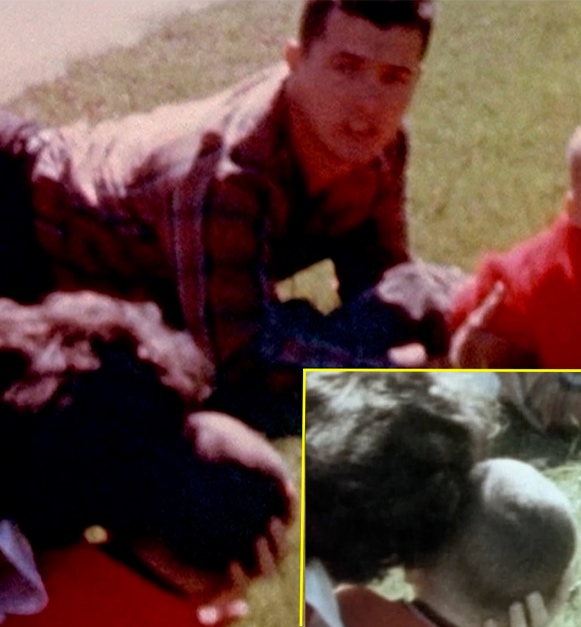
Figure 15. Two captures of the head of witness Bill Newman’s son show vastly different shading. They were taken by two photographers at slightly different positions. The larger image is from a motion picture, and the smaller is from a still picture taken on film with a much greater dynamic range. (Source: Tom Craven [larger photo] and Tom Atkins)
|
In a limited-dynamic-range medium, the interior portion of a head wound could easily appear in deep shadow if it is not directly illuminated by the sun.
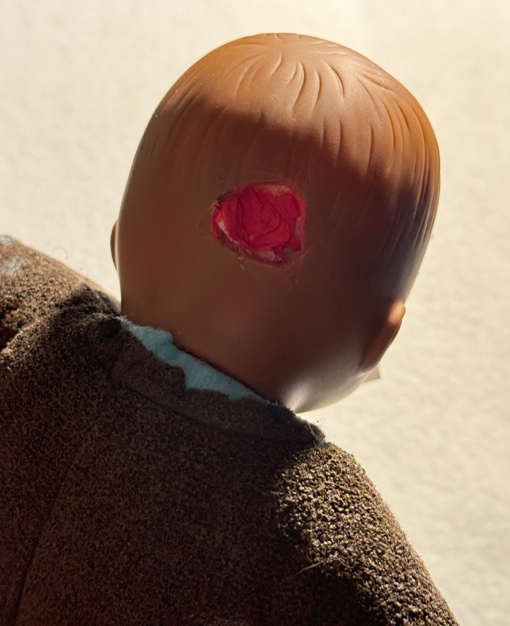
Figure 16. Mock head wound in a doll. (Source: Photo by author)
|
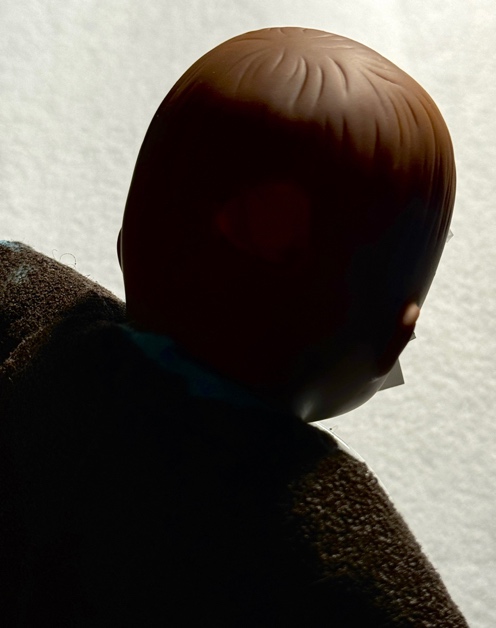
Figure 17. Same head wound at a darker exposure shows how easy it is to cloak the wound. (Source: Photo by author)
|
The high-quality copy of the Moorman photo below also shows how what appears to be a hole in the skull can be “hidden” when the hole is not in direct sunlight. This very faint hole is not visible in lower-quality versions.
 |
Figure 18. Picture of JFK’s head showing an apparent wound, from an early high-quality copy. (Source: Groden, Absolute Proof[L14], 169)
Paradoxical Shadow Angles
When we analyze 2D photographs of shadows cast in a 3D environment, the observed angles often seem so counterintuitive as to suggest forgery. However, when we accurately replicate the light source and objects in 3D modeling software such as Blender or Autodesk Maya, the resulting “impossible” shadows match those in the 2D photographs. Similar misreading errors have been observed in non-JFK disputes, such as debates over images of the Apollo astronauts on the moon.

Figure 19. Different shadow angles cast from three poles. (Source: Photo by author)
|

Figure 20. Different shadow angles cast by identical poles. (Source: Photo by author)
|
The Overlooked Keystone Effect
Although researchers of the Zapruder film, such as Costella, have meticulously documented lens distortions (including pincushioning) and parallax perspective shifts, keystone perspective distortion has received comparatively little attention in the JFK assassination literature. In upcoming articles, I will demonstrate that fully accounting for the keystone effect explains the anomalies behind several specific claims of film alteration.
![Figure 21. Towers tilt in different directions because of keystone perspective distortion. (Source: cyberlink.com[L15])](/images/2026/Bouzarth/p1_image21.jpeg)
Figure 21. Towers tilt in different directions because of keystone perspective distortion. (Source: cyberlink.com[L15])
|
2. Camera-Specific Characteristics
Plain-language summary: Zapruder’s Bell & Howell 414PD was a consumer camera built to relatively loose tolerances. Recent tests confirmed it ran at roughly 18.3 frames per second rather than the 16 fps listed in its manual, slowed gradually as the spring unwound, and varied by up to about 10 percent in timing from one frame to the next. Its light meter was primitive, and its aperture took up to half a second to respond, so brightness differences between frames are normal, not suspicious. An overexposed startup frame is explained by ordinary factors such as startup lag, a faint light leak, and fog from daylight loading. The camera also left distinctive signatures: it exposed the area between the film perforations and had two different types of double exposures in that area, interlocking each frame with the next so that a removed frame should leave a detectable discontinuity.
Camera Speed
The FBI analyzed Zapruder’s Bell & Howell 414PD and determined it had an average speed of 18.3 frames per second, even though the owner’s manual specifies 16 fps. There has been much speculation that the FBI’s test results were unreliable. I purchased the same model and tested the speed myself. Using a 400-fps high-speed camera, I captured the area where the film would normally be exposed. I then wrote a program to determine the midpoint of each shutter opening and to calculate the frames per second. I found that the camera speed started at 18.9 fps and ended at just under 18.0 fps, and the average was slightly below 18.4 fps. My average is very close to the FBI’s figure for Zapruder’s actual camera.
I also observed a timing variation between consecutive frames. I estimate this variation at approximately 10 percent. Because the camera lacked a professional-level control system for film-transport speed, this observation was not unexpected.
Camera Filming Limitations
At normal filming speed, the camera can run for slightly more than 45 seconds before the drive mechanism must be manually wound. I measured the winding process at approximately 30 seconds if vigorous motion is maintained.
When filming in high-speed mode, only about 15 seconds of recording can be captured before winding is required again. In this mode, very firm pressure must be maintained on the run button, and the camera’s noise increases noticeably. The run button’s design helps ensure this mode is not accidentally selected.
Exposure Control in the 414PD
Though cutting-edge for an amateur camera at the time, the light meter was primitive by modern standards; it used a cadmium sulfide (CdS) cell to measure the average light falling on it. It could not measure the actual light passing through the lens, as most modern cameras can.
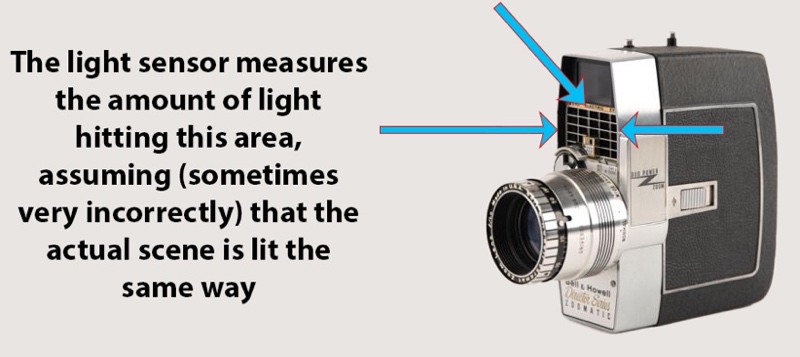 |
Figure 22. The camera’s aperture takes up to half a second to adjust after the light sensor detects a change in lighting conditions. (Source: Photo and annotations by author)
Because of this slow aperture adjustment, one should be cautious about drawing conclusions based on exposure differences between frames.
First-Frame Overexposure
Several factors can explain why the first frame of a sequence appears overexposed relative to later frames: startup lag, small light leaks, daylight-loading fog, and the camera’s slow iris response. Any one of these can affect the opening frame without implying manipulation.
1.In my tests, I measured a slight startup lag when the film began moving. This would result in about 10 percent overexposure, producing a noticeable but minor lightening of the frame.
2.I noticed a very subtle light leak in the film-gate area when the camera was not filming. This would cause a white cast over the frame, the intensity of which would depend on the brightness incident on the lens and on how long the camera sat idle. Of course, we cannot be certain that Zapruder’s camera had the same deficiency.
3.Frames at the beginning of the roll would be subject to fog from light during daylight loading. The ambient light level and how long it took to load the film would determine the extent of this fog.
4.As mentioned earlier, I noticed that the iris of the Bell & Howell 414PD reacts slowly to changes in light (up to half a second). If the camera were moved from a position aimed toward the ground to eye level, there might be one or two overexposed images because of the iris’s slow response to the brighter light typically seen at eye level.
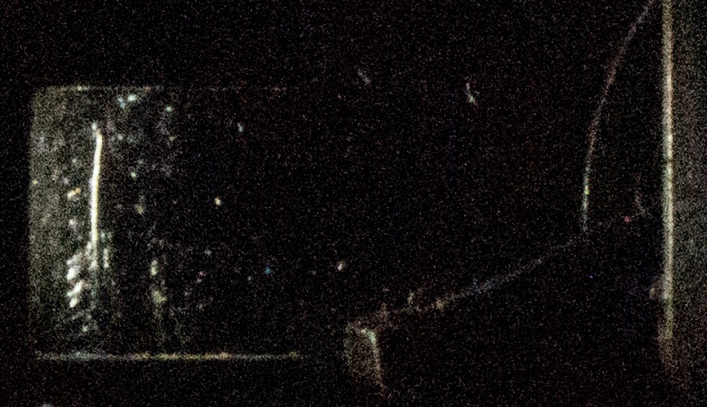
Figure 23. A faint light leak is detected in the film-gate area of the Bell & Howell 414PD while the shutter is closed. Filmed in total darkness. (Source: Photo by author)
|
![Figure 24. The fog in the frame as indicated by the green arrows does not exactly match the frame image and is thus consistent with a slight light leak (point 2 above). (Source: Zavada, page 21[L3]; g...](/images/2026/Bouzarth/p1_image24.jpeg)
Figure 24. The fog in the frame as indicated by the green arrows does not exactly match the frame image and is thus consistent with a slight light leak (point 2 above). (Source: Zavada, page 21[L3]; green arrows added)
|
Zapruder Camera Signatures
The Bell & Howell 414PD camera that Zapruder used had unique signatures. The two most important signatures that bear on questions of alteration are discussed below.
One of the most notable of these signatures is that the camera captured images in the perforation area, as shown below. This was not an intentional feature but presumably a byproduct of an expedient design decision. Images in this area would not be projected.
Some researchers claim that the 414PD camera Zavada tested had less image penetration in the perforation area than Zapruder’s camera. Zavada disputes this claim[L3]. I will also add that it is not safe to assume that consumer cameras with identical model numbers will perform identically, given their looser tolerances compared to professional cameras.
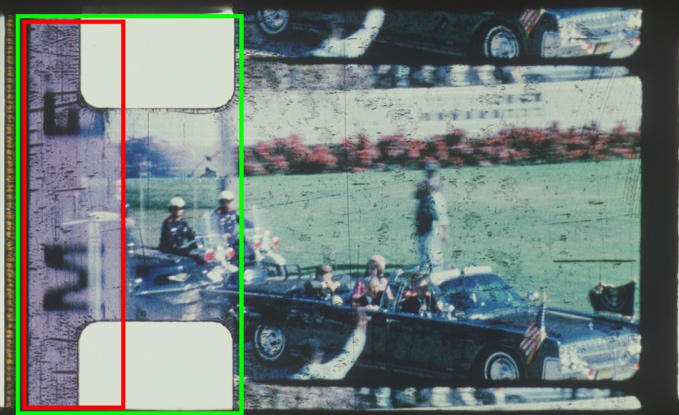
Figure 25. The perforation area is shown in the green box. The branding area is shown in the red box. (Source: Zavada 4K Scan of Frame 236; annotations added)
|
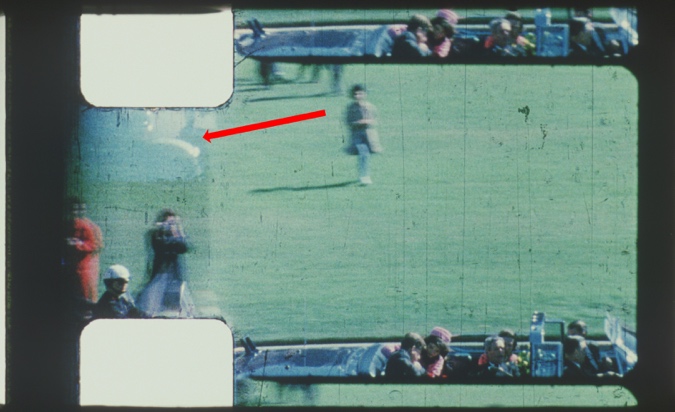
Figure 26. A red arrow points to an example of a ghost motorcycle fender from the prior frame. (Source: Zavada 4K Scan of Frame 312; annotations added)
|
Due to the film-movement mechanism, the camera superimposes a residual portion of the prior image in the perforation area, as seen in Figure 26. As Costella accurately pointed out, this interlocks each frame with the next. Removing a frame should therefore create a discontinuity that can be tested by comparing scene content and overlap signatures between adjacent frames.
Also note that scene content bleeds into the film’s branding area (see the red box in Figure 25).
Perhaps the most important signature is found in the transition area just to the right of the middle of each sprocket hole. This small area shows consistent scene overlap. As shown in Figure 27 below, the black mask that separates the frames, as seen in the right portion of the image, becomes thinner and finally vanishes as it approaches the left sprocket hole. This small unmasked area near the sprocket hole is actually a double exposure of the images from two adjacent frames.
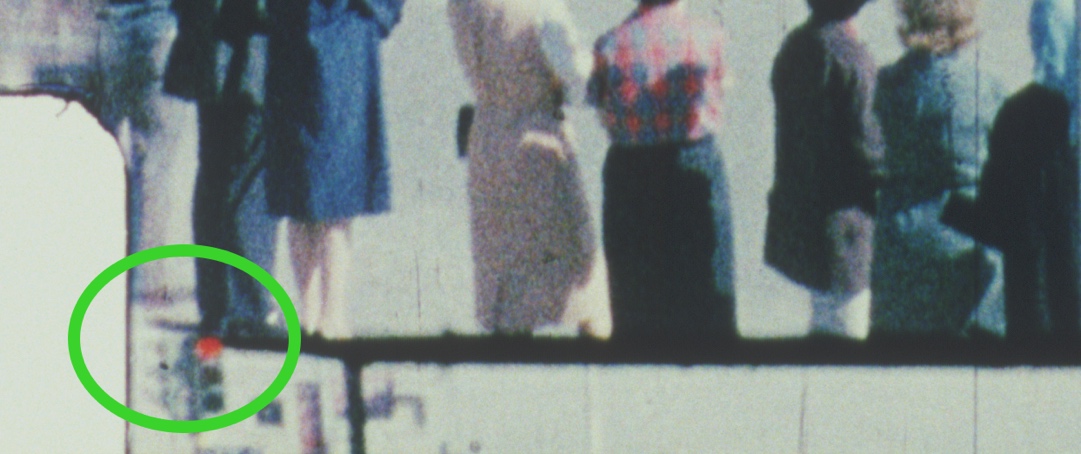 |
Figure 27. Cropped section of Frame 97 (Source: 4K Scan; annotation by author)
Figure 28 shows four more examples of the mask signature. Frame -6 (6 frames before the motorcade) shows what the mask looks like with equally lit adjacent frames. The relative brightness of any two frames can cause content from the brighter one to protrude into the overlapped area. In Frame 360, the top frame image is lighter and protrudes downward into the other frame. In Frames 310 and 11, the bottom frame image is lighter and protrudes upward.
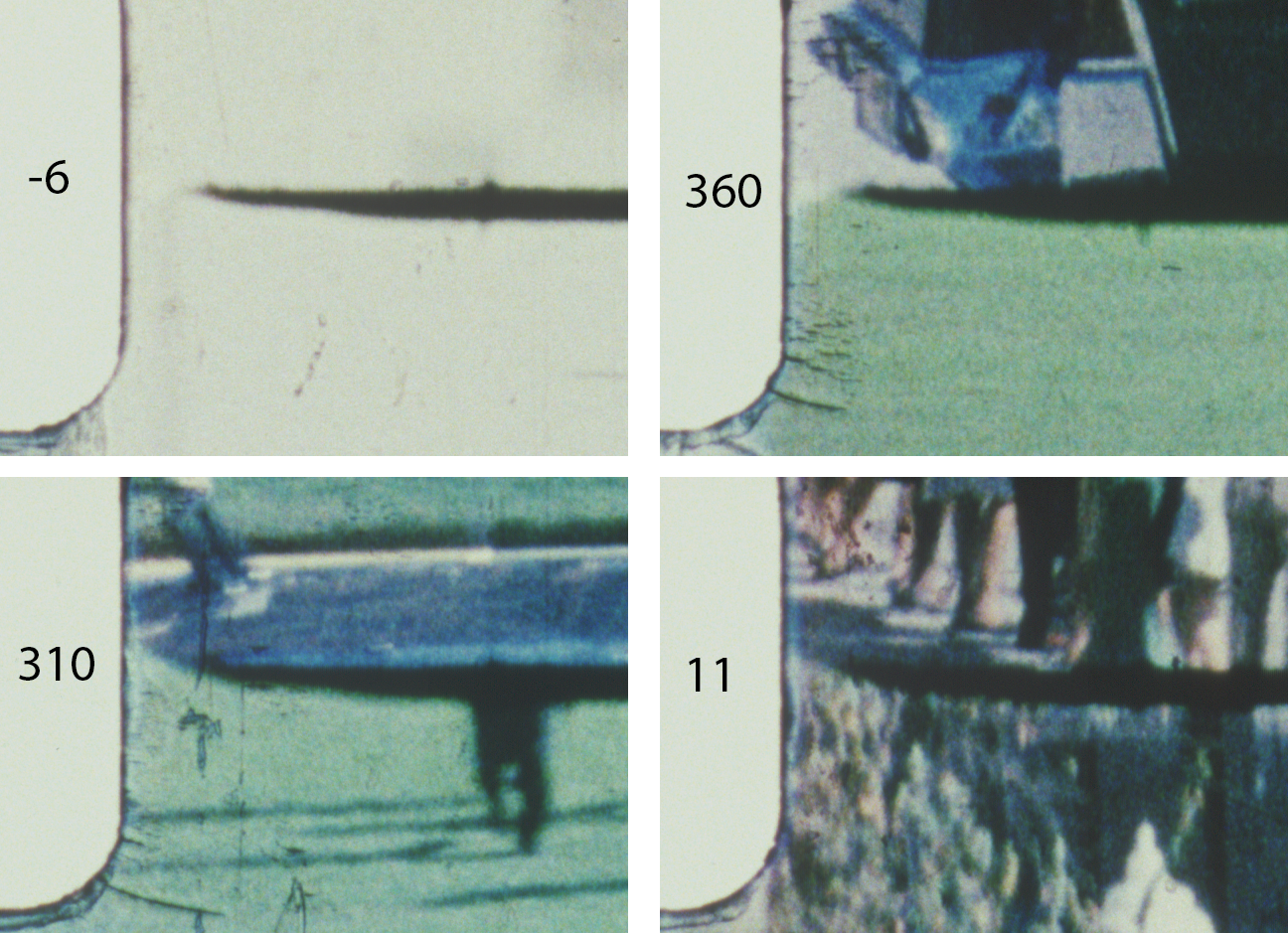
Figure 28. Cropped sections of Frames -6, 360, 310, and 11 (Source: 4K Scan; annotations by author)
|
Reproducing this mask signature would be extraordinarily difficult with an optical printer.
3. Copying and Digital Reproduction Issues
Plain-language summary: Almost everyone studying the film today works from later copies or digital scans. Each generation loses detail, changes contrast, and can introduce sharpening or color artifacts. The highest quality materials accessible to researchers are the first-generation 4-by-5-inch transparencies at the Sixth Floor Museum. Later-generation or heavily graded scans can make natural features look artificial or hide real detail that remains. A higher-bit-depth scan cannot invent information the original film never recorded, but it can preserve subtle remaining tones more accurately for careful examination.
Because most researchers must rely on scans of lower-quality copies, they can easily draw inaccurate conclusions. My research and firsthand observations indicate that the 4-by-5-inch transparencies housed at the Sixth Floor Museum are the highest quality materials currently accessible to researchers. Access to them is especially important because NARA has restricted further handling of the surviving film. The reproduction issues that bear on this problem are discussed below.
Scanner Quality
The practical point is simple: no scans are 100 percent accurate, and the resulting images may vary widely depending on their processing history.
Scanning very small portions of film images (relative to individual sensor size) places demanding requirements on optical resolution, focus, flare control, registration, sensor noise performance, and density range. Scanner design and operating parameters can therefore significantly affect the result.
Scanner quality matters, as do the settings chosen for the scanning process. Subsequent postproduction can change the image further, especially through contrast, sharpening, color balance, and gamma adjustments.
Generational Loss
The most significant quality factor is often the film’s generational history and the resulting degradation relative to the source film.
Every generational copy of a film loses quality in several ways, including loss of detail and changes in contrast, gamma, dynamic range, and grain. Scanners and even many digital-to-digital operations6 contribute to further degradation.
In this article, the term “first generation” refers to the first copy of the original film.
Wilkinson and Whitehead granted me unique access to the third-generation negatives, the source of their 6K scan (hereafter “6K Scan”). In addition to viewing the 6K Scan on their own equipment, I examined Frame 317 from their negative film and used my 4K digital microscope to capture key sections of that frame.
I have viewed other sources that are documented elsewhere.7
Through my research, I determined that the 4-by-5-inch first-generation transparencies are the highest quality materials I examined. By comparison, the third-generation copies suffer noticeable degradation.
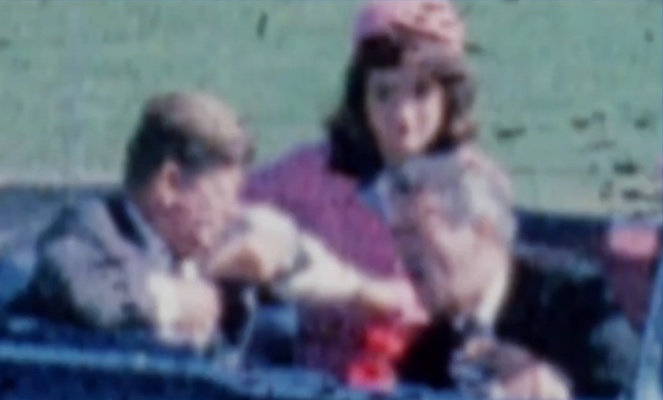
Figure 29. 6K Scan. (Source: Screen capture from Larry Rivera’s November 2024 lecture to the JFK Historical Group showing a blowup of Frame 257 from the 6K Scan of the third-generation film purchased by Wilkinson and Whitehead)
|
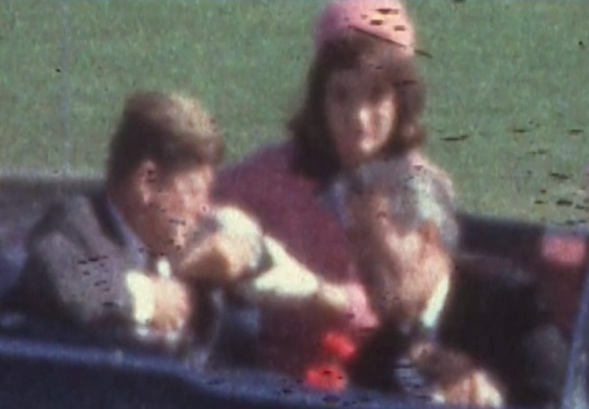
Figure 30. MPI Home Video DVD blowup of a first-generation frame. Note the superior detail. Because the DVD shows only a portion of this frame, more of the available scan resolution is devoted to the cropped scene. Effectively, that scene is represented by approximately four times as many pixels. The 4-by-5-inch transparency would show even more detail. Note that this DVD frame shows a narrower width because of aspect-ratio distortion. (Source: DVD release[L16]; Image of an Assassination)
|
I will show another example below that demonstrates the risk of drawing conclusions from lower-quality versions. The front scalp wound in Figure 31 can look crude in lower-quality versions. That crude appearance has led to the claim that it is an artistic creation. The higher-quality version in Figure 32 looks more photographically natural.
![Figure 31. Frame 313 from the 6K Scan. The wound appears somewhat unrealistic. (Source: Midnight Writer News[L9])](/images/2026/Bouzarth/p1_image31.png)
Figure 31. Frame 313 from the 6K Scan. The wound appears somewhat unrealistic. (Source: Midnight Writer News[L9])
|
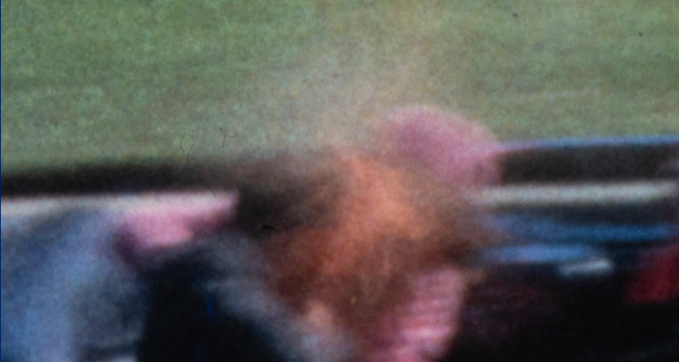
Figure 32. Frame 313 from the MPI 4-by-5-inch transparency shows a more photographically natural-looking structure. (Source: Photo by author)
|
Scanning Resolution
Beyond a certain point, the scanner’s resolution becomes less important than other factors. The following side-by-side examples, made from the same original, illustrate this more clearly than words. These examples also underscore the importance of rescanning the 4-by-5-inch transparencies using current high-quality technology. I have taken the first steps toward making this a reality. Because all analog materials are subject to aging and handling risks, the scan should be done promptly using a modern, top-quality scanner. New scans should be made available to researchers at a reasonable cost.
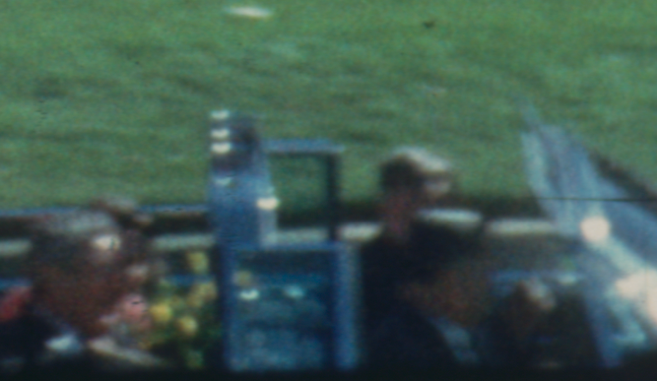
Figure 33. An extremely high-resolution scan showing a section of Frame 317. The scan was performed by the Sixth Floor Museum on October 30, 2013, using an Epson 10000XL scanner. Its resolution is 23,500 by 18,378 pixels. The total size of the complete frame is 1.3 GB. (Source: The Sixth Floor Museum; purchased by author)
|
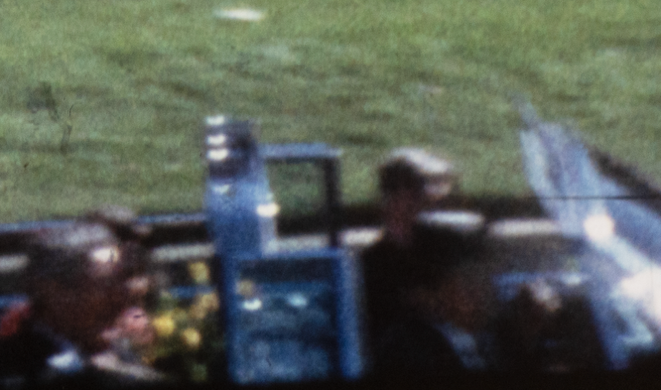
Figure 34. Photo taken by the author under challenging conditions (handheld; bending over; original under a protective cover; overhead lighting) at the museum with a professional DSLR and macro lens. Even under these conditions, the detail captured appears superior to the museum’s high-resolution scan. No digital sharpening was performed. (Source: Photo by author)
|
Accuracy of Color Grading
Once a film is scanned, especially when the source is an internegative or the scan is log-encoded, postproduction color grading is essential. Depending on the nature of the grading work, an image’s contrast, gamma, and sharpness will likely result.
The Frame 317 scans shown below are from the same source but have different color-grading parameters. Notice how the version on the right creates a sharper delineation between the shaded and unshaded hair. It is visibly oversharpened, making it easy to reach false conclusions about alteration.
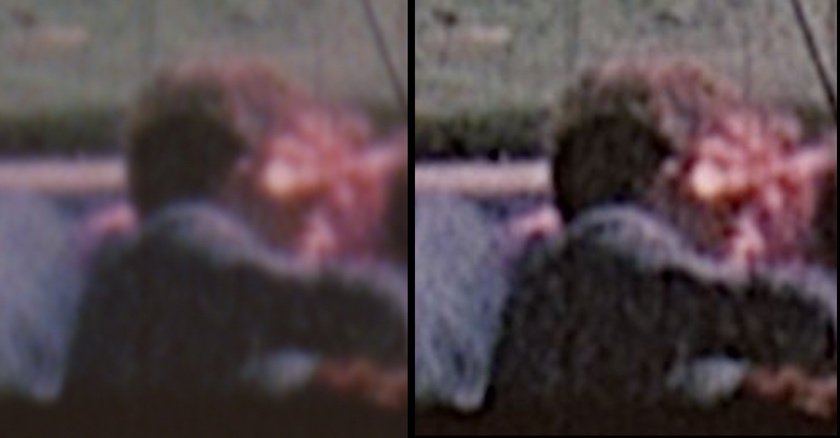 |
Figure 35. These are the two versions of Frame 317 supplied by Doug Horne. They clearly show sharpness differences. (Source: Two images from Midnight Writer News[L9])
Ideally, the ungraded 6K Scan DPX (Digital Picture Exchange) file for at least Frame 317 would be made publicly available so other researchers could conduct further analysis.
10-Bit Log-Encoded Scan
I will try to clarify what a 10-bit log-encoded scan is and what it is not. Readers who do not need the technical details may skip to the final paragraph of this section.
A scanner’s dynamic range is the range of film densities (from nearly transparent to very dense) from which it can capture useful tonal information. It is often expressed in stops, with each stop representing a factor of two in light exposure or transmission. In practice, the usable scanner dynamic range depends on factors such as sensor noise, optical flare, illumination, calibration, analog-to-digital conversion, and the scanner’s maximum distinguishable film density.
Bit depth is a separate consideration from dynamic range. When an RGB pixel is stored digitally, each color component is assigned a certain number of possible numerical values; an 8-bit component has 256 values, while a 10-bit component has 1,024. Bit depth determines how finely the captured tonal range is divided; it does not, by itself, determine the scanner’s capability to capture stops. If the number of bits used to encode the tonal range is too small, the result will be banding due to the loss of subtle tonal differences.
If a log-encoding method is chosen, the full tonal range can be stored using fewer bits than were originally captured. For example, if the scanner captured 12 bits per component, the 12-bit value may be remapped into 10 bits of storage per component. This approach was originally developed to reduce file-storage demands. Good encoding algorithms attempt to preserve the tonal nuance associated with more bits by compressing values in areas of the tonal range that the human eye distinguishes less readily.
Log-encoded scans are normally decoded before conventional viewing because an uncorrected log-encoded image appears flat and low in contrast. The display transform maps the log values into the tonal and color characteristics of the intended output medium.
The principal limitation remains the information captured in the original film. No scanner can reconstruct scene detail or tonal subtlety that the original film failed to capture, regardless of how high the scanner’s bit depth or dynamic range may be.
Benefits of Using Higher-Bit-Depth Scans
Additional bit depth is generally regarded as valuable in postproduction because it provides greater numerical precision and grading latitude. The additional code values permit more extensive adjustments to gamma, contrast, levels, curves, and color balance with less risk of banding, posterization, or the loss of smooth tonal transitions.
If subtle differences remain among closely related film densities, higher-bit-depth scanning can preserve those differences more precisely and permit them to be made more visible during grading. Higher-bit-depth files also provide greater latitude for correcting a suboptimal scanning exposure, provided the relevant highlight and shadow information was captured and not clipped.
The following images illustrate what a higher-bit-depth scan can preserve when appropriately graded. The available images are consistent with a recessed area containing tonal variation rather than a uniformly opaque mask. Because the images available to me are graded reproductions rather than the original DPX data, however, I do not regard their precise color or faint internal detail as dispositive. Release of the ungraded DPX file would permit a more rigorous evaluation.
The sun-induced shadow on the head appears less sharply delineated than in more contrast-enhanced versions, while faint reddish detail remains visible within the recessed wound area. By contrast, the oversharpened version in Figure 35 (right image) loses this detail because of its contrast, gamma, and sharpening characteristics. This demonstrates that processing adjustments can have a greater effect on the image than scanner resolution or capture bit depth.
Given the direction of the sunlight and Kodachrome II’s limited dynamic range, it is technically reasonable to expect the interior of the head wound to appear faint, as shown below, especially because it is deeply recessed and shaded by the surrounding skull. I consider these scans of Frame 317 evidence against the claim that an opaque dark mask was placed over the rear of the head to conceal the wound.
![Figure 36. The 6K Scan of Frame 317 captured from a presentation. (Source: Dr. David Mantik’s 2023 Citizens Against Political Assassination [CAPA] lecture[L17])](/images/2026/Bouzarth/p1_image36.jpeg)
Figure 36. The 6K Scan of Frame 317 captured from a presentation. (Source: Dr. David Mantik’s 2023 Citizens Against Political Assassination [CAPA] lecture[L17])
|
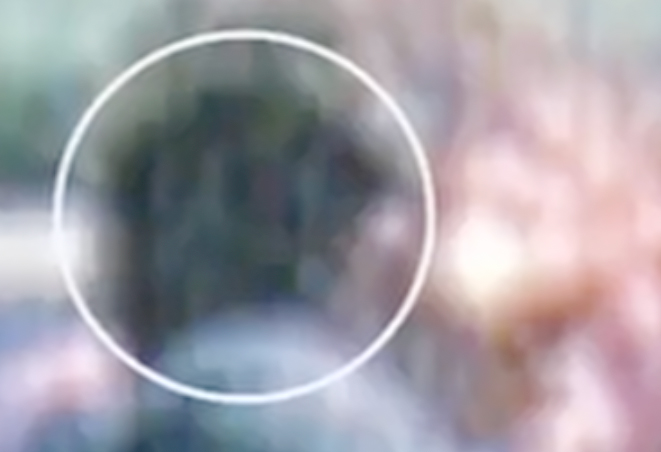
Figure 37. Further lightening helps visualize the apparent interior of the head wound; the area with a slight reddish hue is more visible. (Source: Same as Figure 36; further lightening by author)
|
The Documentary Record: ARRB, NPIC, Kodak, and Hawkeye Works
The documentary record for the assassination weekend consists of two relevant elements: the NPIC briefing board events and associated memories, and Kodak’s classified work at its Hawkeye plant, which some allege is where an alteration took place. The ARRB later investigated these issues.
NPIC, Kodak, and Hawkeye Works
It is undisputed that NPIC (under CIA executive direction) constructed two sets of briefing boards. These efforts were compartmentalized, and the staff who produced each set were unaware of the other set. Dino Brugioni produced the first set, and Ben Hunter and Homer McMahon produced the second set of prints.
Hunter and McMahon received their film from a “Mr. Bill Smith” of the Secret Service.
Demystifying “Hawkeye Works”
“Hawkeye Works” was the name of a large Kodak industrial facility, not the code name of a single CIA operation. Portions of the facility supported classified government programs alongside Kodak’s broader film, optics, and manufacturing work. The words “Hawkeye Works”8 were cast above the front entrance; the facility had been openly referred to in Kodak publications since the 1910s and even had its own softball team. A publicly circulated 1951 Kodak publication[L18] mentions “military” work at Hawkeye Works.
A CIA memo[L10] to the agency’s ARRB liaison stated that an interview with McMahon was classified “S BYE” (S: Secret compartmentalized with code-word access; BYE: Short for BYEMAN, the NRO codeword for satellite reconnaissance). The interview tape mentions the “Hawkeye Works” location, and for that reason, the CIA requested removal of the name of this location. The CIA also requested removal of references to the “Camp Peary” location, even though the CIA’s use of that facility (known as “The Farm”) had been public knowledge since the early 1970s, and the Navy had used the name long before the 1951 turnover to the CIA. The CIA did not want either location mentioned, presumably to avoid drawing scrutiny to individuals (“sources”) associated with past secret projects. As an analogy, if the CIA ran an operation out of the Empire State Building, it would not classify the location name, but information about its specific presence there would be classified Top Secret. Code words would likely be assigned to specific operations at the location.
Today we know many of the actual code words that the U.S. Intelligence Community, including the CIA and the NRO, used for the ultrasecret programs Kodak participated in: Bridgehead, Corona, KH-7 Gambit, and KH9-Hexagon. For a deeper look at the Bridgehead initiative, see the declassified NRO document[L19]. Additionally, post-declassification videos feature several of the actual Kodak engineers who worked on these clandestine Cold War operations:
•How These Former Kodak Engineers Helped Prevent World War III[L20]
•Secret Kodak Cold War History Film[L21]
Hawkeye Works: Capability Versus Evidence
The question, then, is not whether classified Kodak work existed. It plainly did. The question is whether that classified work provides evidence of the specific capability and action alleged.
My research revealed that Hawkeye Works was Kodak’s film and optics manufacturing plant. It later also housed the company’s classified Cold War reconnaissance work in partnership with the NRO, the CIA, and the military. That work focused on building spy-satellite cameras, producing specialized satellite film, and processing that film. Separate Kodak units outside Hawkeye developed the first practical OLED (organic light-emitting diode, used today in some high-end TVs) and the first digital camera.
Brugioni said that Hawkeye Works could do anything. That broad recollection should not be treated as a technical description of the actual capabilities of Hawkeye Works in November 1963. A more accurate statement might be “Kodak could do just about anything related to film or optics.” Brugioni’s statement of Hawkeye’s “do anything” capability is called into question by McMahon, as noted on page 7 of Horne’s ARRB transcript of his interview with McMahon[L22]:
McMahon: Rochester wasn’t set up to do what we were set up to do.
Horne: In the sense that you had the big enlarger and they did not? Is that what . . .
McMahon: We had a complete ‘world beyond’ facility [transcription continues]
Finally, just because a unit or company can “do anything” does not mean it actually does everything it can. As an analogy, a manufacturer of optical printers would not be expected to retain artistic talent to modify films for Hollywood. The CIA may well have used optical printers for common purposes, such as copying films to other formats. However, I have found no documentary evidence that the CIA maintained or used an optical-printing capability for frame-by-frame content alteration of motion-picture film.
The existence of classified capabilities should not be treated as evidence of unlimited technical competence; documented covert failures, including repeated plots against Fidel Castro, demonstrate the danger of that inference.
What Did Hawkeye Works Do with the Zapruder Film?
The only accounts placing the film at Hawkeye Works come from later recollections by former NPIC employees, who attributed the claim to an unidentified “Mr. Bill Smith.” If anything improper was done there, Smith would have acted imprudently by mentioning details to NPIC employees, even those with security clearances.
Smith reportedly stated he escorted the film directly from a citizen, presumably Zapruder, in Dallas to Hawkeye Works in Rochester, where the film was processed (or, in some accounts, “developed”). Smith used the word “processed” or “developed,” not “altered,” “manipulated,” or even “copied.” The claim that the film was taken directly from Zapruder in Dallas to Rochester conflicts with the documented processing and handling chronology.
The NPIC accounts appear to be the principal basis for the claim that a potentially different version of the film was created at Hawkeye Works over the assassination weekend. I have found no direct witness testimony or contemporaneous record stating that content alteration occurred there.
If the claim that the alteration happened between the two NPIC events is accepted, the alteration would have had to occur within a very narrow time frame. That window would also have to include the time needed to reconstruct a 16mm film from both sides of the Double 8 film9 delivered to the first team.
NPIC Statements
Brugioni recalled seeing more than one frame of the head explosion. Horne told him the extant film shows only one. In fact, the surviving briefing board and most high-quality copies, including the 6K Scan, show the explosion across several frames. Therefore, Brugioni’s recollection is consistent with the extant record, and the premise he was given was wrong.
Brugioni and McMahon are both on record[L23] as saying that, in the film they viewed, they did not see images in the perforation area.
These recollections deserve to be taken seriously, and if they are accurate they point toward the later NPIC team having worked from a duplicate rather than the camera original. That distinction matters a great deal for tracing who handled which piece of film over that weekend. It does not, however, loosen the chronology. The briefing boards were physical objects, assembled during those days, and the images they preserve correspond to the film that exists today. Whatever generation sat on the light table, the content those boards record was fixed within roughly 72 hours of the assassination. Any alteration hypothesis has to fit inside that interval, and the interval is the difficulty.
Brugioni viewed the MPI DVD, noted its quality, and said, “I’m amazed at the quality here. This is good. I did not see it that clear.” This again suggests that he was not viewing the original Zapruder film.
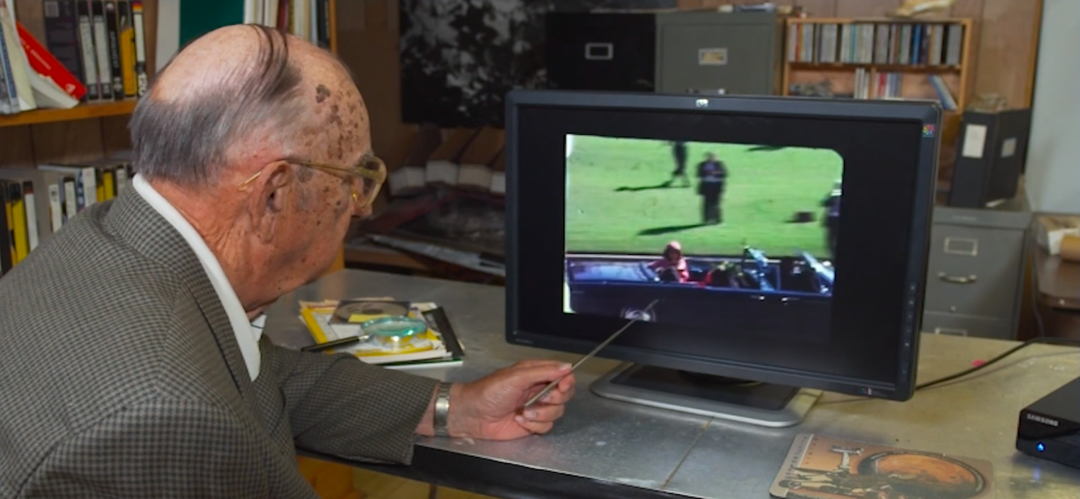 |
Figure 38. Brugioni’s viewing of the MPI DVD. (Source: YouTube[L24])
Details omitted from recollections given decades later are weak evidence and should not be treated as conclusive. Nevertheless, there is no record of either witness describing any of the following, all of which alteration hypotheses would predict:
•The Stemmons sign was placed differently.
•The limousine stopped.
•The limousine was seen from the very beginning of Elm Street.
•The head-wound debris was shown flying rearward.
•The front scalp wound was absent in the original.
Thus, the NPIC evidence may raise questions about handling and chronology, but it does not itself supply a workable alteration method. That method is usually assumed to be optical printing, which creates different problems.
ARRB Issues
The ARRB-Kodak Conflict-of-Interest Claim
Alterationists sometimes argue that Zavada’s ARRB report should be discounted because Kodak did not voluntarily disclose its secret partnership with the CIA, an omission they frame as a disqualifying ethical violation. The historical record, however, is more complicated. According to ARRB Chief Analyst Doug Horne, leadership purposely kept Kodak and Zavada in the dark[L25] regarding key details. Fearing Kodak would rescind its pro bono analysis offer, ARRB leadership withheld knowledge of the CIA-Kodak relationship. This undermines the narrative of the ARRB as an unwitting victim of an undisclosed conflict of interest.
The CIA and other government agencies have historically contracted with entities that possess special capabilities, from large corporations such as General Electric and Lockheed to many smaller firms. The ARRB had every reason to count Kodak among them. The company’s military work was a matter of public record. That background helps explain why Hawkeye Works attracted suspicion, but it does not by itself establish that Zapruder-film content alteration occurred there.
What the Record Shows About Kodak and Zavada
We can only speculate about whether the ARRB’s primary contacts at Kodak knew about the CIA projects. Because these projects were likely highly compartmentalized, very few people would have known the full details. Furthermore, anyone who did know would likely have been bound by strict, legally enforceable nondisclosure agreements. When I asked Zavada whether he was aware of any potential CIA conflict of interest during his time with the ARRB, he said he was not aware of one, and his response struck me as sincere rather than defensive.
Optical Printing Issues
Most proponents of alteration believe that optical printing with an animation stand was the method used to accomplish the claimed changes. They generally believe this printing occurred at Hawkeye Works, although there is no evidence that changes were made there. My research revealed that using optical printing to alter content was a specialized operation performed by a few talented creative artists.
If the necessary artists had been drawn from the commercial motion-picture industry, they would have required rapid recruitment, travel arrangements, security clearances, and access to custom equipment. Proponents of an alternative scenario, in which personnel already possessed both the requisite skills and clearances, would need to provide evidence that such a team existed and was available.
Optical printing without content alteration was far more common. Moses Weitzman, whom Time-Life hired to copy and enlarge the Zapruder film, specialized in this latter type of optical printing.
![Figure 39. An Oxberry optical printer with an animation stand could be used to alter content. (Source: Fielding, The Technique of Special Effects Cinematography[L26])](/images/2026/Bouzarth/p1_image40.jpeg)
Figure 39. An Oxberry optical printer with an animation stand could be used to alter content. (Source: Fielding, The Technique of Special Effects Cinematography[L26])
|
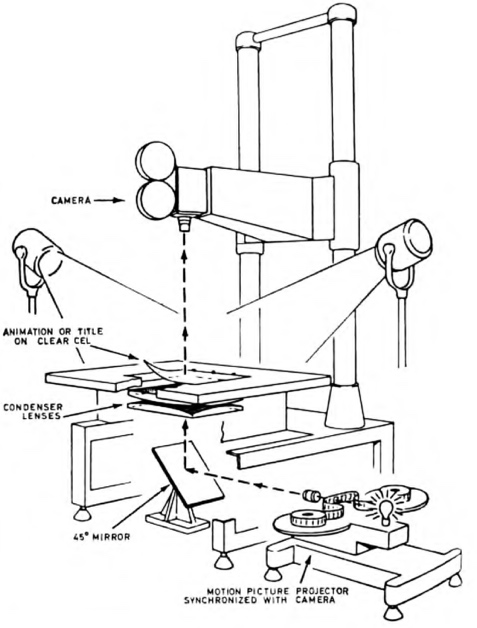
Figure 40. Simplified drawing of an optical printer. (Source: See Figure 39)
|
What Optical Printing Could Do
Optical printers were historically used in motion-picture production to combine, modify, repeat, and omit visual material. The goal was to keep the work from being noticed by the audience, with no need to worry about microscopic frame examination or the nonprojectable area.
Hollywood effects work benefited from controlled lighting, camera movement, set design, exposure, and repeatable plate photography. By contrast, any team tasked with altering the Zapruder film would have faced serious challenges. For example, the motion blur present in nearly every frame would have posed alteration difficulties not generally found in a Hollywood environment. Any sophisticated optical artistry required to handle the ever-changing blur within the limousine would have created a severe time constraint.
The Central Alteration Challenge
Before I state the challenge in the section “The Precise Challenge,” it is useful to identify several relevant features of optical printing and to recap pertinent camera issues.
Transition Between Frames. The area where two frames meet is usually not a concern in either Hollywood or consumer film applications. Projection equipment masks that area so the audience never sees it. Because of the technical nature of optical printers, the complete transition area from the original film cannot be accurately reproduced.10 The perforation region, which occupies roughly one-third of the width of each 8mm frame, was never projected. There was no reason to reproduce that region in normal motion-picture work, as the audience would never see it.
Perforation Region Signature. Zapruder’s camera captured images in the perforation region, as Figure 41 shows. Figure 42 shows what portion of that original scene an optical printer typically reproduced. An optical printing solution of the Zapruder film would have to reproduce the perforation region faithfully.
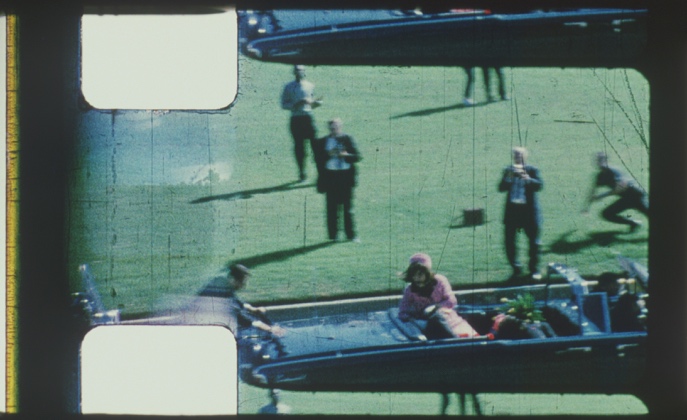
Figure 41. This is the 4K Scan of Frame 346 that shows the entire image captured by Zapruder’s camera. The large image around the perforations would never be projected. (Source: 4K Scan)
|
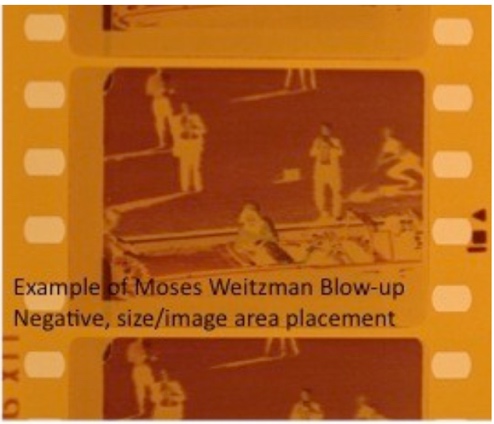
Figure 42. Frame 346 printed as a negative on an Oxberry optical printer by Moses Weitzman for Time-Life. Note that the perforation region image observed in Figure 41 was not copied because of optical printing constraints. (Source: Zavada’s response to Horne, 22[L3])
|
Area Between Sprocket Holes Signature. Because of another design quirk, a portion of the previous frame’s image was double-exposed onto the current image in the perforation region, producing ghost images as described earlier in the Zapruder Camera Signatures section. This physically links neighboring frames. Image detail also surrounds each sprocket hole, creating an exacting alignment problem. An optical copy would therefore have to reproduce not only the visible scene but also these camera-produced relationships while leaving no evidence of the new frame boundaries created by the copying process.
Transition Mask Signature. A small area of each scene overlaps in the transition area around the sprocket holes, as described earlier. Perfect reproduction of this overlap would present a very serious challenge when using an optical printer or any other discrete frame-by-frame process.
Unmodified Frames. Once an optical printer is used, every frame, even if not modified or removed, is subject to the same considerations.
The Unresolved Technical Problem. I have not identified a method available in 1963 that would allow an optical printer to copy the film without producing frame-to-frame transition signatures while simultaneously reproducing the perforation area and its camera signatures perfectly. Figure 43 illustrates where overlap or underlap transition artifacts would be expected to appear.
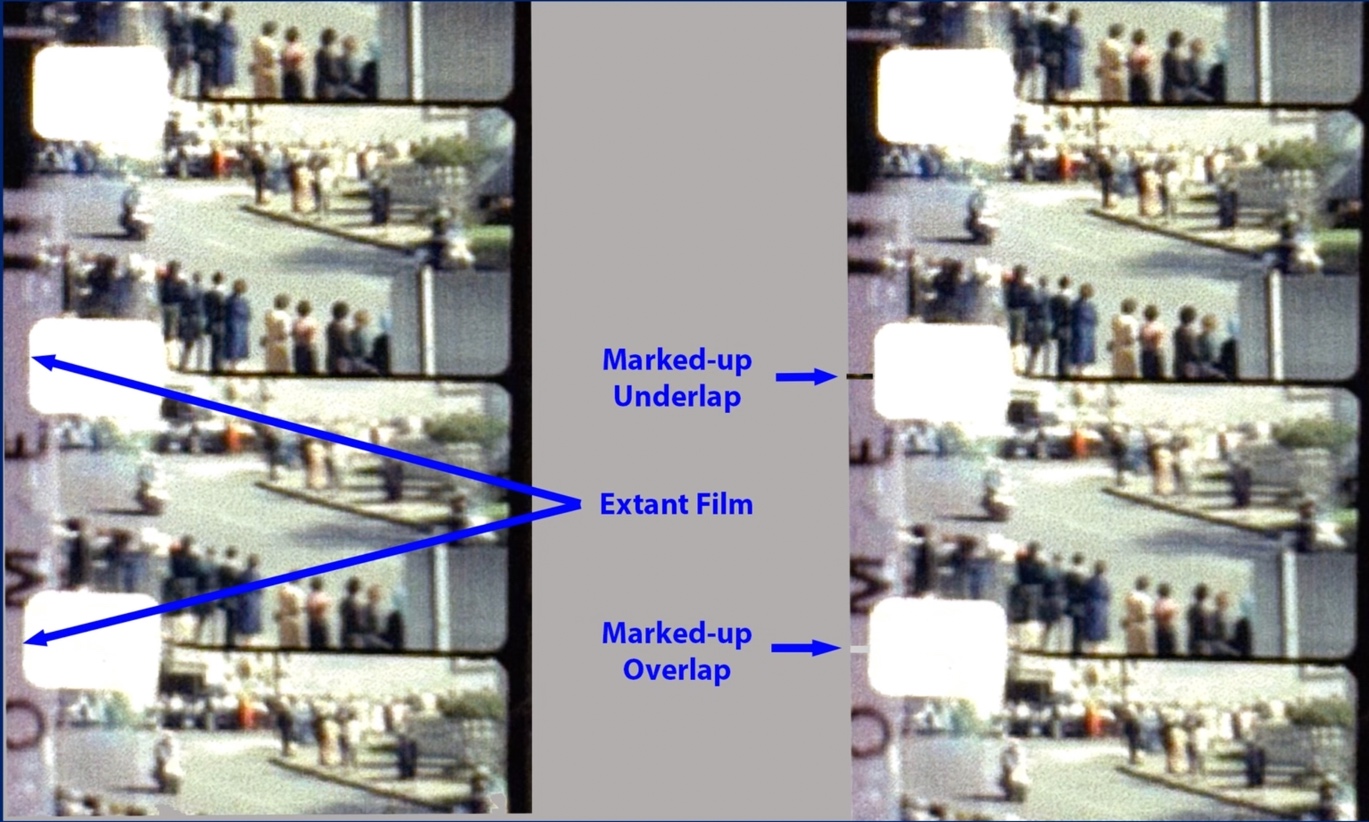 |
Figure 43. The extant film is shown at left. The mocked-up version at right identifies where an optical-printing copy could produce two types of transition errors: an overlap, in which adjacent copied frame images intrude upon one another, or an underlap, in which the two copied frame images fail to meet at the boundary. These transition artifacts would arise from the optical-copying process itself, even if the source images were not altered. (Source: Zavada’s files as marked up by author)
I have carefully searched for possible methods of alteration. Every alternative I found would impose significant time constraints and artistic or technical challenges. For those interested, I have critiqued several possible techniques[L27] that attempt to address this issue.
The Precise Challenge
Any credible alteration theory relying on optical printing must describe a method available in November 1963 that simultaneously satisfies the following three requirements:
1.Faithful reproduction of the small mask area double exposure. The method must faithfully reproduce the scene overlap around the mask. See Figures 27 and 28.
2.No detectable frame-to-frame transitions. The process must produce a continuous strip in which the boundaries between successive frames show no frame overlap or underlap caused by the masking required when each frame is photographed separately. See Figure 43.
3.Full and precise reproduction of the perforation-region imagery. The method must copy and correctly align all photographic information, including the ghost images, within the perforation region, even though conventional optical printers of the era were designed only for the projectable image area. See Figures 25 and 26.
These three requirements are not independent; solving one tends to make the others harder.
Until a technically detailed, historically plausible process is shown to meet all three conditions at once, the optical-printing route remains an unresolved barrier for the alteration hypothesis
Conclusion
When you have eliminated the impossible, whatever remains, however improbable, must be the truth.
Arthur Conan Doyle, The Sign of the Four
The evidence examined here imposes substantial physical, historical, and chronological constraints on any alteration hypothesis. A credible proposal must address those constraints in light of the surviving early film copies, the assassination-weekend documentation, and the technology demonstrably available at the time. Until an alteration theory can account for those challenges through a technically and historically plausible process, nonalteration remains the better-supported explanation.
In subsequent articles, I will examine some of the main alteration arguments more closely, starting with line-profile analyses and then other claims, including the limousine stop issue. Part 2 is available here .
Author’s Note
This article reflects more than two years of investigation, including access to important historical film materials and correspondence, review of technical literature, and interviews with leading researchers on both sides of the controversy. Evidence-based corrections are welcome and will be considered carefully.
If you have technical review comments on this article, please send them to craig@decodingmystery.com and keep them strictly focused on the material presented here. I will revise this article to correct any misstatements and will credit those who raise valid criticisms. I will keep all correspondents anonymous unless they tell me otherwise.
If you would like to ensure that future articles address specific anomalies, please email your requests. A printable list of all URLs is available here[L28].
Zapruder Film © 1967 (Renewed 1995) The Sixth Floor Museum at Dealey Plaza.
Fair Use Notice. This article reproduces limited portions of copyrighted works for purposes of criticism, comment, scholarship, and research under 17 U.S.C. § 107. The excerpts are used solely to identify and evaluate the specific claims under discussion and are published without charge. All rights remain with their respective owners.
______________
1. That the alteration happened during the weekend is the majority view among alteration proponents.↩︎
2. The details are secondary because I do not consider an expert-versus-expert discussion fruitful. For those interested in the historical record, some examples are listed here[L29].↩︎
3. Analog film resolution is measured in line pairs per millimeter (lp/mm). A simplified explanation follows. The measure refers to the number of alternating black and white lines (line pairs) that can be distinguished within a single millimeter of film. A test target typically presents a series of line pairs at progressively finer spacing. When the target is photographed, the coarser series remain resolved as distinct alternating lines, while the finer series blur into a fuzzy gray area. The finest series that remains resolvable defines the resolution.
Historical technical information on Kodachrome II is scarce, but Kodachrome 25, its immediate successor, may serve as a proxy. Widely cited sources give Kodak’s published figures for Kodachrome 25 as 100 lp/mm with high-contrast targets and 63 lp/mm with low-contrast targets. This would correspond to 450 line pairs across the 4.5 mm projectable area of the frame. Since each line pair requires two picture elements to reproduce, the rough digital equivalent would be 900 pixels with high-contrast targets.
Working from the 4K Scan of Frame 317, I measured several points strictly along the horizontal axis. The width of the shaded portion of JFK’s head, from the left edge of his head to the interface between his ear and his hair on the right, was approximately 3 percent of the frame’s projectable area. The faintly visible width of the head wound measured approximately 1.5 percent. Because the projectable width of a Kodachrome II frame is about 4.5 mm, those measurements correspond to roughly 0.14 mm and 0.07 mm, respectively. At 100 lp/mm, the shaded portion of the head would therefore span about 14 line pairs, and the wound area about 7, both figures assuming optimal contrast. This equates to roughly 28 pixels and 14 pixels. Under low-contrast conditions (63 lp/mm), the figures fall to about 18 pixels and 9 pixels.
These numbers would be reduced further by a suboptimal lens, such as the one on the 414PD. Given all of these uncertainties, I use 25 pixels as a working estimate of the width of the shaded area of JFK’s head. This figure is offered only to convey the limited resolution of the wound area in modern terms; the exact number is not important.↩︎
4. More technically stated: Bright moving areas spread exposure into adjacent darker areas and bright backgrounds intrude across the apparent edges of dark moving objects.↩︎
5. See the Exposure section of Kodak’s data sheet for Kodachrome 25[L30], the immediate successor to Kodachrome II.↩︎
6. Lossless digital copying does not degrade image information. Resampling, recompression, sharpening, color transformations, etc., can.↩︎
7. In addition to the 6K Scan, I viewed the 4-by-5-inch transparencies now stored at the Sixth Floor Museum (first generation) and purchased the museum’s high-resolution scan of Frame 317. I saw materials from Robert Groden’s archive (second generation) and I was given a copy of the 4K Scan (second generation). ↩︎
8. Sometimes spelled Hawk-Eye Works.↩︎
9. Double 8 film is a 16mm film that is exposed one half at a time and slit into two 8mm strips after processing.↩︎
10. An optical printer captures images frame by frame. After each capture, the film advances to the next position. At each frame boundary, the camera must mask the area to prevent the round lens image from double-exposing adjacent frames. Due to the film’s small size and the loose tolerances of the sprocket holes, achieving a seamless transition that perfectly aligns neighboring frame edges is a seemingly unsolvable technical challenge.↩︎


